Building Blocks
This section contains fundamental products for the synthesis of organic and biological compounds. Building blocks are the essential starting materials used to construct complex molecules through various chemical reactions. They play a critical role in drug discovery, material science, and chemical research. At CymitQuimica, we offer a diverse range of high-quality building blocks to support your innovative research and industrial projects, ensuring you have the essential components for successful synthesis.
Subcategories of "Building Blocks"
- Boronic Acids & Boronic Acid Derivatives(5,756 products)
- Chiral Building Blocks(1,242 products)
- Hydrocarbon Building Blocks(6,095 products)
- Organic Building Blocks(61,037 products)
Found 196200 products of "Building Blocks"
Sort by
Purity (%)
0
100
|
0
|
50
|
90
|
95
|
100
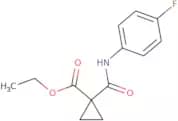
Ethyl 1-((4-fluorophenyl)carbamoyl)cyclopropanecarboxylate
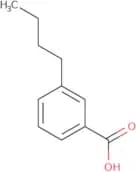
CAS:<p>Versatile small molecule scaffold</p>Formula:C13H14FNO3Purity:Min. 95%Molecular weight:251.25 g/mol3-N-Butylbenzoic acid
CAS:<p>Versatile small molecule scaffold</p>Formula:C11H14O2Purity:Min. 95%Molecular weight:178.23 g/molRef: 3D-VAA65172
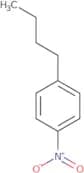
1gTo inquire5gTo inquire10gTo inquire5mg200.00€50mg715.00€250mgTo inquire500mgTo inquire1-Butyl-4-nitrobenzene
CAS:<p>1-Butyl-4-nitrobenzene is an environmental pollutant that is a byproduct of coal combustion and industrial processes. It can be chlorinated to produce 1,2,3-trichloropropane, which is used in the production of various chemicals. The chemical transformation of 1-butyl-4-nitrobenzene yields a variety of products including nitroarenes and anilines. The mechanistic pathways for the production of these compounds are not completely understood but it has been shown that isotope effects may play a role in the formation of certain product yields.</p>Formula:C10H13NO2Purity:Min. 95%Molecular weight:179.22 g/mol2,2-Dimethylpentanenitrile
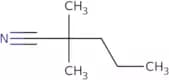
CAS:<p>2,2-Dimethylpentanenitrile is a solvent that can be used in the polymerization of cellulose acetate. It has been shown to have reactive sites and be resistant to radiation and heat. 2,2-Dimethylpentanenitrile has also been used as a polymerization initiator for cationic polymers, which are water vapor-resistant and bond cleavage resistant. This compound is an experimental infection agent that is used against enteritidis, which is an antibiotic-resistant bacterium. 2,2-Dimethylpentanenitrile has also been shown to be effective as an electrophotographic developer for particle suspensions and gaseous emissions.</p>Purity:Min. 95%Ref: 3D-VAA65447
1gTo inquire5gTo inquire10gTo inquire25gTo inquire50gTo inquire10mg197.00€100mg705.00€2-Methyl-4-phenyl-1,3-oxazole
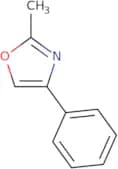
CAS:<p>2-Methyl-4-phenyl-1,3-oxazole is an organic compound that is a white solid. It has a molecular weight of 222.2 g/mol and chemical formula C6H5NO2. 2-Methyl-4-phenyl-1,3-oxazole can be synthesized by reacting phenylmagnesium bromide with methyl iodide in an ether solvent at room temperature. The reaction produces a product in high yield, which is soluble in both water and organic solvents. The product is stable to air and light for up to two months at room temperature.<br><br>The following are the properties of 2-methyl 4 phenyl 1,3 oxazole:<br><br>• White solid<br>• Molecular weight of 222.2 g/mol<br>• Chemical formula C6H5NO2 <br>• Soluble in both water and organic solvents <br>• Synthesized by reacting phenylmag</p>Formula:C10H9NOPurity:Min. 95%Molecular weight:159.18 g/molMethyl (2E)-3-(dimethylamino)prop-2-enoate
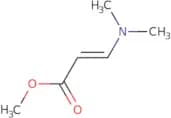
CAS:<p>Versatile small molecule scaffold</p>Formula:C6H11NO2Purity:Min. 95%Molecular weight:129.2 g/molMethyl 4,4-dimethylpent-2-enoate
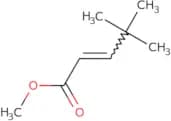
CAS:<p>Methyl 4,4-dimethylpent-2-enoate is a natural product that has been isolated from the fungus Candida albicans. It has been shown to inhibit the growth of Aspergillus niger and Candida albicans.</p>Formula:C8H14O2Purity:Min. 95%Molecular weight:142.2 g/molN-Cyclopentylcyclopentanamine
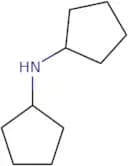
CAS:<p>N-Cyclopentylcyclopentanamine is a cyclic amine that has a carboxylate and an amino function. It can be used as a substrate film for reaction rate studies and to investigate the effect of surface active agents on the patterning of the polymer. The compound is also used as a primary amino reactant in reactions with hydrocarbon groups, amines, and silicone. This substance is soluble in organic solvents such as acetone, ether, chloroform, and benzene.</p>Formula:C10H19NPurity:Min. 95%Molecular weight:153.26 g/mol3-Methyl-1,2,3,4-tetrahydroquinoline
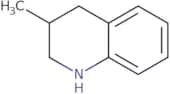
CAS:<p>3-Methyl-1,2,3,4-tetrahydroquinoline is a synthetic molecule that has been shown to have adjuvant activity in the treatment of cancer. 3-Methyl-1,2,3,4-tetrahydroquinoline inhibits bacterial growth by alkylating DNA and RNA. It binds to nucleic acids and prevents transcription and replication. The molecular structure of 3-methyl-1,2,3,4-tetrahydroquinoline was elucidated by FTIR spectroscopy and XRPD analysis. This compound has also been shown to inhibit the growth of Staphylococcus aureus strains.</p>Formula:C10H13NPurity:Min. 95%Molecular weight:147.21 g/mol6,7-Dimethylquinoline
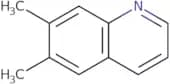
CAS:<p>6,7-Dimethylquinoline is a chemical that is used as a research tool in the study of the uptake of drugs into tissues and their excretion by the body. 6,7-Dimethylquinoline is used as an internal standard for gas chromatography to measure the uptake rate of drugs into tissues. This chemical has also been shown to have significant cutaneous absorption and may be metabolized to glucuronide conjugates in humans. It has been shown to bioconcentrate in muscle tissue and may be metabolized by biotransformation products. 6,7-Dimethylquinoline is excreted primarily in the bile and its whole-body half-life ranges from 3.2 hours to 5.3 hours.</p>Formula:C11H11NPurity:Min. 95%Molecular weight:157.21 g/mol7,8-Dimethylquinoline
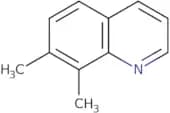
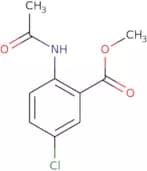
CAS:<p>7,8-Dimethylquinoline is an electrophilic agent that has been shown to be active against a variety of fungi. 7,8-Dimethylquinoline is a phenolic compound that can be used as an antifungal agent and has been shown to possess narcotic properties. 7,8-Dimethylquionline is not toxic to mammals but may cause toxicity in other organisms. It also has potential to inhibit membrane transport processes in fungi.</p>Formula:C11H11NPurity:Min. 95%Molecular weight:157.22 g/molMethyl 2-Acetamido-5-chlorobenzoate
CAS:<p>Methyl 2-acetamido-5-chlorobenzoate is a chemical compound that belongs to the group of organic compounds. It has a crystal structure with orthorhombic and isotropic properties. The radiation used in the measurement of this compound is atomic and it has been measured using a Bruker instrument.</p>Formula:C10H10ClNO3Purity:Min. 95%Molecular weight:227.64 g/molRef: 3D-VAA67654
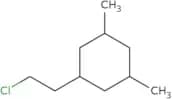
25gTo inquire50gTo inquire100gTo inquire250gTo inquire500gTo inquire250mg348.00€2500mg1,299.00€1-(2-Chloroethyl)-3,5-dimethylcyclohexane
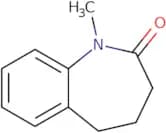
CAS:<p>Versatile small molecule scaffold</p>Formula:C10H19ClPurity:Min. 95%Molecular weight:174.71 g/mol1-Methyl-2,3,4,5-tetrahydro-1H-1-benzazepin-2-one
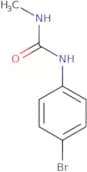
CAS:<p>Versatile small molecule scaffold</p>Formula:C11H13NOPurity:Min. 95%Molecular weight:175.23 g/mol1-(4-Bromophenyl)-3-methylurea
CAS:<p>1-(4-Bromophenyl)-3-methylurea is a nitrosourea that has been shown to be carcinogenic in experiments. It is an alkylating agent that may also have genotoxic properties. 1-(4-Bromophenyl)-3-methylurea can react with DNA, forming DNA adducts. This chemical is a potent inhibitor of the enzyme nitrite reductase, which reduces nitrite to nitric oxide and water. Nitric oxide is important for blood vessel dilation and vasodilation, as well as the regulation of vasoconstriction. The inhibition of this enzyme leads to increased blood pressure by blocking these effects. 1-(4-Bromophenyl)-3-methylurea is commonly used in the laboratory to induce papillomas on the skin of animals or fish, as well as carcinogenic activity in vitro.</p>Formula:C8H9BrN2OPurity:Min. 95%Molecular weight:229.07 g/molRef: 3D-VAA68007
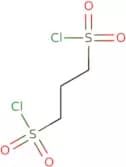
1mgTo inquire250mg298.00€50µgTo inquire100µgTo inquire2500mg1,126.00€250µgTo inquire500µgTo inquirePropane-1,3-disulfonyl dichloride
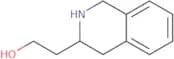
CAS:<p>Versatile small molecule scaffold</p>Formula:C3H6Cl2O4S2Purity:Min. 95%Molecular weight:241.1 g/mol2-(1,2,3,4-Tetrahydroisoquinolin-3-yl)ethan-1-ol
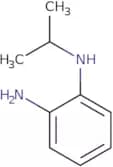
CAS:<p>Versatile small molecule scaffold</p>Formula:C11H15NOPurity:Min. 95%Molecular weight:177.24 g/mol1-N-(Propan-2-yl)benzene-1,2-diamine
CAS:<p>1-N-(Propan-2-yl)benzene-1,2-diamine is a supramolecular ligand that is an alkylation agent. It has been shown to have high sensitivity and can be used as a catalyst for the synthesis of various compounds. 1-N-(Propan-2-yl)benzene-1,2-diamine may be useful in the production of pharmaceuticals and other organic compounds. This compound has been synthesized using a multistep process with x-ray crystallography to confirm its stability and structure. The nitrogen atom in this compound allows it to act as a base, which is important for many chemical reactions.</p>Formula:C9H14N2Purity:Min. 95%Molecular weight:150.22 g/mol2-Amino-6H,7H,8H,9H,11H-pyrido[2,1-b]quinazolin-11-one
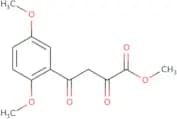
CAS:<p>2-Amino-6H,7H,8H,9H,11H-pyrido[2,1-b]quinazolin-11-one is a compound that has been studied theoretically and experimentally. It can be used in the treatment of cancer. The theoretical calculations have shown that this compound interacts with sulfoxide groups. The experimental studies have shown that it reacts with surfaces and solvents. 2-Amino-6H,7H,8H,9H,11H-pyrido[2,1-b]quinazolin-11-one has been shown to bind to the mackinazolinone site on DNA gyrase in a manner similar to quinolones. This binding creates a conformation change that prevents the enzyme from functioning as an ATPase. The xray crystallography studies show that 2 amino 6 H 7 H 8 H 9 H 11 H pyrido [2 1</p>Formula:C12H13N3OPurity:Min. 95%Molecular weight:215.25 g/molMethyl 4-(2,5-dimethoxyphenyl)-2,4-dioxobutanoate
CAS:<p>Versatile small molecule scaffold</p>Formula:C13H14O6Purity:Min. 95%Molecular weight:266.25 g/mol

![2-Amino-6H,7H,8H,9H,11H-pyrido[2,1-b]quinazolin-11-one](/_next/image/?url=https%3A%2Fstatic.cymitquimica.com%2Fproducts%2F3D%2Fthumb-webp%2FVCA93409.webp&w=3840&q=75)