Building Blocks
This section contains fundamental products for the synthesis of organic and biological compounds. Building blocks are the essential starting materials used to construct complex molecules through various chemical reactions. They play a critical role in drug discovery, material science, and chemical research. At CymitQuimica, we offer a diverse range of high-quality building blocks to support your innovative research and industrial projects, ensuring you have the essential components for successful synthesis.
Subcategories of "Building Blocks"
- Boronic Acids & Boronic Acid Derivatives(5,756 products)
- Chiral Building Blocks(1,242 products)
- Hydrocarbon Building Blocks(6,095 products)
- Organic Building Blocks(61,037 products)
Found 196139 products of "Building Blocks"
Sort by
Purity (%)
0
100
|
0
|
50
|
90
|
95
|
100
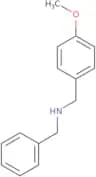
Benzyl-(4-methoxy-benzyl)-amine
CAS:<p>Benzyl-(4-methoxy-benzyl)-amine is a chemical compound that has the molecular formula CHNO. It is an organic compound with a nitrate group, which are common in esters and phenolates. This compound can be synthesized by debenzylating benzyl amines and reacting them with nitric acid. Benzyl-(4-methoxy-benzyl)-amine may also be prepared by reacting benzaldehyde with ammonium hydroxide or ammonia gas. The synthesis of this compound is chemoselective, meaning it only reacts at one point on the molecule, rather than two. Benzyl-(4-methoxy-benzyl)-amine is used as a precursor to other compounds such as ammonium nitrate, esters, phenolates, and amides.</p>Formula:C15H17NOPurity:Min. 95%Molecular weight:227.3 g/mol2-(4-Chloro-2-formylphenoxy)acetic acid
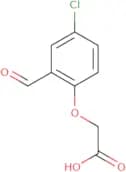
CAS:<p>2-(4-Chloro-2-formylphenoxy)acetic acid is a chemical compound that is found in microalgae. The compound has been shown to inhibit the growth of bacteria by binding to glucose transporters and inhibiting their ability to absorb glucose. This process leads to a decrease in ATP levels, energy depletion, and cell death. In addition, this compound has been shown to have trophic effects on microalgae. This compound also inhibits the expression of malic enzyme genes and ammonium transporter genes in bacteria. 2-(4-Chloro-2-formylphenoxy)acetic acid is a steerable molecule that can be used for sectioning biological material with ultrafast lasers due to its high fluorescence.</p>Formula:C9H7ClO4Purity:Min. 95%Molecular weight:214.6 g/mol2-{[2-({2-[(2-Hydroxyethyl)sulfanyl]ethyl}sulfanyl)ethyl]sulfanyl}ethan-1-ol
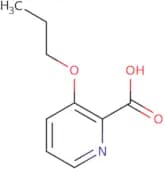
CAS:<p>2-{[2-({2-[(2-Hydroxyethyl)sulfanyl]ethyl}sulfanyl)ethyl]sulfanyl}ethan-1-ol is a polymer with a heterocyclic ring that is soluble in organic solvents. It has been used as an activator, coactivator and/or stabilizer for the thermal treatment of inorganic acids to produce imidazolines and halogens. 2-{[2-({2-[(2-Hydroxyethyl)sulfanyl]ethyl}sulfanyl)ethyl]sulfanyl}ethan-1-ol has been shown to be effective in the production of polymeric materials with good stability and low volatility.</p>Formula:C8H18O2S3Purity:Min. 95%Molecular weight:242.4 g/mol3-Propoxypyridine-2-carboxylic acid
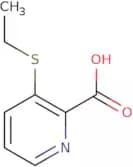
CAS:<p>3-Propoxypyridine-2-carboxylic acid is a benzene ring containing piperidine with a carboxamide substituent. It has shown to be selective for human eosinophils, and is an antagonist at the benzodiazepine site of GABAA receptors. 3-Propoxypyridine-2-carboxylic acid can also be derivatized to form a potent antagonist of benzodiazepine sites on GABAA receptors.</p>Formula:C9H11NO3Purity:Min. 95%Molecular weight:181.19 g/mol3-(Ethylsulfanyl)pyridine-2-carboxylic acid
CAS:<p>Versatile small molecule scaffold</p>Formula:C8H9NO2SPurity:Min. 95%Molecular weight:183.23 g/mol3-{[(Benzyloxy)carbonyl]amino}-3-phenylpropanoic acid
CAS:<p>Versatile small molecule scaffold</p>Formula:C17H17NO4Purity:Min. 95%Molecular weight:299.32 g/molBenzyl propiolate
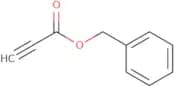
CAS:<p>Benzyl propiolate is a molecule that is structurally related to propiolic acid. It has been shown to act as an adrenergic receptor agonist, which leads to platelet aggregation and thrombocytopenia. Benzyl propiolate also forms methyl esters with alcohols and is synthesized by methyl esterification of benzyl alcohol and propionic acid. This compound is electron deficient, which allows it to react with electron-rich substances, such as thromboplastin in the reaction solution for heparin-induced thrombocytopenia.</p>Formula:C10H8O2Purity:Min. 95%Molecular weight:160.17 g/molBenzyl 2-cyanoacetate
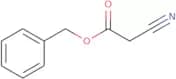
CAS:<p>Benzyl 2-cyanoacetate is an aliphatic hydrocarbon that has been used in the synthesis of various quinoline derivatives. It can be prepared by the reaction of malonic acid with hydrochloric acid, followed by borohydride reduction and the addition of active methylene. Benzyl 2-cyanoacetate is also a precursor to a number of other compounds, including β-amino acids, which are used as pharmaceutical preparations. The chloride ions in benzyl 2-cyanoacetate react with nitro groups to form chloroquinolines. This compound is also an efflux pump inhibitor that blocks bacterial cells from exporting antibiotic molecules out of the cell.</p>Formula:C10H9NO2Purity:Min. 95%Molecular weight:175.19 g/molN-Methyl-5,6,7,8-tetrahydronaphthalen-1-amine
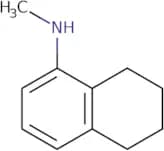
CAS:<p>Versatile small molecule scaffold</p>Formula:C11H15NPurity:Min. 95%Molecular weight:161.24 g/mol4-[(4-Methoxyphenyl)sulfanyl]aniline
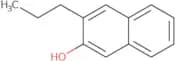
CAS:<p>Versatile small molecule scaffold</p>Formula:C13H13NOSPurity:Min. 95%Molecular weight:231.32 g/mol3-Propylnaphthalen-2-ol
CAS:<p>Versatile small molecule scaffold</p>Formula:C13H14OPurity:Min. 95%Molecular weight:186.25 g/mol3-Phenyl-2-[(prop-2-en-1-yl)amino]propanoic acid
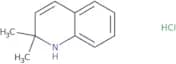
CAS:<p>Versatile small molecule scaffold</p>Formula:C12H15NO2Purity:Min. 95%Molecular weight:205.25 g/mol2,2-Dimethyl-1,2-dihydroquinoline hydrochloride
CAS:<p>Versatile small molecule scaffold</p>Formula:C11H14ClNPurity:Min. 95%Molecular weight:195.69 g/molPhenyl-prop-2-ynyl-amine
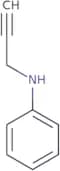
CAS:<p>Phenyl-prop-2-ynyl-amine is a primary amine with neuroprotective properties. It can be activated to the corresponding aniline by treatment with a base. Phenyl-prop-2-ynyl-amine has been shown to have neuroprotective effects in a model system of Parkinson's disease. It also possesses ring-opening activity on quinoline derivatives and gold nanoparticles. This reaction is slow, but it can be accelerated by the addition of a carboxylic acid. The use of this method for the synthesis of phenylpropene derivatives provides an efficient route for the construction of complex molecules with functional groups in their skeletons.</p>Formula:C9H9NPurity:Min. 95%Molecular weight:131.17 g/mol1-Z-2-Pyrrolidinone
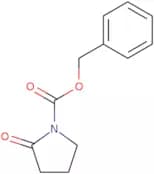
CAS:<p>Versatile small molecule scaffold</p>Formula:C12H13NO3Purity:Min. 95%Molecular weight:219.24 g/mol4-Bromopentanenitrile
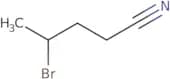
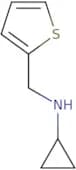
CAS:<p>4-Bromopentanenitrile is a medicinal molecule that has been shown to have oral bioavailability. This compound is an antagonist of the chemokine receptor CXCR4 and blocks the binding of SDF-1α and other ligands to this receptor, which inhibits the migration of lymphocytes from bone marrow into peripheral tissues. 4-Bromopentanenitrile has also been shown to inhibit cell proliferation in vitro and in vivo, which may be due to its ability to block DNA replication. 4-Bromopentanenitrile has been tested for its ability to inhibit the growth of cancer cells in mice models.</p>Formula:C5H8BrNPurity:Min. 95%Molecular weight:162.03 g/molCyclopropyl-thiophen-2-ylmethyl-amine
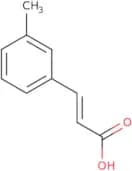
CAS:<p>Versatile small molecule scaffold</p>Formula:C8H11NSPurity:Min. 95%Molecular weight:153.25 g/mol(E)-3-(m-Tolyl)acrylic acid
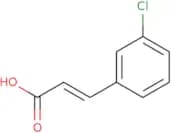
CAS:<p>(E)-3-(m-Tolyl)acrylic acid is a natural flavonoid compound found in plants. It is an intermediate in the biosynthesis of phenylpropanoids, which are a group of plant secondary metabolites. (E)-3-(m-Tolyl)acrylic acid has been shown to inhibit the production of heterocyclic amines, which are carcinogenic compounds formed during the cooking process of meat and fish. In addition, this compound has been shown to have cytotoxic effects on cancer cells and inhibitory effects on malonic acid production in plants. (E)-3-(m-Tolyl)acrylic acid is synthesized from cinnamic acid derivatives and hydroxyl groups. It is also produced by sulfonation of eugenol with sulfuric acid followed by oxidation with hydrogen peroxide.</p>Formula:C10H10O2Purity:Min. 95%Molecular weight:162.19 g/mol3-Chlorocinnamic acid
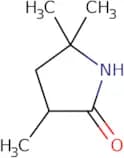
CAS:<p>3-Chlorocinnamic acid is a potential anticancer agent that has been shown to stimulate the growth of epidermal cells. It inhibits the activity of epidermal growth factor (EGF) and is active against some forms of cancer. 3-Chlorocinnamic acid binds to an activated form of the epidermal growth factor receptor and prevents its activation. 3-Chlorocinnamic acid also inhibits pro-apoptotic protein kinase activities, which may be useful for treating conditions such as tuberculosis. The chemical group in this compound is responsible for its optical properties and its ability to bind to proteins with cinnamoyl groups.</p>Formula:C9H7ClO2Purity:Min. 95%Molecular weight:182.6 g/mol3,5,5-Trimethyl-2-pyrrolidinone
CAS:<p>3,5,5-Trimethyl-2-pyrrolidinone is a cyclic hydrocarbon that is produced by the photolysis of acetonylacetone. It undergoes hydrolysis to form 3,5,5-trimethyl-3-oxazolidinone and 2-oxopropanal. The former reacts with nitrones to form oxaziridines and pyrrolidinones. 3,5,5-Trimethyl-2-pyrrolidinone can be used as a protecting group for hydroxyl groups in organic synthesis.</p>Formula:C7H13NOPurity:Min. 95%Molecular weight:127.18 g/mol

![2-{[2-({2-[(2-Hydroxyethyl)sulfanyl]ethyl}sulfanyl)ethyl]sulfanyl}ethan-1-ol](/_next/image/?url=https%3A%2Fstatic.cymitquimica.com%2Fproducts%2F3D%2Fthumb-webp%2FPAA44077.webp&w=3840&q=75)
![3-{[(Benzyloxy)carbonyl]amino}-3-phenylpropanoic acid](/_next/image/?url=https%3A%2Fstatic.cymitquimica.com%2Fproducts%2F3D%2Fthumb-webp%2FPAA44098.webp&w=3840&q=75)
![4-[(4-Methoxyphenyl)sulfanyl]aniline](/_next/image/?url=https%3A%2Fstatic.cymitquimica.com%2Fproducts%2F3D%2Fthumb-webp%2FPAA45385.webp&w=3840&q=75)
![3-Phenyl-2-[(prop-2-en-1-yl)amino]propanoic acid](/_next/image/?url=https%3A%2Fstatic.cymitquimica.com%2Fproducts%2F3D%2Fthumb-webp%2FPAA46399.webp&w=3840&q=75)