Building Blocks
This section contains fundamental products for the synthesis of organic and biological compounds. Building blocks are the essential starting materials used to construct complex molecules through various chemical reactions. They play a critical role in drug discovery, material science, and chemical research. At CymitQuimica, we offer a diverse range of high-quality building blocks to support your innovative research and industrial projects, ensuring you have the essential components for successful synthesis.
Subcategories of "Building Blocks"
- Boronic Acids & Boronic Acid Derivatives(5,756 products)
- Chiral Building Blocks(1,242 products)
- Hydrocarbon Building Blocks(6,095 products)
- Organic Building Blocks(61,037 products)
Found 196139 products of "Building Blocks"
Sort by
Purity (%)
0
100
|
0
|
50
|
90
|
95
|
100
2,6-Dichloro-4-nitrobenzamide
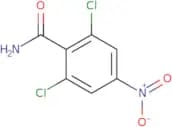
CAS:<p>2,6-Dichloro-4-nitrobenzamide is a chemical compound that is used in the manufacture of other chemicals. It can be synthesized by the diazotization of an amino acid or nitrite with sodium nitrite and hydrolysing the resulting cyanohydrin with an inorganic acid or alkali metal. This compound is typically used as a feed additive to control coccidiosis in poultry, although it also has anticoccidial properties against some bacteria. 2,6-Dichloro-4-nitrobenzamide is used for the treatment of humans as a salt orally or intravenously, and as an anticoccidial agent that is effective against Eimeria tenella and Eimeria acervulina. It is also used to treat bacterial infections such as typhoid fever, cholera, dysentery and salmonellosis.</p>Formula:C7H4Cl2N2O3Purity:Min. 95%Molecular weight:235.02 g/molIsophthalic Dihydrazide
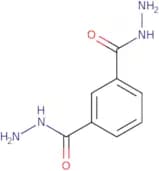
CAS:<p>Isophthalic Dihydrazide is an ethylene diamine that reacts with oxadiazole and trifluoroacetic acid to form a polymeric coating on the surface of nickel particle. It is used in the production of epoxy resins for automotive coatings and as a hardener for paints and varnishes. Isophthalic Dihydrazide reacts with hydroxyl groups on the surface of polymer particles to produce cross-linking, which increases the resistance of the polymer against water vapor and other substances. The optimum concentration for this product is between 0.1% - 0.5%.</p>Formula:C8H10N4O2Purity:Min. 95%Molecular weight:194.19 g/molN-Phenylpiperidine-1-carbothioamide
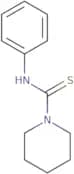
CAS:<p>N-Phenylpiperidine-1-carbothioamide is a piperidine derivative. It has a crystal structure that is composed of phenyl and hydrogen bonds.</p>Formula:C12H16N2SPurity:Min. 95%Molecular weight:220.34 g/mol(3-Methoxy-1,2-oxazol-5-yl)methanamine
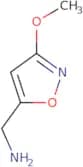
CAS:<p>Versatile small molecule scaffold</p>Formula:C5H8N2O2Purity:Min. 95%Molecular weight:128.13 g/mol6-(Chloromethyl)quinoline hydrochloride
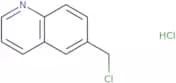
CAS:<p>Versatile small molecule scaffold</p>Formula:C10H9Cl2NPurity:Min. 95%Molecular weight:214.09 g/mol4-Hydroxy-3,4-dihydro-2H-1λ⁶-benzothiopyran-1,1-dione
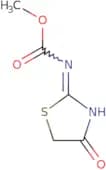
CAS:<p>Versatile small molecule scaffold</p>Formula:C9H10O3SPurity:Min. 95%Molecular weight:198.24 g/molMethyl N-(4-oxo-4,5-dihydro-1,3-thiazol-2-yl)carbamate
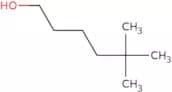
CAS:<p>Versatile small molecule scaffold</p>Formula:C5H6N2O3SPurity:Min. 95%Molecular weight:174.2 g/mol5,5-Dimethylhexan-1-ol
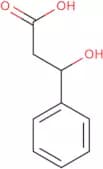
CAS:<p>Versatile small molecule scaffold</p>Formula:C8H18OPurity:Min. 95%Molecular weight:130.23 g/mol(3R)-3-Hydroxy-3-phenylpropanoic acid
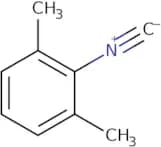
CAS:<p>(3R)-3-Hydroxy-3-phenylpropanoic acid is a fatty acid that is involved in the biosynthesis of erythroxylum. It has an innovative function for valorisation because it can be used to produce hydroxy fatty acids through a reaction with oleaginous materials. The synthesis of this compound is driven by the catalytic function of enzymes and the reaction system, which are made up of biocatalysts and substrates. The reaction products are compounds with a hydroxy group and an enantiomer. This process is catalyzed by esterases. The reactions take place at temperatures between 30°C and 50°C, with a pH range between 7 and 11.</p>Formula:C9H10O3Purity:Min. 95%Molecular weight:166.17 g/mol2-Isocyano-1,3-dimethyl-benzene
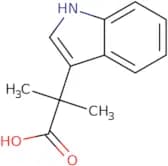
CAS:<p>2-Isocyano-1,3-dimethyl-benzene is an organic compound that is used to synthesize other compounds. It has a redox potential of -0.6 volts and a crystallography of orthorhombic with a space group of Pbca. It reacts with nitrogen atoms in the reaction solution to form stable complexes and can react with copper ions to form a copper complex. 2-Isocyano-1,3-dimethyl-benzene has been shown to undergo transfer reactions with molybdenum in the presence of xylene as solvent and ammonia gas as a catalyst. This chemical reaction mechanism leads to the formation of an isocyanide intermediate, which then reacts with water molecules to create an aminium ion and hydrogen cyanide. Titration calorimetry experiments have shown that 2-isocyano-1,3-dimethylbenzene has an enthalpy change of -2</p>Formula:C9H9NPurity:Min. 95%Molecular weight:131.17 g/mol2-(1H-Indol-3-yl)-2-methylpropanoic acid
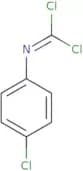
CAS:<p>Versatile small molecule scaffold</p>Formula:C12H13NO2Purity:Min. 95%Molecular weight:203.24 g/mol1-Chloro-N-(4-chlorophenyl)methanecarbonimidoyl chloride
CAS:<p>Versatile small molecule scaffold</p>Formula:C7H4Cl3NPurity:Min. 95%Molecular weight:208.5 g/mol4-{2-[1-(4-Bromophenyl)ethylidene]hydrazin-1-yl}benzoic acid
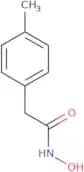
CAS:<p>Versatile small molecule scaffold</p>Formula:C15H13BrN2O2Purity:Min. 95%Molecular weight:333.18 g/molN-Hydroxy-2-(4-methylphenyl)acetamide
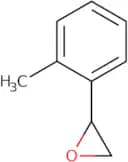
CAS:<p>Versatile small molecule scaffold</p>Formula:C9H11NO2Purity:Min. 95%Molecular weight:165.19 g/mol2-(2-Methylphenyl)oxirane
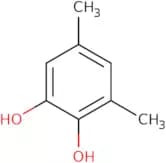
CAS:<p>Versatile small molecule scaffold</p>Formula:C9H10OPurity:Min. 95%Molecular weight:134.17 g/mol3,5-Dimethylbenzene-1,2-diol
CAS:<p>3,5-Dimethylbenzene-1,2-diol is a chemical compound that belongs to the class of organic compounds. This molecule can be synthesised from 3,5-dimethylbenzoic acid. The oxidation of this molecule was achieved by using an intramolecular reaction with potassium permanganate. The configuration of the molecules are in a cis form. This molecule is used as an intermediate for various other organic compounds such as carbohydrates and antibiotics. 3,5-Dimethylbenzene-1,2-diol can be isolated from natural sources such as plants or fungi. The chemical synthesis of this molecule requires a Diels–Alder reaction between two cyclohexadiene rings and three methyl groups.</p>Formula:C8H10O2Purity:Min. 95%Molecular weight:138.16 g/mol3,4-Dimethylbenzene-1,2-diol
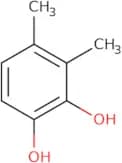
CAS:<p>3,4-Dimethylbenzyl alcohol is a colorless liquid with a low viscosity. It is used as an intermediate in the preparation of polycarboxylic acids and amides. 3,4-Dimethylbenzyl alcohol has been shown to increase the polymerization rate of unsaturated polyester resins. The compound can be synthesized from 3,4-dimethylbenzene-1,2-diol by treatment with sodium carbonate in methanol followed by hydrolysis of the resulting 3,4-dimethylbenzyl alcohol.<br>The compound has also been shown to have anti-inflammatory properties and be used as a solvent for tobacco products.<br>3,4-Dimethylbenzyl alcohol can be obtained through the reaction of fatty acid with potassium hydroxide in ethylene glycol at high temperatures.</p>Formula:C8H10O2Purity:Min. 95%Molecular weight:138.16 g/mol3,6-Dimethylbenzene-1,2-diol
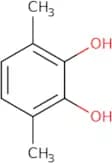
CAS:<p>3,6-Dimethylbenzene-1,2-diol is a bactericidal agent that belongs to the class of amides. It inhibits bacterial growth by binding to water molecules and thus preventing their availability for use in the construction of cell walls. 3,6-Dimethylbenzene-1,2-diol has been shown to be efficient when used as a catalyst for the reaction between 2-aminoterephthalic acid and benzodioxan under mild conditions. This process results in a fluorescent product with an intramolecular hydrogen bond. The catalytic mechanism is thought to involve an active site containing a hydroxyl group that attacks the substrate at the C3 position, followed by a proton transfer from water molecule to form a hydroxyl oxygen intermediate.</p>Formula:C8H10O2Purity:Min. 95%Molecular weight:138.17 g/mol2-Methoxy-4-propylphenol
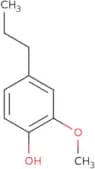
CAS:<p>2-Methoxy-4-propylphenol (2MPP) is a cross-linking agent that reacts with eugenol to form reaction intermediates. It has been shown to be effective in the treatment of skin conditions such as acne, eczema and dermatitis. This product is a reaction product of 2MPP and eugenol, which forms the intermediate 2-methoxyphenylpropene, which then reacts with another molecule of eugenol to form a second intermediate. The final reaction product is 3-(3,4-dimethoxyphenyl)propene. 2MPP has been shown to be an active ingredient in the treatment of acne and other skin conditions due to its ability to penetrate the skin, crosslink collagen and elastin fibers, and promote tissue repair.</p>Formula:C10H14O2Purity:Min. 95%Molecular weight:166.22 g/mol4-(Ethylamino)-3-nitrobenzoic acid
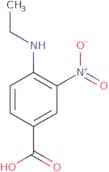
CAS:<p>4-(Ethylamino)-3-nitrobenzoic acid (4ENA) is a centrosymmetric molecule with a crystal structure that contains ammonium and nitro groups. It also forms dimers when in the presence of chloride or chloroformate, which can be seen by the absorption bands at 550 nm. The 4ENA molecule is sensitive to hydrogen chloride and ammonium carbonate, which can cause it to decompose into ethylamine and 3-nitrophenol. Nitric acid will cause 4ENA to form the nitro group attached to the benzene ring. 4ENA has been shown to inhibit platelet aggregation by inhibiting thrombus formation on damaged endothelium.</p>Formula:C9H10N2O4Purity:Min. 95%Molecular weight:210.19 g/mol


![4-{2-[1-(4-Bromophenyl)ethylidene]hydrazin-1-yl}benzoic acid](/_next/image/?url=https%3A%2Fstatic.cymitquimica.com%2Fproducts%2F3D%2Fthumb-webp%2FCAA77237.webp&w=3840&q=75)