Building Blocks
This section contains fundamental products for the synthesis of organic and biological compounds. Building blocks are the essential starting materials used to construct complex molecules through various chemical reactions. They play a critical role in drug discovery, material science, and chemical research. At CymitQuimica, we offer a diverse range of high-quality building blocks to support your innovative research and industrial projects, ensuring you have the essential components for successful synthesis.
Subcategories of "Building Blocks"
- Boronic Acids & Boronic Acid Derivatives(5,756 products)
- Chiral Building Blocks(1,242 products)
- Hydrocarbon Building Blocks(6,093 products)
- Organic Building Blocks(60,522 products)
Found 195533 products of "Building Blocks"
Sort by
Purity (%)
0
100
|
0
|
50
|
90
|
95
|
100
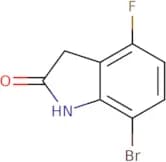
7-Bromo-4-fluoro-2-oxindole
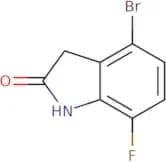
CAS:<p>Versatile small molecule scaffold</p>Formula:C8H5BrFNOPurity:Min. 95%Molecular weight:230.03 g/mol4-Bromo-7-fluoroindolin-2-one
CAS:<p>Versatile small molecule scaffold</p>Formula:C8H5BrFNOPurity:Min. 95%Molecular weight:230.04 g/mol1-[(3-Fluorophenyl)methyl]-1H-1,2,3-triazole-4-carboxylic acid
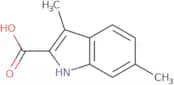
CAS:<p>Versatile small molecule scaffold</p>Formula:C10H8FN3O2Purity:Min. 95%Molecular weight:221.19 g/mol3,6-Dimethyl-1H-indole-2-carboxylic acid
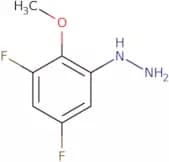
CAS:<p>Versatile small molecule scaffold</p>Formula:C11H11NO2Purity:Min. 95%Molecular weight:189.21 g/mol(3,5-Difluoro-2-methoxyphenyl)hydrazine
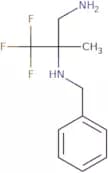
CAS:<p>Versatile small molecule scaffold</p>Formula:C7H8F2N2OPurity:Min. 95%Molecular weight:174.15 g/mol(3-Amino-1,1,1-trifluoro-2-methylpropan-2-yl)(benzyl)amine
CAS:<p>Versatile small molecule scaffold</p>Formula:C11H15F3N2Purity:Min. 95%Molecular weight:232.25 g/mol3-(Prop-2-yn-1-yl)piperidine hydrochloride
CAS:<p>Versatile small molecule scaffold</p>Formula:C8H14ClNPurity:Min. 95%Molecular weight:159.65 g/molDimethallylamine
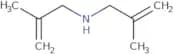
CAS:<p>Dimethallylamine is a monomer that can be used as a polymerization initiator. Dimethallylamine has been shown to react with hydrochloric acid in an efficient method for the synthesis of polydimethylsiloxane. Dimethallylamine reacts with fatty acids to form esters and amines, which are structural components of many polymers. Dimethallylamine can also be used as a cross-linking agent in cellulose derivatives such as nitrocellulose and cellulose acetate butyrate.</p>Formula:C8H15NPurity:Min. 95%Molecular weight:125.21 g/mol2-(3-Methyl-1H-pyrazol-1-yl)ethanol
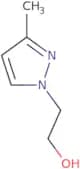
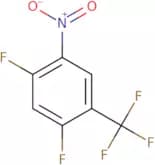
CAS:<p>Versatile small molecule scaffold</p>Formula:C6H10N2OPurity:Min. 95%Molecular weight:126.16 g/mol2,4-Difluoro-5-nitrobenzotrifluoride
CAS:<p>Versatile small molecule scaffold</p>Formula:C7H2F5NO2Purity:Min. 95%Molecular weight:227.09 g/molo-[(Pyridin-2-yl)methyl]hydroxylamine dihydrochloride
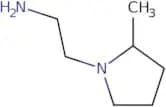
CAS:<p>Versatile small molecule scaffold</p>Formula:C6H10Cl2N2OPurity:Min. 95%Molecular weight:197.06 g/mol2-(2-Methylpyrrolidin-1-yl)ethan-1-amine
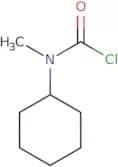
CAS:<p>Versatile small molecule scaffold</p>Formula:C7H16N2Purity:Min. 95%Molecular weight:128.22 g/molN-Cyclohexyl-N-methylcarbamoyl chloride
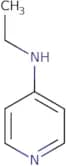
CAS:<p>Versatile small molecule scaffold</p>Formula:C8H14ClNOPurity:Min. 95%Molecular weight:175.65 g/molN-Ethylpyridin-4-amine
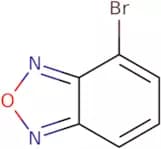
CAS:<p>N-Ethylpyridin-4-amine is an aminopyridine that interacts with chloride ions to form a specific chloroformate ester. It is used as a biochemical tool for the detection of lead in biological samples. The reaction time for the formation of the chloroformate ester is dependent on concentrations, pH, and temperature. This compound can be extracted from other compounds using a variety of different extraction techniques. The asymmetry of N-Ethylpyridin-4-amine can be detected using various spectroscopic techniques such as infrared or nuclear magnetic resonance spectroscopy.</p>Formula:C7H10N2Purity:Min. 95%Molecular weight:122.17 g/mol4-Bromo-2,1,3-benzoxadiazole
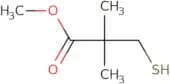
CAS:<p>4-Bromo-2,1,3-benzoxadiazole (4BB) is a mycobacterium avium inhibitor. It has been shown to inhibit the growth of Mycobacterium avium and other bacteria by binding to the chemokine receptor CXCR1. 4BB inhibits chemokine-induced migration of inflammatory cells, which may be due to its ability to inhibit tnf-α production in human lung cells. This drug also has been shown to have antiinflammatory effects, which are mediated through the inhibition of prostaglandin synthesis at the cyclooxygenase enzyme. 4BB is not active against bacteria that are resistant to beta-lactam antibiotics or fluoroquinolones.</p>Formula:C6H3BrN2OPurity:Min. 95%Molecular weight:199 g/molMethyl 2,2-dimethyl-3-sulfanylpropanoate
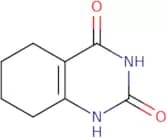
CAS:<p>Versatile small molecule scaffold</p>Formula:C6H12O2SPurity:Min. 95%Molecular weight:148.23 g/mol1,2,3,4,5,6,7,8-Octahydroquinazoline-2,4-dione
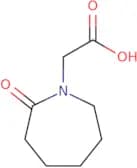
CAS:<p>1,2,3,4,5,6,7,8-Octahydroquinazoline-2,4-dione is a bicyclic compound that has high potency as an antagonist at the 5HT2A receptor. This compound is orally active and has been shown to be effective against ketanserin in vitro. The bicyclic ring system of 1,2,3,4,5,6,7,8-octahydroquinazoline-2,4-dione provides the molecule with a high degree of lipophilicity and this may account for its potent activity.</p>Formula:C8H10N2O2Purity:Min. 95%Molecular weight:166.18 g/mol(2-Oxo-azepan-1-yl)-acetic acid
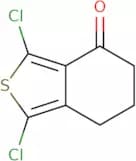
CAS:<p>Versatile small molecule scaffold</p>Formula:C8H13NO3Purity:Min. 95%Molecular weight:171.2 g/mol1,3-Dichloro-4,5,6,7-tetrahydro-2-benzothiophen-4-one
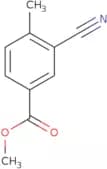
CAS:<p>Versatile small molecule scaffold</p>Formula:C8H6Cl2OSPurity:Min. 95%Molecular weight:221.1 g/molMethyl 3-cyano-4-methylbenzoate
CAS:<p>Versatile small molecule scaffold</p>Formula:C10H9NO2Purity:Min. 95%Molecular weight:175.18 g/mol

![1-[(3-Fluorophenyl)methyl]-1H-1,2,3-triazole-4-carboxylic acid](/_next/image/?url=https%3A%2Fstatic.cymitquimica.com%2Fproducts%2F3D%2Fthumb-webp%2FKAC91227.webp&w=3840&q=75)

![o-[(Pyridin-2-yl)methyl]hydroxylamine dihydrochloride](/_next/image/?url=https%3A%2Fstatic.cymitquimica.com%2Fproducts%2F3D%2Fthumb-webp%2FKBA01254.webp&w=3840&q=75)