Building Blocks
This section contains fundamental products for the synthesis of organic and biological compounds. Building blocks are the essential starting materials used to construct complex molecules through various chemical reactions. They play a critical role in drug discovery, material science, and chemical research. At CymitQuimica, we offer a diverse range of high-quality building blocks to support your innovative research and industrial projects, ensuring you have the essential components for successful synthesis.
Subcategories of "Building Blocks"
- Boronic Acids & Boronic Acid Derivatives(5,756 products)
- Chiral Building Blocks(1,242 products)
- Hydrocarbon Building Blocks(6,095 products)
- Organic Building Blocks(61,037 products)
Found 196139 products of "Building Blocks"
Sort by
Purity (%)
0
100
|
0
|
50
|
90
|
95
|
100
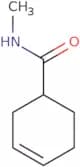
N-Methylcyclohex-3-ene-1-carboxamide
CAS:<p>Versatile small molecule scaffold</p>Formula:C8H13NOPurity:Min. 95%Molecular weight:139.19 g/mol2-(2-{[2-(2-Hydroxyethoxy)ethyl]amino}ethoxy)ethan-1-ol
CAS:<p>Versatile small molecule scaffold</p>Formula:C8H19NO4Purity:Min. 95%Molecular weight:193.24 g/mol2-Oxa-6-azaspiro[3.3]heptane-6-ethanamine
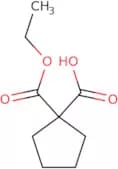
CAS:<p>Versatile small molecule scaffold</p>Formula:C7H14N2OPurity:Min. 95%Molecular weight:142.2 g/mol1-(Ethoxycarbonyl)cyclopentane-1-carboxylic acid
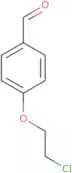
CAS:<p>Versatile small molecule scaffold</p>Formula:C9H14O4Purity:Min. 95%Molecular weight:186.2 g/mol4-(2-Chloroethoxy)benzaldehyde
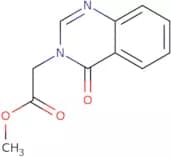
CAS:<p>4-(2-Chloroethoxy)benzaldehyde is a phenolic compound that has been shown to have antioxidant properties. It can scavenge free radicals and inhibit lipid peroxidation through its electron donating activity. 4-(2-Chloroethoxy)benzaldehyde has also been shown to have anti-inflammatory, anticancer, antifungal, and antimicrobial properties in vitro. The biological activities of this compound are most likely due to its synthesis of heterocycles and functionalities. 4-(2-Chloroethoxy)benzaldehyde has been found in the etoac extract of Moringa oleifera leaves as well as other solvents.</p>Formula:C9H9ClO2Purity:Min. 95%Molecular weight:184.62 g/molMethyl 2-(4-oxo-3,4-dihydroquinazolin-3-yl)acetate
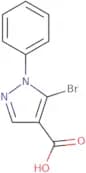
CAS:<p>Versatile small molecule scaffold</p>Formula:C11H10N2O3Purity:Min. 95%Molecular weight:218.21 g/mol5-Bromo-1-phenyl-1H-pyrazole-4-carboxylic acid
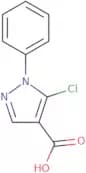
CAS:<p>Versatile small molecule scaffold</p>Formula:C10H7BrN2O2Purity:Min. 95%Molecular weight:267.08 g/mol5-Chloro-1-phenyl-1H-pyrazole-4-carboxylic acid
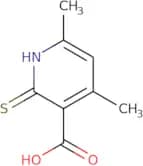
CAS:<p>Versatile small molecule scaffold</p>Formula:C10H7ClN2O2Purity:Min. 95%Molecular weight:222.63 g/mol4,6-Dimethyl-2-sulfanylpyridine-3-carboxylic acid
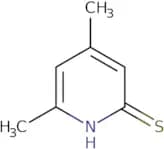
CAS:<p>Versatile small molecule scaffold</p>Formula:C8H9NO2SPurity:Min. 95%Molecular weight:183.23 g/mol4,6-Dimethylpyridine-2-thiol
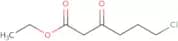
CAS:<p>Versatile small molecule scaffold</p>Formula:C7H9NSPurity:Min. 95%Molecular weight:139.22 g/molEthyl 6-chloro-3-oxohexanoate
CAS:<p>Ethyl 6-chloro-3-oxohexanoate is an antibacterial agent that belongs to the quinolone class of antibiotics. It is a derivative of aniline, which is oxidized by polyphosphoric acid to form the corresponding carboxylic acid. This product has been shown to have high biological activity against bacteria, including Staphylococcus aureus and Enterococcus faecalis. Ethyl 6-chloro-3-oxohexanoate can be used in combination with piperidine or amines to form esters and salts, respectively. The product can also react with chlorinating agents such as thionyl chloride or phosphorus pentachloride to produce chlorinated derivatives.</p>Formula:C8H13ClO3Purity:Min. 95%Molecular weight:192.64 g/mol3-(Pyridin-3-yl)prop-2-enenitrile
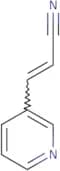
CAS:<p>Versatile small molecule scaffold</p>Formula:C8H6N2Purity:Min. 95%Molecular weight:130.15 g/mol5-Methoxy-1,3-benzothiazol-2-amine
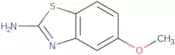
CAS:<p>5-Methoxy-1,3-benzothiazol-2-amine (5MBZ) is a benzothiazepine with inhibitory activity. It has been shown to bind to the mitochondrial membrane potential in cells and reduce the amount of ATP produced by the mitochondria. 5MBZ also has in vitro cytotoxic activity against cancer cells and has been shown to be effective in reducing β-amyloid production. This compound was synthesized through an imine reaction with 2,4,6-trinitrobenzenesulfonic acid and methylamine. 5MBZ was found to be soluble in water and organic solvents.</p>Formula:C8H8N2OSPurity:Min. 95%Molecular weight:180.23 g/mol8-Bromo-2-(methylthio)pyrazolo[1,5-a][1,3,5]triazin-4-ol
CAS:<p>Versatile small molecule scaffold</p>Formula:C6H5BrN4OSPurity:Min. 95%Molecular weight:261.1 g/mol8-bromo-4-chloro-2-(methylthio)pyrazolo[1,5-a][1,3,5]triazine
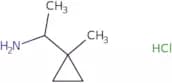
CAS:<p>Versatile small molecule scaffold</p>Formula:C6H4BrClN4SPurity:Min. 95%Molecular weight:279.5 g/mol1-(1-Methylcyclopropyl)ethan-1-amine hydrochloride
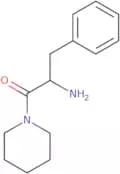
CAS:<p>Versatile small molecule scaffold</p>Formula:C6H14ClNPurity:Min. 95%Molecular weight:135.63 g/mol2-Amino-3-phenyl-1-(piperidin-1-yl)propan-1-one
CAS:<p>Versatile small molecule scaffold</p>Formula:C14H20N2OPurity:Min. 95%Molecular weight:232.32 g/mol(1-Bromo-2-methoxyethyl)benzene
CAS:<p>Versatile small molecule scaffold</p>Formula:C9H11BrOPurity:Min. 95%Molecular weight:215.09 g/molAzocane-1-sulfonamide
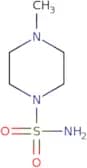
CAS:<p>Versatile small molecule scaffold</p>Formula:C7H16N2O2SPurity:Min. 95%Molecular weight:192.28 g/mol4-Methylpiperazine-1-sulfonamide
CAS:<p>Versatile small molecule scaffold</p>Formula:C5H13N3O2SPurity:Min. 95%Molecular weight:179.24 g/mol

![2-(2-{[2-(2-Hydroxyethoxy)ethyl]amino}ethoxy)ethan-1-ol](/_next/image/?url=https%3A%2Fstatic.cymitquimica.com%2Fproducts%2F3D%2Fthumb-webp%2FECA38447.webp&w=3840&q=75)
![2-Oxa-6-azaspiro[3.3]heptane-6-ethanamine](/_next/image/?url=https%3A%2Fstatic.cymitquimica.com%2Fproducts%2F3D%2Fthumb-webp%2FECA38440.webp&w=3840&q=75)
![8-Bromo-2-(methylthio)pyrazolo[1,5-a][1,3,5]triazin-4-ol](/_next/image/?url=https%3A%2Fstatic.cymitquimica.com%2Fproducts%2F3D%2Fthumb-webp%2FECA34635.webp&w=3840&q=75)
![8-bromo-4-chloro-2-(methylthio)pyrazolo[1,5-a][1,3,5]triazine](/_next/image/?url=https%3A%2Fstatic.cymitquimica.com%2Fproducts%2F3D%2Fthumb-webp%2FECA34633.webp&w=3840&q=75)