Building Blocks
This section contains fundamental products for the synthesis of organic and biological compounds. Building blocks are the essential starting materials used to construct complex molecules through various chemical reactions. They play a critical role in drug discovery, material science, and chemical research. At CymitQuimica, we offer a diverse range of high-quality building blocks to support your innovative research and industrial projects, ensuring you have the essential components for successful synthesis.
Subcategories of "Building Blocks"
- Boronic Acids & Boronic Acid Derivatives(5,756 products)
- Chiral Building Blocks(1,242 products)
- Hydrocarbon Building Blocks(6,095 products)
- Organic Building Blocks(61,055 products)
Found 199650 products of "Building Blocks"
Sort by
Purity (%)
0
100
|
0
|
50
|
90
|
95
|
100
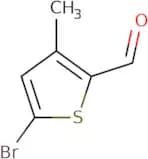
5-Bromo-3-methylthiophene-2-carbaldehyde
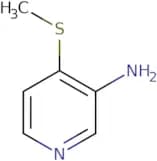
CAS:Versatile small molecule scaffoldFormula:C6H5BrOSPurity:Min. 95%Molecular weight:205.07 g/mol4-(Methylsulfanyl)pyridin-3-amine
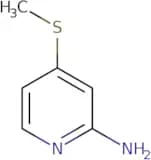
CAS:<p>Versatile small molecule scaffold</p>Formula:C6H8N2SPurity:Min. 95%Molecular weight:140.21 g/mol4-(Methylsulfanyl)pyridin-2-amine
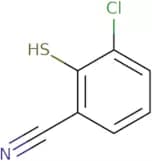
CAS:<p>Versatile small molecule scaffold</p>Formula:C6H8N2SPurity:Min. 95%Molecular weight:140.21 g/mol3-Chloro-2-mercaptobenzonitrile
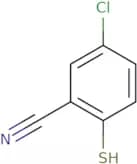
CAS:<p>Versatile small molecule scaffold</p>Formula:C7H4ClNSPurity:Min. 95%Molecular weight:169.63 g/mol5-Chloro-2-sulfanylbenzonitrile
CAS:<p>Versatile small molecule scaffold</p>Formula:C7H4ClNSPurity:Min. 95%Molecular weight:169.63 g/mol(2R)-2-Amino-3-[(2-hydroxyethyl)disulfanyl]propanoic acid
CAS:<p>Acetaminophen is a drug that has been used as an analgesic, antipyretic, and anti-inflammatory agent. It is most commonly used in the United States for pain relief from headaches, muscle aches, arthritis, colds and other minor ailments. Acetaminophen can cause liver injury when taken in large doses or on an empty stomach. This drug's toxicity may be due to its ability to inhibit the synthesis of glutathione ethyl ester (GTE) by cytochrome P450 isozymes. The GTE is a major antioxidant that protects cells against oxidative stress and it has been shown to be hepatoprotective in animals. The acetaminophen-induced hepatotoxicity may also be due to the inhibition of protein synthesis by acetaminophen at physiological levels.</p>Formula:C5H11NO3S2Purity:Min. 95%Molecular weight:197.3 g/mol(1R,2S,4S)-rel-7-Oxabicyclo[2.2.1]heptane-2-carboxylic acid
CAS:(1R,2S,4S)-rel-7-Oxabicyclo[2.2.1]heptane-2-carboxylic acid is a carbamate that is a selective antagonist of the a2a receptor. It can be used for the treatment of glaucoma and other diseases involving the a2a receptor. The lipase enzyme catalyzes the hydrolysis of (1R,2S,4S)-rel-7-Oxabicyclo[2.2.1]heptane-2-carboxylic acid to yield an enantiomerically pure butyl ester that is then converted by hydrazine into an enantiomerically pure heptane-2-carboxylic acid product. This process occurs in microreactors at high yields and with minimal use of organic solvents, making it scalable and economically viable for industrial production.Formula:C7H10O3Purity:Min. 95%Molecular weight:142.15 g/molPK11007
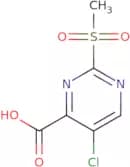
CAS:<p>PK11007 is a novel anticancer drug that has been shown to have an anti-cancer effect on breast cancer cell lines. PK11007 binds to DNA and inhibits the transcriptional regulation of genes. It also has been shown to be a predictive biomarker for prognosis, as well as being sensitive to changes in cellular environment. This drug is synthesized from the secondary metabolite dibenzo[a,j]pyrene-7,8-diol, which is found in Astragalus membranaceus. The synthesis method involves the use of palladium catalyzed reductive amination and oxidation of dibenzo[a,j]pyrene-7,8-diol with sodium sulfide.</p>Formula:C6H5ClN2O4SPurity:Min. 95%Molecular weight:236.63 g/mol5-Chloro-2-(methylsulfonyl)pyrimidine
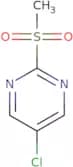
CAS:<p>5-Chloro-2-(methylsulfonyl)pyrimidine (CMP) is a herbicide that inhibits the growth of plants by blocking photosynthesis. It prevents the production of chlorophyll, which is necessary for photosynthesis to occur. CMP has been shown to be effective against weeds in Australia, where it is used as a preemergence herbicide on rice fields. This compound also has a tendency to decarboxylate and form methyl sulfates when heated or when exposed to ultraviolet light. CMP is an electrophile and reacts with nucleophiles such as sulfates, hydroxyl groups, and aromatic rings.</p>Formula:C5H5ClN2O2SPurity:Min. 95%Molecular weight:192.63 g/molDodecanedial
CAS:<p>Dodecanedial is a biological compound that is activated by radiation and has been shown to have cancer-fighting properties. Dodecanedial can be used in the synthesis of polyvinyl alcohol, which is used in the production of vinyl alcohol, a precursor for many organic compounds. Dodecanedial binds to insulin receptors and has been shown to prevent the development of insulin resistance. It also inhibits pancreatitis by suppressing lipase activity. Dodecanedial has been shown to react with potassium phosphate, forming dodecane-1,2-diolate potassium phosphate. This reaction vessel is an important step in the synthesis of various biologically active compounds such as insulin and thyroxine.</p>Formula:C12H22O2Purity:Min. 95%Molecular weight:198.3 g/mol3-(Bromomethyl)-1-benzofuran
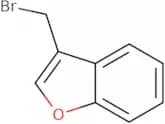
CAS:<p>3-Bromomethyl-1-benzofuran (3BMBF) is a dopamine D2 receptor antagonist. It is structurally related to the antipsychotic drug benperidol, but has a higher affinity for the dopamine D2 receptor. 3BMBF has shown selectivity for the dopamine D2 receptor, with little effect on other receptors such as the serotonin 5HT1A and 5HT2A receptors. 3BMBF is an aromatic compound with a heteroaromatic ring system that has been shown to have high affinity for the dopamine D2 receptor.</p>Formula:C9H7BrOPurity:Min. 95%Molecular weight:211.05 g/mol3-Bromo-1-benzofuran-2-carbaldehyde
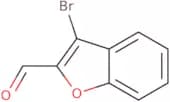
CAS:<p>Versatile small molecule scaffold</p>Formula:C9H5BrO2Purity:Min. 95%Molecular weight:225.04 g/mol3-bromo-1-benzofuran-2-carboxylic acid
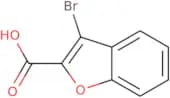
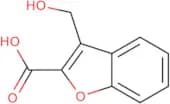
CAS:<p>Versatile small molecule scaffold</p>Formula:C9H5BrO3Purity:Min. 95%Molecular weight:241 g/mol3-(Hydroxymethyl)-1-benzofuran-2-carboxylic acid
CAS:<p>Versatile small molecule scaffold</p>Formula:C10H8O4Purity:Min. 95%Molecular weight:192.17 g/mol2-{[(tert-butoxy)carbonyl]amino}-4-hydroxybutanoic acid
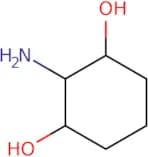
CAS:<p>Versatile small molecule scaffold</p>Formula:C9H17NO5Purity:Min. 95%Molecular weight:219.2 g/molrac-(1R,2R,3S)-2-Aminocyclohexane-1,3-diol
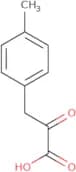
CAS:<p>Versatile small molecule scaffold</p>Formula:C6H13NO2Purity:Min. 95%Molecular weight:131.17 g/mol3-(4-Methylphenyl)-2-oxopropanoic acid
CAS:<p>3- (4-Methylphenyl)-2-oxopropanoic acid is an aromatic amino acid that is formed by the biotransformations of phenylpyruvic acid. The compound has been found to be a substrate for transaminases and can be converted to semicarbazone, an intermediate in the synthesis of many drugs. 3-(4-methylphenyl)-2-oxopropanoic acid has also been used as a catalyst for escherichia coli recombinant cells and e. coli recombinant cells.</p>Formula:C10H10O3Purity:Min. 95%Molecular weight:178.18 g/mol[(Oxolan-2-yl)methyl]urea
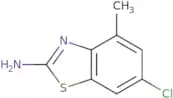
CAS:<p>Versatile small molecule scaffold</p>Formula:C6H12N2O2Purity:Min. 95%Molecular weight:144.17 g/mol6-Chloro-4-methyl-benzothiazol-2-ylamine
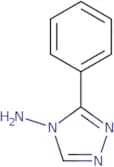
CAS:<p>Versatile small molecule scaffold</p>Formula:C8H7ClN2SPurity:Min. 95%Molecular weight:198.68 g/mol3-Phenyl-4H-1,2,4-triazol-4-amine
CAS:<p>Versatile small molecule scaffold</p>Formula:C8H8N4Purity:Min. 95%Molecular weight:160.18 g/mol

![(2R)-2-Amino-3-[(2-hydroxyethyl)disulfanyl]propanoic acid](/_next/image/?url=https%3A%2Fstatic.cymitquimica.com%2Fproducts%2F3D%2Fthumb-webp%2FNBA25463.webp&w=3840&q=75)
![(1R,2S,4S)-rel-7-Oxabicyclo[2.2.1]heptane-2-carboxylic acid](/_next/image/?url=https%3A%2Fstatic.cymitquimica.com%2Fproducts%2F3D%2Fthumb-webp%2FNBA26356.webp&w=3840&q=75)

![2-{[(tert-butoxy)carbonyl]amino}-4-hydroxybutanoic acid](/_next/image/?url=https%3A%2Fstatic.cymitquimica.com%2Fproducts%2F3D%2Fthumb-webp%2FNBA30892.webp&w=3840&q=75)
![[(Oxolan-2-yl)methyl]urea](/_next/image/?url=https%3A%2Fstatic.cymitquimica.com%2Fproducts%2F3D%2Fthumb-webp%2FNBA33610.webp&w=3840&q=75)