Building Blocks
This section contains fundamental products for the synthesis of organic and biological compounds. Building blocks are the essential starting materials used to construct complex molecules through various chemical reactions. They play a critical role in drug discovery, material science, and chemical research. At CymitQuimica, we offer a diverse range of high-quality building blocks to support your innovative research and industrial projects, ensuring you have the essential components for successful synthesis.
Subcategories of "Building Blocks"
- Boronic Acids & Boronic Acid Derivatives(5,756 products)
- Chiral Building Blocks(1,242 products)
- Hydrocarbon Building Blocks(6,095 products)
- Organic Building Blocks(61,037 products)
Found 196200 products of "Building Blocks"
Sort by
Purity (%)
0
100
|
0
|
50
|
90
|
95
|
100
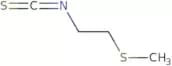
1-Isothiocyanato-2-(methylsulfanyl)ethane
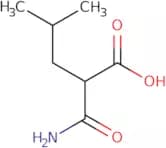
CAS:<p>Versatile small molecule scaffold</p>Formula:C4H7NS2Purity:Min. 95%Molecular weight:133.2 g/mol2-Carbamoyl-4-methylpentanoic acid
CAS:<p>Versatile small molecule scaffold</p>Formula:C7H13NO3Purity:Min. 95%Molecular weight:159.18 g/mol2-[1-(Carboxymethyl)cycloheptyl]acetic acid
CAS:<p>Versatile small molecule scaffold</p>Formula:C11H18O4Purity:Min. 95%Molecular weight:214.26 g/mol3-Oxaspiro[5.6]dodecane-2,4-dione
CAS:<p>Versatile small molecule scaffold</p>Formula:C11H16O3Purity:Min. 95%Molecular weight:196.24 g/molDecahydrocyclohepta[C]pyrrole-1,3-dione
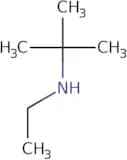
CAS:<p>Versatile small molecule scaffold</p>Formula:C9H13NO2Purity:Min. 95%Molecular weight:167.2 g/molN-tert-Butylethylamine
CAS:<p>N-tert-Butylethylamine is an organic compound that is the amide of tert-butanol and ethylamine. It can be used as a hydrogen peroxide source in organic synthesis. N-tert-Butylethylamine has been shown to have antioxidant properties, which may be due to its ability to scavenge free radicals. N-tert-Butylethylamine has also been shown to crosslink polymers, such as polyethylene and polypropylene, with high efficiency. The resulting materials are reusable and can be regenerated with acid catalyst. This reusability makes N-tert-Butylethylamine an attractive alternative to conventional crosslinkers that are not easily recycled or reused.</p>Formula:C6H15NPurity:Min. 95%Molecular weight:101.19 g/mol4,5,6,7-Tetrahydro-1,3-benzothiazole
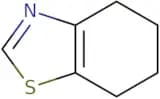
CAS:<p>4,5,6,7-Tetrahydro-1,3-benzothiazole is a synthetic substance that has neuroprotective effects and may be used for the treatment of nervous system diseases. It is synthesized from l-tartaric acid and potassium dichromate with hydrochloric acid as a catalyst. The product is often found in an isomeric mixture or as individual isomers. This chemical study can be used to prepare pharmaceutical preparations or other chemical products.</p>Formula:C7H9NSPurity:Min. 95%Molecular weight:139.22 g/mol2-Ethyl-2-propen-1-ol
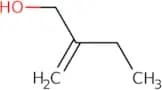
CAS:<p>Versatile small molecule scaffold</p>Formula:C5H10OPurity:Min. 95%Molecular weight:86.13 g/mol2-Benzyloxirane
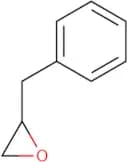
CAS:<p>2-Benzyloxirane is a reactive compound that contains a hydroxyl group and can form covalent adducts with metal hydroxides. It also forms enantiomeric pairs and can react with epoxides to form oxiranes. 2-Benzyloxirane has been shown to have effects on the liver, including symptoms of nausea, vomiting, and jaundice. Chronic oral exposure to 2-benzyloxirane causes an overload of calcium ions in the body. This may lead to symptoms such as muscle spasms, convulsions, and paralysis.</p>Formula:C9H10OPurity:Min. 95%Molecular weight:134.18 g/mol3-[(Furan-2-ylmethyl)-amino]-propan-1-ol
CAS:<p>Versatile small molecule scaffold</p>Formula:C8H13NO2Purity:Min. 95%Molecular weight:155.2 g/mol2-[(2-Hydroxyethyl)(pyridin-2-yl)amino]ethan-1-ol
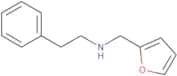
CAS:<p>Versatile small molecule scaffold</p>Formula:C9H14N2O2Purity:Min. 95%Molecular weight:182.22 g/molFuran-2-ylmethyl-phenethyl-amine
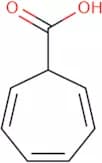
CAS:Controlled Product<p>Versatile small molecule scaffold</p>Formula:C13H15NOPurity:Min. 95%Molecular weight:201.27 g/molCyclohepta-2,4,6-triene-1-carboxylic acid
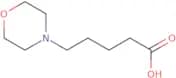
CAS:<p>Versatile small molecule scaffold</p>Formula:C8H8O2Purity:Min. 95%Molecular weight:136.15 g/mol5-(Morpholin-4-yl)pentanoic acid
CAS:<p>Versatile small molecule scaffold</p>Formula:C9H17NO3Purity:Min. 95%Molecular weight:187.24 g/molButyl[(2,3-dihydro-1,4-benzodioxin-2-yl)methyl]amine
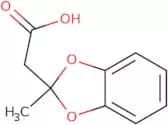
CAS:<p>Butyl[(2,3-dihydro-1,4-benzodioxin-2-yl)methyl]amine is a hydrophobic diluent that is used as a solvent or as a vehicle for drugs. It has been shown to interact with the immune system and is immunogenic. Butyl[(2,3-dihydro-1,4-benzodioxin-2-yl)methyl]amine can be used to reconstitute antigen and targetable molecules in order to increase their concentration and make them more detectable. Butyl[(2,3-dihydro-1,4-benzodioxin-2-yl)methyl]amine has been shown to have effects on blood pressure and can be used as a diagnostic agent for this disease.</p>Formula:C13H19NO2Purity:Min. 95%Molecular weight:221.29 g/mol2-(2-Methyl-1,3-dioxaindan-2-yl)acetic acid
CAS:<p>Versatile small molecule scaffold</p>Formula:C10H10O4Purity:Min. 95%Molecular weight:194.18 g/mol2-Cyclohexylethanol
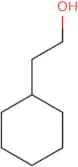
CAS:<p>2-Cyclohexylethanol is a molecule that is used in wastewater treatment. It is a solid phase microextraction (SPME) extraction technique that utilizes cyclohexane rings to adsorb hydrophobic compounds, such as fatty acids and alkoxy radicals, from water samples. 2-Cyclohexylethanol has been shown to be an effective agent for the cleavage of fatty acid molecules and for the synthesis of fatty acid esters. The biodiesel production process uses 2-cyclohexylethanol as a catalyst to remove water from the reaction mixture. This product also has photochemical properties that have been used to synthesize ketones and other organic molecules.</p>Formula:C8H16OPurity:Min. 95%Molecular weight:128.22 g/mol2-Cyclohexyl-1-phenylethanol
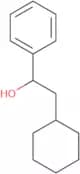
CAS:<p>Versatile small molecule scaffold</p>Formula:C14H20OPurity:Min. 95%Molecular weight:204.31 g/mol1-Cyclohexyl-3-phenylpropan-2-amine
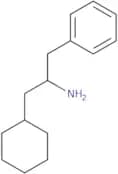
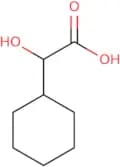
CAS:Controlled Product<p>Versatile small molecule scaffold</p>Formula:C15H23NPurity:Min. 95%Molecular weight:217.35 g/mol2-Cyclohexyl-2-hydroxyacetic acid
CAS:<p>2-Cyclohexyl-2-hydroxyacetic acid is a linker that is used in the synthesis of pharmaceuticals and agrochemicals. It acts as a polymerization catalyst, which means it can increase the rate at which two molecules join together to form a larger molecule. The active substances in this compound are sodium carbonate and piperidine, which are both found in other compounds. 2-Cyclohexyl-2-hydroxyacetic acid has been shown to be effective in treating bladder conditions such as urinary tract infections and benign prostatic hyperplasia (BPH). This drug also has anti-inflammatory properties.</p>Formula:C8H14O3Purity:Min. 95%Molecular weight:158.19 g/mol

![2-[1-(Carboxymethyl)cycloheptyl]acetic acid](/_next/image/?url=https%3A%2Fstatic.cymitquimica.com%2Fproducts%2F3D%2Fthumb-webp%2FEAA43218.webp&w=3840&q=75)
![3-Oxaspiro[5.6]dodecane-2,4-dione](/_next/image/?url=https%3A%2Fstatic.cymitquimica.com%2Fproducts%2F3D%2Fthumb-webp%2FEAA43219.webp&w=3840&q=75)
![Decahydrocyclohepta[C]pyrrole-1,3-dione](/_next/image/?url=https%3A%2Fstatic.cymitquimica.com%2Fproducts%2F3D%2Fthumb-webp%2FEAA43221.webp&w=3840&q=75)
![3-[(Furan-2-ylmethyl)-amino]-propan-1-ol](/_next/image/?url=https%3A%2Fstatic.cymitquimica.com%2Fproducts%2F3D%2Fthumb-webp%2FEAA43922.webp&w=3840&q=75)
![2-[(2-Hydroxyethyl)(pyridin-2-yl)amino]ethan-1-ol](/_next/image/?url=https%3A%2Fstatic.cymitquimica.com%2Fproducts%2F3D%2Fthumb-webp%2FEAA43934.webp&w=3840&q=75)
![Butyl[(2,3-dihydro-1,4-benzodioxin-2-yl)methyl]amine](/_next/image/?url=https%3A%2Fstatic.cymitquimica.com%2Fproducts%2F3D%2Fthumb-webp%2FEAA44260.webp&w=3840&q=75)