


Building Blocks
This section contains fundamental products for the synthesis of organic and biological compounds. Building blocks are the essential starting materials used to construct complex molecules through various chemical reactions. They play a critical role in drug discovery, material science, and chemical research. At CymitQuimica, we offer a diverse range of high-quality building blocks to support your innovative research and industrial projects, ensuring you have the essential components for successful synthesis.
Subcategories of "Building Blocks"
- Boronic Acids & Boronic Acid Derivatives(5,756 products)
- Chiral Building Blocks(1,242 products)
- Hydrocarbon Building Blocks(6,095 products)
- Organic Building Blocks(61,038 products)
Found 196817 products of "Building Blocks"
Sort by
Purity (%)
0
100
|
0
|
50
|
90
|
95
|
100
2-bromo-1-(oxan-4-yl)ethan-1-one
CAS:<p>Versatile small molecule scaffold</p>Formula:C7H11BrO2Purity:Min. 95%Molecular weight:207.1 g/mol1-Propyl-1H-indole-3-carboxylic acid
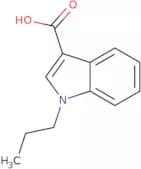
CAS:Controlled Product<p>Versatile small molecule scaffold</p>Formula:C12H13NO2Purity:Min. 95%Molecular weight:203.24 g/molN-[1-(Adamantan-1-yl)ethyl]-2-chloroacetamide
CAS:<p>Versatile small molecule scaffold</p>Formula:C14H22ClNOPurity:Min. 95%Molecular weight:255.78 g/mol9-Chloro-2,3,4,5-tetrahydro-1-benzoxepin-5-one
CAS:<p>Versatile small molecule scaffold</p>Formula:C10H9ClO2Purity:Min. 95%Molecular weight:196.63 g/mol8,9-Dimethyl-2,3,4,5-tetrahydro-1-benzoxepin-5-one
CAS:<p>Versatile small molecule scaffold</p>Formula:C12H14O2Purity:Min. 95%Molecular weight:190.24 g/mol4-(4-Aminophenyl)-2,3-dihydro-1H-imidazol-2-one
CAS:<p>Versatile small molecule scaffold</p>Formula:C9H9N3OPurity:Min. 95%Molecular weight:175.19 g/mol2-(Fluoromethyl)-1-methylpiperazine dihydrochloride
CAS:<p>Versatile small molecule scaffold</p>Formula:C6H15Cl2FN2Purity:Min. 95%Molecular weight:205.1 g/molOctahydropyrazino[2,1-c][1,4]oxazine dihydrochloride
CAS:<p>Octahydropyrazino[2,1-c][1,4]oxazine dihydrochloride is a piperazine derivative that has been shown to have pharmacokinetic properties such as selectivity. It is a molecule with profiles of potency. Octahydropyrazino[2,1-c][1,4]oxazine dihydrochloride has been shown to inhibit the activity of the enzyme phosphodiesterase type 3 (PDE3). The inhibition of PDE3 leads to an increase in intracellular cAMP levels and the activation of protein kinase A (PKA), which are important for smooth muscle relaxation and vasodilation. Octahydropyrazino[2,1-c][1,4]oxazine dihydrochloride also has affinity for other enzymes such as cyclooxygenase-2 (COX-2) and nitric oxide synthase (NOS).</p>Formula:C7H16Cl2N2OPurity:Min. 95%Molecular weight:215.12 g/molEthyl 2-(2,6-dimethylpiperidin-1-yl)-2-oxoacetate
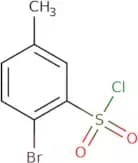
CAS:<p>Versatile small molecule scaffold</p>Formula:C11H19NO3Purity:Min. 95%Molecular weight:213.27 g/mol2-Bromo-5-methylbenzenesulfonyl chloride
CAS:<p>Versatile small molecule scaffold</p>Formula:C7H6BrClO2SPurity:Min. 95%Molecular weight:269.54 g/molPhosphonic acid, (2-amino-2,3-dihydro-1H-inden-2-yl)-
CAS:<p>Phosphonic acid, (2-amino-2,3-dihydro-1H-inden-2-yl)- is a type of organic compound that has been shown to have an inhibitory effect on the growth of bacteria. The linear regression analysis showed that phosphonic acid had a greater inhibitory effect on the growth rate of chlorogenic acids than cinnamic acid derivatives. Phosphonic acid also inhibits the growth of bacteria by binding to endogenous enzymes and inactivating them. It binds to methyl transferase and prevents it from transferring a methyl group onto 5′ carbon atoms in methionine, which is an essential step for protein synthesis.</p>Formula:C9H12NO3PPurity:Min. 95%Color and Shape:PowderMolecular weight:213.17 g/mol1,4-Dioxa-spiro[4.5]dec-8-yl methanesulfonate
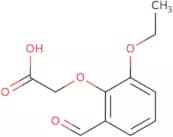
CAS:<p>Versatile small molecule scaffold</p>Formula:C9H16O5SPurity:Min. 95%Molecular weight:236.28 g/mol(2-Ethoxy-6-formylphenoxy)acetic acid
CAS:<p>Versatile small molecule scaffold</p>Formula:C11H12O5Purity:Min. 95%Molecular weight:224.21 g/mol1H-Pyrazole-3,5-diamine dihydrochloride
CAS:<p>Versatile small molecule scaffold</p>Formula:C3H8Cl2N4Purity:Min. 95%Molecular weight:171.03 g/mol6,6-Diethoxyhex-4-yn-2-ol
CAS:<p>Versatile small molecule scaffold</p>Formula:C10H18O3Purity:Min. 95%Molecular weight:186.25 g/mol1-(1,2-Oxazol-5-yl)propan-2-ol
CAS:<p>Versatile small molecule scaffold</p>Formula:C6H9NO2Purity:Min. 95%Molecular weight:127.14 g/mol3-[(Dimethylamino)methylidene]-2,3-dihydro-1H-indol-2-one
CAS:<p>Versatile small molecule scaffold</p>Formula:C11H12N2OPurity:Min. 95%Molecular weight:188.23 g/mol1-Methyl-1,4,7-triazonane
CAS:<p>Versatile small molecule scaffold</p>Formula:C7H17N3Purity:Min. 95%Molecular weight:143.23 g/molN-[4-(2-Chloroacetyl)-3-fluorophenyl]acetamide
CAS:<p>Versatile small molecule scaffold</p>Formula:C10H9ClFNO2Purity:Min. 95%Molecular weight:229.63 g/mol3-(3,4-Dimethoxyphenyl)prop-2-enoyl chloride
CAS:<p>3-(3,4-Dimethoxyphenyl)prop-2-enoyl chloride is a lactone that can be used for coupling reactions. It is a triester of quinic acid and 3,4-dimethoxybenzene propionic acid. 3-(3,4-Dimethoxyphenyl)prop-2-enoyl chloride is prepared by the reaction of 3,4-dimethoxyphenol with chloroacetic acid and sodium ethoxide in ethanol. This product has been shown to inhibit the growth of bacteria by inhibiting protein synthesis and cell division.</p>Formula:C11H11ClO3Purity:Min. 95%Molecular weight:226.65 g/mol


![N-[1-(Adamantan-1-yl)ethyl]-2-chloroacetamide](/_next/image/?url=https%3A%2Fstatic.cymitquimica.com%2Fproducts%2F3D%2Fthumb-webp%2FRFA10405.webp&w=3840&q=75)


![Octahydropyrazino[2,1-c][1,4]oxazine dihydrochloride](/_next/image/?url=https%3A%2Fstatic.cymitquimica.com%2Fproducts%2F3D%2Fthumb-webp%2FRFA10865.webp&w=3840&q=75)


![1,4-Dioxa-spiro[4.5]dec-8-yl methanesulfonate](/_next/image/?url=https%3A%2Fstatic.cymitquimica.com%2Fproducts%2F3D%2Fthumb-webp%2FRFA12033.webp&w=3840&q=75)


![3-[(Dimethylamino)methylidene]-2,3-dihydro-1H-indol-2-one](/_next/image/?url=https%3A%2Fstatic.cymitquimica.com%2Fproducts%2F3D%2Fthumb-webp%2FRFA21064.webp&w=3840&q=75)

![N-[4-(2-Chloroacetyl)-3-fluorophenyl]acetamide](/_next/image/?url=https%3A%2Fstatic.cymitquimica.com%2Fproducts%2F3D%2Fthumb-webp%2FRFA23446.webp&w=3840&q=75)
