Building Blocks
This section contains fundamental products for the synthesis of organic and biological compounds. Building blocks are the essential starting materials used to construct complex molecules through various chemical reactions. They play a critical role in drug discovery, material science, and chemical research. At CymitQuimica, we offer a diverse range of high-quality building blocks to support your innovative research and industrial projects, ensuring you have the essential components for successful synthesis.
Subcategories of "Building Blocks"
- Boronic Acids & Boronic Acid Derivatives(5,756 products)
- Chiral Building Blocks(1,242 products)
- Hydrocarbon Building Blocks(6,095 products)
- Organic Building Blocks(61,038 products)
Found 196817 products of "Building Blocks"
Sort by
Purity (%)
0
100
|
0
|
50
|
90
|
95
|
100
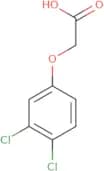
2-(3,4-Dichlorophenoxy)acetic acid
CAS:<p>2-(3,4-Dichlorophenoxy)acetic acid is a herbicide that has a phenoxyacetic structure. It inhibits photosynthesis in plants by blocking the action of the enzyme ribulose-1,5-bisphosphate carboxylase. This causes chlorophyll synthesis to be disrupted and the plant to die. 2-(3,4-Dichlorophenoxy)acetic acid also inhibits acetolactate synthase and other enzymes in plants that are necessary for amino acid synthesis.</p>Formula:C8H6Cl2O3Purity:Min. 95%Molecular weight:221.04 g/mol4-Bromophenetole
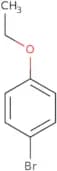
CAS:<p>4-Bromophenetole is a hydrogen bond acceptor, an amine, and a palladium complex. It is considered a drug target for the treatment of amines and fatty acids. 4-Bromophenetole has been shown to have antibacterial properties against fatty acid-producing bacteria such as Escherichia coli and Pseudomonas aeruginosa. This compound can be synthesized from phenol, acetone, and bromine in high yields. 4-Bromophenetole also has synergistic effects with other drugs that bind to fatty acid synthase (FAS), including insulin, which may help to treat type 2 diabetes.</p>Formula:C8H9BrOPurity:Min. 95%Molecular weight:201.06 g/molN-Allylaniline
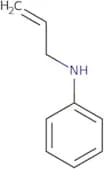
CAS:<p>N-Allylaniline is a hydrogen bond donor. It is an organic compound that belongs to the group of allylamines, which are heterocyclic amines having one nitrogen atom in the ring. N-Allylaniline has been shown to be biologically relevant for alkene metabolism and as a precursor for 3,4-dimethoxyphenylacetic acid, which is used as a starting material for the synthesis of pharmaceuticals. The molecule has four methoxy groups and two nitrogen atoms with one lone pair of electrons on each atom. N-Allylaniline also has intermolecular hydrogen bonding capabilities between the methoxy groups and the nitrogen atoms.</p>Formula:C9H11NPurity:Min. 95%Molecular weight:133.19 g/mol1,2-Diiodoethene
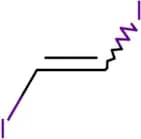
CAS:<p>1,2-Diiodoethene is a molecule with two functional groups that can be used for catalysis. The reaction scheme shows that the stereocontrol of this molecule is controlled by the type of substituents on the carbon atoms. This molecule has been shown to be synthesized in cross-coupling reactions and as an intermediate in the synthesis of pharmaceutical drugs. It also has been used as a precursor for other molecules with different functional groups. 1,2-Diiodoethene can react with fatty acids to form esters or with fatty acid anhydrides to form amides. This molecule also has been shown to have frequencies that are similar to those of fatty acids, which may account for its ability to form esters and amides.</p>Formula:C2H2I2Purity:Min. 95%Molecular weight:279.85 g/mol3-Methylcyclohexanol
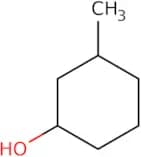
CAS:<p>3-Methylcyclohexanol is a reactive chemical substance with the chemical formula CH3CH2OH. It is used in the synthesis of covid-19, a pandemic antiviral drug that can be used to treat influenza A virus. 3-Methylcyclohexanol is a sodium salt that is stable in water and has an acylation reaction with an acid chloride. This reaction produces an ester and carboxylic acid as byproducts. 3-Methylcyclohexanol can be hydrogenated using metal catalysts, such as palladium, platinum or nickel, to produce fatty acids. The efficient method for this process involves dehydration of the alcohol to form the corresponding hydroxy compound.</p>Formula:C7H14OPurity:Min. 95%Molecular weight:114.19 g/mol3'-Ethoxyacetanilide
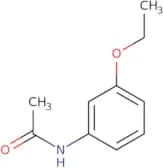
CAS:<p>3'-Ethoxyacetanilide is a chemical compound that inhibits the growth of certain bacteria, including Mycobacterium tuberculosis. It is used as an antibiotic to treat bacterial infections, such as tuberculosis and leprosy. 3'-Ethoxyacetanilide inhibits the synthesis of mycolic acids, which are essential for the growth of Mycobacterium tuberculosis.</p>Formula:C10H13NO2Purity:Min. 95%Molecular weight:179.22 g/mol1,1-Diiodoethane
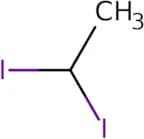
CAS:<p>1,1-Diiodoethane is a chemical compound with the molecular formula C2H4I2. It is a colorless liquid that reacts with chloride to form ethylene. The desorption of 1,1-diiodoethane from an aluminum surface was studied using a cavity ringdown spectrometer. The frequency range for this process is in the infrared region. The shift and profiles for 1,1-diiodoethane are also available.</p>Formula:C2H4I2Purity:Min. 95%Molecular weight:281.86 g/mol2,2-Dibromopropane
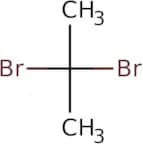
CAS:<p>2,2-Dibromopropane is a synthetic chemical that has been used as a precursor in the production of nylon. It is an activator that can be used to form covalent bonds with reactive groups on other molecules. The activation energy for the reaction with piperazine is between 104 and 106 kJ/mol. 2,2-Dibromopropane undergoes acylation reactions under certain conditions, forming reaction products such as 2,2-dibromoethyl acetate and 2,2-dibromoethanol. The molecular weight of 2,2-dibromopropane is 192.19 g/mol and its structural formula is CHBrCHBrCHBrCHBrC≡C≡C≡C≡C≡C≡CC(O)OH.</p>Formula:C3H6Br2Purity:Min. 95%Molecular weight:201.89 g/mol2-Iodo-2-methylbutane
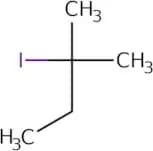
CAS:<p>2-Iodo-2-methylbutane (2IMB) is an organic compound that is used as a reagent in organic chemistry. It is an alkyne that has been shown to react with tellurium, forming a tetraalkyltetrahalide. This reaction can be observed by the addition of 2IMB to a solution containing tellurium and anions in a chromatographic method. The frequency range for this reaction is between 10 and 300 MHz. 2IMB has been shown to have two chiral centers, which means it can exist as four different stereoisomers. These four stereoisomers are:</p>Formula:C5H11IPurity:Min. 95%Molecular weight:198.05 g/mol2-Amino-2-methylbutyric acid
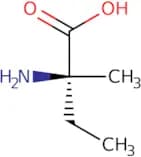
CAS:<p>2-Amino-2-methylbutyric acid is a nonsteroidal anti-inflammatory drug that belongs to the group of p2 sodium salts. It is used for the treatment of bowel disease, as well as in the prevention and treatment of skin cancer. 2-Amino-2-methylbutyric acid has been shown to inhibit glutamate release from nerve endings and prevent the development of skin cancer. It also has been shown to have a protective effect against cyclic peptide alamethicin f50, which causes colon spasms. The conformational properties of 2-amino-2-methylbutyric acid have been studied using rotarod tests and laser ablation techniques.</p>Formula:C5H11NO2Purity:Min. 95%Molecular weight:117.15 g/mol2-Ethyl-2-methylpropanedioic acid
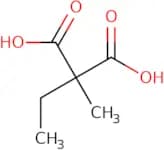
CAS:<p>2-Ethyl-2-methylpropanedioic acid is a molecule with the chemical formula CH3CO(CH2)4COOH. It is used in the production of calcium carbonate, which is used as a filler in paints, plastics and paper. 2-Ethyl-2-methylpropanedioic acid has a carboxyl group and hydroxyl group that are reactive with silicon. It also contains a fatty acid group and nitrogen atoms. The most common functional groups present in this molecule are the carbonyl group and the hydrocarbon group. It can be found on polyvinylpyrrolidone or as an additive in paint to increase its hardness and flexibility.</p>Formula:C6H10O4Purity:Min. 95%Molecular weight:146.14 g/mol2-Isothiocyanato-2-methylbutane
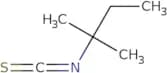
CAS:<p>2-Isothiocyanato-2-methylbutane is a compound that has been shown to have estrogenic activity. It has been shown to induce mammary cancer in female rats and promote proliferation of breast cancer cells. This chemical has been detected in the environment, where it is an outlier among other environmental estrogens. 2-Isothiocyanato-2-methylbutane has been found to bind to estrogen receptors and trigger receptor-mediated effects. The mechanism of action of 2-isothiocyanato-2-methylbutane is not fully understood but appears to be mediated through estrogen receptors, as seen with other estrogens.</p>Formula:C6H11NSPurity:Min. 95%Molecular weight:129.23 g/molTribromoethylene
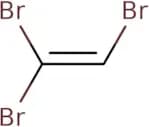
CAS:<p>Tribromoethylene is a reactive, hydroxyl-containing compound that has been used as a cross-linking agent in the production of polymers. It is a colorless liquid with an unpleasant odor. Tribromoethylene has many uses including as an antioxidant and a stabilizer for rubber, plastics, and paints. In addition to its use as a reactive functional group, tribromoethylene also has long-term toxicity in CD-1 mice. This toxicity may be due to the ability of tribromoethylene to produce epoxides through oxidation by hydrogen fluoride or other peroxides. Epoxides are known to disrupt cellular energy metabolism and cause cell death by reacting with lysine residues on proteins. The mechanism for this toxicity is not well understood but may involve cross-linking of proteins and DNA.</p>Formula:C2HBr3Purity:Min. 95%Molecular weight:264.74 g/mol4,N-Dimethyl-N-phenyl-benzenesulfonamide
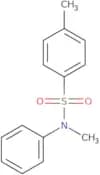
CAS:<p>4,N-Dimethyl-N-phenyl-benzenesulfonamide is an acceptor that coordinates with a metal ion to form a complex. It has been shown to form complexes with aluminum, lithium aluminum hydride (LAH), and hydrogen. 4,N-Dimethyl-N-phenyl-benzenesulfonamide binds to the nitrogen atoms of diamines and chlorides to form complexes. The crystal structure of this complex has been determined using X-ray diffraction. 4,N-Dimethyl-N-phenyl-benzenesulfonamide is chiral at the carbon atom of the diethyl group on the nitrogen atom.</p>Formula:C14H15NO2SPurity:Min. 95%Molecular weight:261.34 g/mol4-Cumylphenol
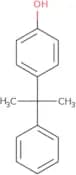
CAS:<p>4-Cumylphenol is a cumylphenol that inhibits the aromatase enzyme, which converts androgens to estrogens. 4-Cumylphenol is used in wastewater treatment as an inhibitor of hydrogen sulfide production. It has also been shown to have anti-inflammatory properties due to its inhibition of prostaglandin synthesis. The detection time for 4-cumylphenol is approximately 1 hour.</p>Formula:C15H16OPurity:Min. 95%Molecular weight:212.29 g/mol4-Amino-N-pyridin-3-ylbenzenesulfonamide
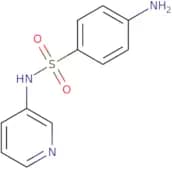
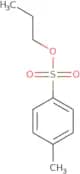
CAS:<p>Versatile small molecule scaffold</p>Formula:C11H11N3O2SPurity:Min. 95%Molecular weight:249.29 g/molPropyl toluene-4-sulphonate
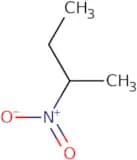
CAS:<p>Propyl toluene-4-sulphonate is a chemical compound that is used in the synthesis of pharmaceuticals. It has been shown to have neuroprotective effects. In addition, it has been found to be genotoxic and genotoxic potential has been demonstrated in assays involving mammalian cells and the formation of micronuclei. This chemical also exhibits carcinogenic properties, which may be due to its ability to form DNA adducts with p-chlorobenzenesulfonic acid.</p>Formula:C10H14O3SPurity:Min. 95%Molecular weight:214.28 g/mol2-Nitrobutane
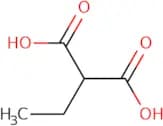
CAS:<p>Versatile small molecule scaffold</p>Formula:C4H9NO2Purity:Min. 95%Molecular weight:103.12 g/molEthylmalonic Acid
CAS:<p>Ethylmalonic acid (EA) is a metabolic intermediate that is synthesized in the mitochondria. It is a product of the oxidation of malonyl-CoA and succinyl-CoA by the enzyme dehydrogenase. EA has been shown to be produced in vivo, and can be used as a marker for mitochondrial dysfunction. EA levels are increased in patients with metabolic disorders such as diabetes mellitus and obesity, as well as other diseases such as cancer, Alzheimer’s disease, Parkinson’s disease, Huntington’s disease, multiple sclerosis, amyotrophic lateral sclerosis (ALS), heart failure, chronic obstructive pulmonary disorder (COPD), kidney diseases, liver diseases and anemia. EA levels can also be used to diagnose mitochondrial disorders such as mitochondrial DNA depletion syndrome and Kearns-Sayre syndrome.</p>Formula:C5H8O4Purity:Min. 95%Molecular weight:132.11 g/mol1,8-Naphthosultam
CAS:<p>1,8-Naphthosultam is a naphthenic molecule that has been shown to have redox potentials and functional groups. It is an inhibitor of the catalytic mechanism of the proton pump in the membrane of the gastric parietal cell. The inhibition of this enzyme leads to a decrease in gastric acid secretion and it can be used for the treatment of dyspepsia. 1,8-Naphthosultam binds to a pharmacophore on the proton pump (H+/K+ ATPase) that is composed of two amino acid residues, Asp-85 and His-57. This binding prevents substrate from entering the catalytic site, which eventually leads to inhibition of acid secretion.</p>Formula:C10H7NO2SPurity:Min. 95%Molecular weight:205.23 g/mol