Building Blocks
This section contains fundamental products for the synthesis of organic and biological compounds. Building blocks are the essential starting materials used to construct complex molecules through various chemical reactions. They play a critical role in drug discovery, material science, and chemical research. At CymitQuimica, we offer a diverse range of high-quality building blocks to support your innovative research and industrial projects, ensuring you have the essential components for successful synthesis.
Subcategories of "Building Blocks"
- Boronic Acids & Boronic Acid Derivatives(5,756 products)
- Chiral Building Blocks(1,242 products)
- Hydrocarbon Building Blocks(6,095 products)
- Organic Building Blocks(61,055 products)
Found 199650 products of "Building Blocks"
Sort by
Purity (%)
0
100
|
0
|
50
|
90
|
95
|
100
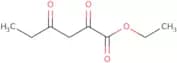
Ethyl 2,4-dioxohexanoate
CAS:<p>Ethyl 2,4-dioxohexanoate (EDOH) is a bioactive molecule that can be used as a disinfectant. It reacts with propionyl to form an acid carboxylate, which has been shown to have antimicrobial activity against bacteria and fungi. EDOH is also used in the synthesis of heterocyclic compounds such as tebufenpyrad. The reaction yield and time depend on the solvent used. For instance, EDOH reacts better in dimethylformamide than in water or methanol. Reaction of EDOH with phenoxy leads to amide formation and subsequent cyclization to form a new ring system.</p>Formula:C8H12O4Purity:Min. 95%Molecular weight:172.18 g/mol1-(2-Bromoethoxy)naphthalene
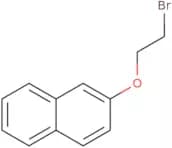
CAS:<p>Versatile small molecule scaffold</p>Formula:C12H11BrOPurity:Min. 95%Molecular weight:251.12 g/mol2-(2-bromoethoxy)naphthalene
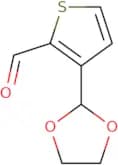
CAS:2-(2-bromoethoxy)naphthalene (2BEEN) is a white or light yellow crystalline solid. It has a molecular weight of 198.8 and an empirical formula of C14H16BrO. 2BEEN is structurally related to piperazine, but the bromine atom at the 2 position in 2BEEN provides a linkage with the ethoxy group at the 4 position, which can orient in two possible orientations. The compound exhibits cis-trans conformational torsion and dihedral angles that are similar to those found in piperazine.Formula:C12H11OBrPurity:Min. 95%Molecular weight:251.11 g/mol3-(1,3-Dioxolan-2-yl)thiophene-2-carbaldehyde
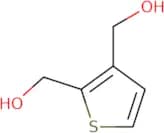
CAS:<p>Versatile small molecule scaffold</p>Formula:C8H8O3SPurity:Min. 95%Molecular weight:184.21 g/mol2,3-Thiophenedimethanol
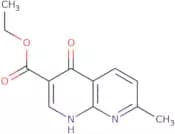
CAS:<p>Versatile small molecule scaffold</p>Formula:C6H8O2SPurity:Min. 95%Molecular weight:144.19 g/molEthyl 4-hydroxy-7-methyl-1,8-naphthyridine-3-carboxylate
CAS:<p>Versatile small molecule scaffold</p>Formula:C12H12N2O3Purity:Min. 95%Molecular weight:232.23 g/mol4-Hydroxy-7-methyl-[1,8]naphthyridine-3-carboxylic acid
CAS:4-Hydroxy-7-methyl-[1,8]naphthyridine-3-carboxylic acid is a compound that has been shown to be an antibacterial agent. It has been shown to selectively inhibit the growth of Gram-positive bacteria by binding to the bacterial cell wall. 4-Hydroxy-7-methyl-[1,8]naphthyridine-3-carboxylic acid binds to amino acids in the peptidoglycan layer of the bacterial cell wall and inhibits the crosslinking of these amino acids with divalent ions such as calcium and magnesium. This leads to changes in solvation structures and decreases in hydrogen bonding interactions, which reduces the stability of the peptidoglycan layer. The spectrum for this molecule is anharmonic, which means that it does not have a harmonic frequency but instead has many frequencies that are related by integer numbers. The molecule can exist in three different forms: two tautomers (keto formFormula:C10H8N2O3Purity:Min. 95%Molecular weight:204.18 g/mol[1,2,4]Triazolo[4,3-a]pyrazin-3-amine
CAS:<p>Versatile small molecule scaffold</p>Formula:C5H5N5Purity:Min. 95%Molecular weight:135.13 g/mol8-Aminonaphthalene-2-sulfonamide
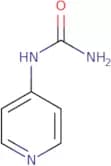
CAS:<p>Versatile small molecule scaffold</p>Formula:C10H10N2O2SPurity:Min. 95%Molecular weight:222.3 g/mol(Pyridin-4-yl)urea
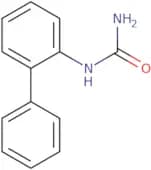
CAS:<p>(Pyridin-4-yl)urea is a ligand with affinity for the neurohormonal receptor urotensin. The binding affinity of this ligand to the urotensin receptor is in the low nanomolar range. (Pyridin-4-yl)urea binds to the urotensin receptor with a higher affinity than its natural ligands, which are small peptides. This compound has been shown to act as a potent antagonist of urotensin, inhibiting its function and blocking the release of its natural agonists, vasopressin and oxytocin. (Pyridin-4-yl)urea has also been shown to inhibit the binding of vasopressin or oxytocin to their specific receptors on cells, which may lead to an increased production of these hormones in vitro.</p>Formula:C6H7N3OPurity:Min. 95%Molecular weight:137.14 g/mol(2-Phenylphenyl)urea
CAS:<p>Versatile small molecule scaffold</p>Formula:C13H12N2OPurity:Min. 95%Molecular weight:212.25 g/mol(4-Phenylphenyl)urea
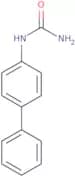
CAS:The molecular formula of 4-Phenylphenyl)urea is C8H7N3O2 and its molecular weight is 186.19 g/mol. The chemical name for 4-Phenylphenyl)urea is (4-phenylphenyl) urea. It has a melting point of 192°C, a boiling point of 334°C, and a density of 1.12 g/cm3. 4-Phenylphenyl)urea crystallizes in the orthorhombic system with space group Pbca and lattice constants a = 8.068 Å, b = 7.957 Å, c = 12.096 Å and β = 116°. It has hydrogen bonds to water molecules as well as to itself through hydrogen bonds with the amide NH groups on the urea moiety and the phenyl ring on one molecule forming hydrogen bonds with other phenyl rings on adjacent molecules.Formula:C13H12N2OPurity:Min. 95%Molecular weight:212.25 g/molN-(Chloroacetyl)allylamine
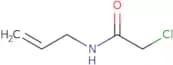
CAS:<p>Versatile small molecule scaffold</p>Formula:C5H8ClNOPurity:Min. 95%Molecular weight:133.58 g/mol2-(2-Bromophenyl)-1H-benzimidazole
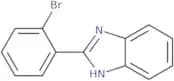
CAS:<p>2-(2-Bromophenyl)-1H-benzimidazole is a halogenated aromatic compound that has been used in electrochemical studies. It can be synthesized by the reaction of bromine with 2,4-dinitrobenzene. The compound exhibits a number of functional groups including nitro and bromo groups. One of the most notable properties of this compound is its ability to act as an efficient electrocatalyst for the reduction of chloride ions to hydrogen gas. 2-(2-Bromophenyl)-1H-benzimidazole also has potentiodynamic polarization properties and has been shown to catalyze the reduction of a number of organic compounds including propane, butane, pentane, hexane and heptane. This compound is also used in microscopy simulations to study unsymmetrical molecules.</p>Formula:C13H9BrN2Purity:Min. 95%Molecular weight:273.13 g/mol3-Hydroxy-3-phenylpentanoic acid
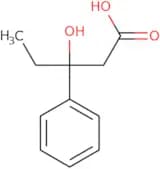
CAS:<p>3-Hydroxy-3-phenylpentanoic acid is a chiral compound with two stereoisomers, the L and D configurations. The L form has been shown to be an enantiomer of propiophenone, which is an ester that reacts in the presence of acetate and hydrogen chloride to form 3-hydroxy-3-phenylpentanoic acid acetate. This reaction is a condensation reaction. The D form has been shown to be an enantiomer of propiophenone, which is an ester that reacts in the presence of acetate and hydrogen chloride to form 3-hydroxy-3-phenylpentanoic acid acetate. This reaction is a condensation reaction. 3HPP can also be synthesized by asymmetric synthesis or hydrolysis.</p>Formula:C11H14O3Purity:Min. 95%Molecular weight:194.23 g/mol2-[(2-Methoxyphenyl)amino]benzoic acid
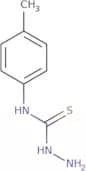
CAS:<p>Versatile small molecule scaffold</p>Formula:C14H13NO3Purity:Min. 95%Molecular weight:243.26 g/mol4-(4-Methylphenyl)-3-thiosemicarbazide
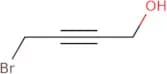
CAS:<p>4-(4-Methylphenyl)-3-thiosemicarbazide is a carbonyl compound. It has been shown to be an inhibitor of acetylcholinesterase, an enzyme that breaks down the neurotransmitter acetylcholine, which is involved in muscle contraction. This inhibition causes paralysis and death in insects. 4-(4-Methylphenyl)-3-thiosemicarbazide has also been shown to be active against gram-negative bacteria. The structure of this molecule was determined by its vibrational spectra and multinuclear NMR data. 4-(4-Methylphenyl)-3-thiosemicarbazide stabilizes the dihedral angle between two nitrogen atoms, which are necessary for formation rate.</p>Formula:C8H11N3SPurity:Min. 95%Molecular weight:181.26 g/mol4-Bromobut-2-yn-1-ol
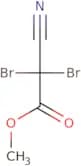
CAS:<p>4-Bromobut-2-yn-1-ol is a chemical compound belonging to the group of thyroid hormones. It is a potent thyromimetic that has been used in cancer research and genetic disease studies. 4-Bromobut-2-yn-1-ol binds to hormone receptors, thereby initiating a response in cells. This compound has been shown to induce mutations in colorectal adenocarcinoma cells, as well as gene expression changes in mutant cells. 4-Bromobut-2-yn-1-ol is also cardiotoxic, with an ID50 value of 0.06 mg/kg body weight.</p>Formula:C4H5BrOPurity:Min. 95%Molecular weight:148.99 g/molMethyl 2,2-dibromo-2-cyanoacetate
CAS:<p>Versatile small molecule scaffold</p>Formula:C4H3Br2NO2Purity:Min. 95%Molecular weight:256.88 g/mol2-(2-Oxooxolan-3-yl)acetic acid
CAS:<p>Versatile small molecule scaffold</p>Formula:C6H8O4Purity:Min. 95%Molecular weight:144.1 g/mol


![4-Hydroxy-7-methyl-[1,8]naphthyridine-3-carboxylic acid](/_next/image/?url=https%3A%2Fstatic.cymitquimica.com%2Fproducts%2F3D%2Fthumb-webp%2FNAA25097.webp&w=3840&q=75)
![[1,2,4]Triazolo[4,3-a]pyrazin-3-amine](/_next/image/?url=https%3A%2Fstatic.cymitquimica.com%2Fproducts%2F3D%2Fthumb-webp%2FNAA25812.webp&w=3840&q=75)
![2-[(2-Methoxyphenyl)amino]benzoic acid](/_next/image/?url=https%3A%2Fstatic.cymitquimica.com%2Fproducts%2F3D%2Fthumb-webp%2FNAA27832.webp&w=3840&q=75)