Building Blocks
This section contains fundamental products for the synthesis of organic and biological compounds. Building blocks are the essential starting materials used to construct complex molecules through various chemical reactions. They play a critical role in drug discovery, material science, and chemical research. At CymitQuimica, we offer a diverse range of high-quality building blocks to support your innovative research and industrial projects, ensuring you have the essential components for successful synthesis.
Subcategories of "Building Blocks"
- Boronic Acids & Boronic Acid Derivatives(5,780 products)
- Chiral Building Blocks(1,240 products)
- Hydrocarbon Building Blocks(6,100 products)
- Organic Building Blocks(61,009 products)
Found 205248 products of "Building Blocks"
Sort by
Purity (%)
0
100
|
0
|
50
|
90
|
95
|
100
2-Methanesulfonylethane-1-thiol
CAS:Versatile small molecule scaffoldFormula:C3H8O2S2Purity:Min. 95%Molecular weight:140.23 g/mol1-Bicyclo[2.2.1]hept-2-yl-ethylaminehydrochloride
CAS:Versatile small molecule scaffoldFormula:C9H18ClNPurity:Min. 95%Molecular weight:175.7 g/mol1-Propanol, 3-(phenylthio)-
CAS:1-Propanol, 3-(phenylthio)- is an intraocular compound that is used in various research applications. It has hydroxypropyl properties and can be used as a lithium hydroxide electrode in cellulose-based systems. Additionally, this compound has been studied for its potential antiviral activity and its effects on protein kinase and the 5-HT3 receptor. 1-Propanol, 3-(phenylthio)- exhibits a moderate viscosity and has been shown to inhibit hydrogen evolution and superoxide production. Furthermore, it displays inhibitory effects on serine protease enzymes. This versatile compound is commonly used in scientific research as a solute or reagent in various experimental protocols.Formula:C9H12OSPurity:Min. 95%Molecular weight:168.26 g/mol2-Oxopiperidine-4-carboxylic acid
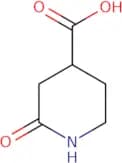
CAS:Versatile small molecule scaffoldFormula:C6H9NO3Purity:Min. 95%Molecular weight:143.14 g/mol2-((2-Methoxy-5-methylphenyl)amino)benzoic acid
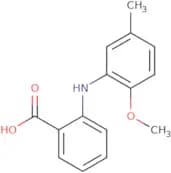
CAS:Versatile small molecule scaffoldFormula:C15H15NO3Purity:Min. 95%Molecular weight:257.28 g/molEthyl 1,2,3,4-tetrahydroquinoline-4-carboxylate
CAS:Versatile small molecule scaffold
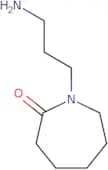
Formula:C12H15NO2Purity:Min. 95%Molecular weight:205.25 g/molN-(3-Aminopropyl)caprolactam Oxalic Acid
CAS:Versatile small molecule scaffoldFormula:C9H18N2O·C2H2O4Purity:Min. 95%Molecular weight:170.25 g/mol2-Methyl-3-phenylcyclopropane-1-carboxylic acid
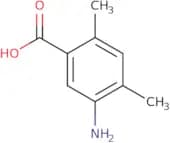
CAS:Versatile small molecule scaffoldFormula:C11H12O2Purity:Min. 95%Molecular weight:176.21 g/mol5-Amino-2,4-dimethylbenzoic acid
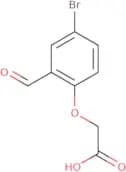
CAS:Versatile small molecule scaffoldFormula:C9H11NO2Purity:Min. 95%Molecular weight:165.19 g/mol2-(4-bromo-2-formylphenoxy)acetic acid
CAS:Versatile small molecule scaffoldFormula:C9H7BrO4Purity:Min. 95%Molecular weight:259.1 g/mol2-(2-formyl-4-methoxyphenoxy)acetic acid
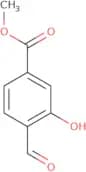
CAS:Versatile small molecule scaffoldFormula:C10H10O5Purity:Min. 95%Molecular weight:210.2 g/molmethyl 4-formyl-3-hydroxybenzoate
CAS:Methyl 4-formyl-3-hydroxybenzoate is a versatile compound used as an intermediate in various industries. It is commonly used in coatings, fatty acid synthesis, and glycoprotein modification. This compound contains methyl and hydrogen groups that can undergo transfer reactions, making it useful in the production of methyl ketones and inhibitors. Methyl 4-formyl-3-hydroxybenzoate is also known for its nucleophilic properties, allowing it to participate in acetylation and other chemical reactions. With its unique structure and diverse applications, this compound plays a crucial role in the synthesis of heteroaromatic compounds and glycan modifications.Formula:C9H8O4Purity:Min. 95%Molecular weight:180.2 g/mol1-Methoxypropan-2-yl methanesulfonate
CAS:Versatile small molecule scaffoldFormula:C5H12O4SPurity:Min. 95%Molecular weight:168.21 g/molOct-4-yne-1,8-diol
CAS:Versatile small molecule scaffoldFormula:C8H14O2Purity:Min. 95%Molecular weight:142.2 g/molAcryloylglycine
CAS:Acryloylglycine is a versatile compound that acts as an inhibitor for various processes. It inhibits the synthesis of fatty acids by blocking the activity of key enzymes involved in their production. Additionally, acryloylglycine has been found to inhibit the binding of antibodies to glycoproteins, thus preventing immune responses mediated by these interactions. Furthermore, it has been shown to inhibit the growth of certain bacteria and has potential as an antibiotic agent. Acryloylglycine also plays a role in research as it can be used as a building block for the synthesis of other compounds, such as acid ethyl ester or oligosaccharides. Lastly, acryloylglycine has been investigated for its effects on dopamine receptors and its potential in modulating neurotransmitter activity.Formula:C5H7NO3Purity:Min. 95%Color and Shape:PowderMolecular weight:129.11 g/mol5-Chloro-1,2-benzoxazol-3-ol
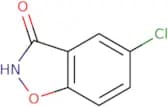
CAS:5-Chloro-1,2-benzoxazol-3-ol is a molecule with analgesic properties. It was shown to inhibit the activity of nociceptive neurons in the rat spinal cord. The mechanism of action is thought to be similar to that of MK-801, which enhances the effects of glutamate on excitatory amino acid receptors and inhibits NMDA receptors. 5-Chloro-1,2-benzoxazol-3-ol may act as an antagonist at GABAergic synapses. 5-Chloro-1,2-benzoxazol-3-ol binds to the benzoate site on GABA A receptors and reduces the duration of chloride ion channel opening. This prevents chloride ions from entering nerve cells and hyperpolarizes them. This results in less action potentials being generated and therefore reduced pain sensation. 5-(chloro)-1,2 benzoxazole 3(4H)-one canFormula:C7H4ClNO2Purity:Min. 95%Molecular weight:169.56 g/mol7-Methoxy-1H-indole-2-carboxylic acid
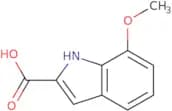
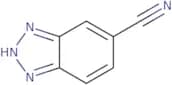
CAS:7-Methoxy-1H-indole-2-carboxylic acid is a compound with diverse applications. It acts as a pyrazole and dihydroorotate dehydrogenase inhibitor, making it useful in the field of medicinal chemistry and drug discovery. Additionally, it has been studied for its potential retinoid activity, which could have implications in skincare and dermatology.Formula:C10H9NO3Purity:Min. 95%Molecular weight:191.18 g/mol1H-1,2,3-Benzotriazole-5-carbonitrile
CAS:Versatile small molecule scaffoldFormula:C7H4N4Purity:Min. 95%Molecular weight:144.14 g/mol(Piperidin-1-yl)thiourea
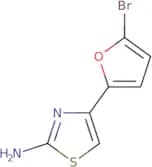
CAS:Versatile small molecule scaffoldFormula:C6H13N3SPurity:Min. 95%Molecular weight:159.26 g/mol4-(5-Bromofuran-2-yl)-1,3-thiazol-2-amine
CAS:Versatile small molecule scaffoldFormula:C7H5BrN2OSPurity:Min. 95%Molecular weight:245.1 g/mol


![1-Bicyclo[2.2.1]hept-2-yl-ethylaminehydrochloride](/_next/image/?url=https%3A%2Fstatic.cymitquimica.com%2Fproducts%2F3D%2Fthumb-webp%2FZAA52059.webp&w=3840&q=75)