


Building Blocks
This section contains fundamental products for the synthesis of organic and biological compounds. Building blocks are the essential starting materials used to construct complex molecules through various chemical reactions. They play a critical role in drug discovery, material science, and chemical research. At CymitQuimica, we offer a diverse range of high-quality building blocks to support your innovative research and industrial projects, ensuring you have the essential components for successful synthesis.
Subcategories of "Building Blocks"
- Boronic Acids & Boronic Acid Derivatives(5,756 products)
- Chiral Building Blocks(1,242 products)
- Hydrocarbon Building Blocks(6,093 products)
- Organic Building Blocks(60,519 products)
Found 195533 products of "Building Blocks"
Sort by
Purity (%)
0
100
|
0
|
50
|
90
|
95
|
100
2,3-Dimethyl-1H-indole-5-carboxamide
CAS:<p>Versatile small molecule scaffold</p>Formula:C11H12N2OPurity:Min. 95%Molecular weight:188.23 g/molMethyl 2-nitropropanoate
CAS:<p>Methyl 2-nitropropanoate is a reactive compound that is used as an epigenetic marker. It reacts with lysine residues in proteins and histones, resulting in the methylation of these proteins. Methyl 2-nitropropanoate has been shown to inhibit the replication of DNA and induce cellular apoptosis in mammalian cells. The effector proteins H3K9me2 and H4K5me1 are involved in epigenetic changes that include gene silencing and histone demethylation. Methyl 2-nitropropanoate can also cause clastogenic effects by forming adducts on dna replication enzymes, such as amide and demethylation. Histone lysines are methylated by methyl 2-nitropropanoate, which causes histones to condense into tight bundles of DNA that contribute to the formation of actin filaments.</p>Formula:C4H7NO4Purity:Min. 95%Molecular weight:133.1 g/mol5,6-Dichlorobenzo(1,3)dioxole
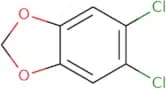
CAS:<p>5,6-Dichlorobenzo(1,3)dioxole (DDD) is an inhibitor of both the cytochrome P450 and the dioxolane monooxygenase. It is stable in vivo and has been shown to have a high selectivity for these enzymes. DDD has been shown to inhibit monoxide production by phenobarbital in rat liver microsomes. This drug also inhibits hepatic microsomes of animals treated with β-naphthoflavone, but not those of animals treated with dioxolane. The inhibition may be due to the inhibition of cytochromes P450 and/or dioxolane monooxygenase by DDD.</p>Formula:C7H4Cl2O2Purity:Min. 95%Molecular weight:191.01 g/molMethyl 1-phenylcyclopropane-1-carboxylate
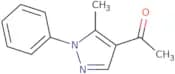
CAS:<p>Versatile small molecule scaffold</p>Formula:C11H12O2Purity:Min. 95%Molecular weight:176.21 g/mol1-(5-Methyl-1-phenyl-1H-pyrazol-4-yl)-1-ethanone
CAS:<p>Phenylhydrazine is a synthetic compound that has been shown to have antioxidant activity. It also has antidiabetic properties and can be used in the development of drugs for diabetes mellitus. Phenylhydrazine is an inhibitor of glycolysis, which results in increased glucose levels in blood. This compound also inhibits the oxidation of glucose by pyruvate kinase and phosphofructokinase, and it has been shown to decrease the level of glycogen in liver cells. Phenylhydrazine was found to have protective effects against alloxan-induced diabetes in mice. The mechanism of action is not fully understood, but it may work by increasing the activity of cellular antioxidant enzymes such as glutathione peroxidase and catalase.</p>Formula:C12H12N2OPurity:Min. 95%Molecular weight:200.24 g/molEthyl 3-methyl-5-oxo-[1,3]thiazolo[3,2-a]pyrimidine-6-carboxylate
CAS:<p>Versatile small molecule scaffold</p>Formula:C10H10N2O3SPurity:Min. 95%Molecular weight:238.27 g/mol2-Chloro-N-[4-(3-nitrophenyl)-1,3-thiazol-2-yl]acetamide
CAS:<p>Versatile small molecule scaffold</p>Formula:C11H8ClN3O3SPurity:Min. 95%Molecular weight:297.72 g/mol6-Bromo-2-methylindole
CAS:<p>Versatile small molecule scaffold</p>Formula:C9H8BrNPurity:Min. 95%Molecular weight:210.07 g/molEthyl 5-methyl-2-oxocyclohexane-1-carboxylate
CAS:<p>Ethyl 5-methyl-2-oxocyclohexane-1-carboxylate is a versatile compound with a wide range of applications. It has been found to exhibit properties similar to coumestrol and zearalenone, which are phytoestrogens commonly found in plants. Additionally, it shares structural similarities with azithromycin, an antibiotic used to treat various bacterial infections.</p>Formula:C10H16O3Purity:Min. 95%Molecular weight:184.23 g/molChloromethyl 2-chloroacetate
CAS:<p>Chloromethyl 2-chloroacetate is a chemical compound that is used in the synthesis of organic compounds. It has been shown to be a reversible, first-order reaction with methanol concentration and hydrogen chloride as reactants. Chloromethyl 2-chloroacetate can be prepared by electrolysis of an acidic solution of chloromethyl acetate in acetonitrile. The mechanism for this reaction is still unclear but it may involve the formation of an acyl chloride intermediate followed by hydrolysis to give the desired product. The rate at which chloromethyl 2-chloroacetate reacts depends on the acidity or basicity of the solution, with acidic solutions giving higher rates than basic ones.</p>Formula:C3H4Cl2O2Purity:Min. 95%Molecular weight:142.97 g/mol5-Ethylnonan-3-one
CAS:<p>Versatile small molecule scaffold</p>Formula:C11H22OPurity:Min. 95%Molecular weight:170.3 g/mol2-[(4-Sulfamoylphenyl)amino]acetic acid
CAS:<p>Versatile small molecule scaffold</p>Formula:C8H10N2O4SPurity:Min. 95%Molecular weight:230.24 g/mol4-(2,2,6-Trimethylcyclohexyl)butan-2-one
CAS:<p>4-(2,2,6-Trimethylcyclohexyl)butan-2-one is a cyclic ketone that is an inhibitor of the nuclear hormone receptors PPARα and PPARγ. This chemical has been shown to promote the synthesis of fatty acids in melanocytes and to have an inhibitory effect on the synthesis of cholesterol. It also inhibits the growth of cancer cells in culture, such as those derived from breast cancer. The secondary metabolite has been found in plants such as Prenanthes lanceolata and cyanobacteria such as Lyngbya sp., which are used for the production of this compound. 4-(2,2,6-Trimethylcyclohexyl)butan-2-one is synthesized by oxidation of 3-(2,2,6-trimethylcyclohexyl)-1,3-dioxane with potassium permanganate or hydrogen peroxide in methanol solvent at low</p>Formula:C13H24OPurity:Min. 95%Molecular weight:196.33 g/molN,N,4-Trimethyl-1,3-thiazol-2-amine
CAS:<p>Versatile small molecule scaffold</p>Formula:C6H10N2SPurity:Min. 95%Molecular weight:142.22 g/mol2-Methylcyclopropane-1-carbonitrile
CAS:<p>Versatile small molecule scaffold</p>Formula:C5H7NPurity:Min. 95%Molecular weight:81.12 g/molN-(Oxan-4-ylmethyl)-4-(1H-1,2,4-triazol-1-yl)aniline
CAS:<p>Versatile small molecule scaffold</p>Formula:C14H18N4OPurity:Min. 95%Molecular weight:258.32 g/mol4-Chloro-6-methoxy-2-(methoxymethyl)pyrimidine
CAS:<p>Versatile small molecule scaffold</p>Formula:C7H9ClN2O2Purity:Min. 95%Molecular weight:188.61 g/mol2,4-Dimethyl-6-oxo-1-{[(propan-2-yl)carbamoyl]methyl}-1,6-dihydropyridine-3-carboxylic acid
CAS:<p>Versatile small molecule scaffold</p>Formula:C13H18N2O4Purity:Min. 95%Molecular weight:266.29 g/mol3,5-Difluoro-4-(morpholin-4-yl)benzoic acid
CAS:<p>Versatile small molecule scaffold</p>Formula:C11H11F2NO3Purity:Min. 95%Molecular weight:243.21 g/mol5-[5-(Propan-2-yl)-1H-1,2,4-triazol-3-yl]quinoline
CAS:<p>Versatile small molecule scaffold</p>Formula:C14H14N4Purity:Min. 95%Molecular weight:238.29 g/mol



![Ethyl 3-methyl-5-oxo-[1,3]thiazolo[3,2-a]pyrimidine-6-carboxylate](/_next/image/?url=https%3A%2Fstatic.cymitquimica.com%2Fproducts%2F3D%2Fthumb-webp%2FGAA12413.webp&w=3840&q=75)
![2-Chloro-N-[4-(3-nitrophenyl)-1,3-thiazol-2-yl]acetamide](/_next/image/?url=https%3A%2Fstatic.cymitquimica.com%2Fproducts%2F3D%2Fthumb-webp%2FGAA12533.webp&w=3840&q=75)


![2-[(4-Sulfamoylphenyl)amino]acetic acid](/_next/image/?url=https%3A%2Fstatic.cymitquimica.com%2Fproducts%2F3D%2Fthumb-webp%2FGAA13811.webp&w=3840&q=75)


![2,4-Dimethyl-6-oxo-1-{[(propan-2-yl)carbamoyl]methyl}-1,6-dihydropyridine-3-carboxylic acid](/_next/image/?url=https%3A%2Fstatic.cymitquimica.com%2Fproducts%2F3D%2Fthumb-webp%2FGBC32868.webp&w=3840&q=75)

![5-[5-(Propan-2-yl)-1H-1,2,4-triazol-3-yl]quinoline](/_next/image/?url=https%3A%2Fstatic.cymitquimica.com%2Fproducts%2F3D%2Fthumb-webp%2FGBC38474.webp&w=3840&q=75)