


Building Blocks
This section contains fundamental products for the synthesis of organic and biological compounds. Building blocks are the essential starting materials used to construct complex molecules through various chemical reactions. They play a critical role in drug discovery, material science, and chemical research. At CymitQuimica, we offer a diverse range of high-quality building blocks to support your innovative research and industrial projects, ensuring you have the essential components for successful synthesis.
Subcategories of "Building Blocks"
- Boronic Acids & Boronic Acid Derivatives(5,778 products)
- Chiral Building Blocks(1,242 products)
- Hydrocarbon Building Blocks(6,098 products)
- Organic Building Blocks(61,098 products)
Found 199594 products of "Building Blocks"
Sort by
Purity (%)
0
100
|
0
|
50
|
90
|
95
|
100
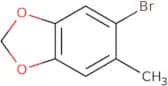
5-Bromo-6-methyl-1,3-dioxaindane
CAS:<p>Versatile small molecule scaffold</p>Formula:C8H7BrO2Purity:Min. 95%Molecular weight:215.04 g/mol4H,7H-[1,3]Thiazolo[5,4-d]pyrimidin-7-one
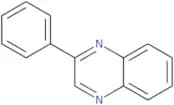
CAS:<p>Versatile small molecule scaffold</p>Formula:C5H3N3OSPurity:Min. 95%Molecular weight:153.16 g/mol2-Phenylquinoxaline
CAS:<p>2-Phenylquinoxaline is a compound that belongs to the aryl halide group. It has been used as a solvent in organic synthesis, and it has also been shown to be able to transport substances. 2-Phenylquinoxaline has been found to induce cancer in laboratory animals and is known for its ability to cause DNA damage. The chemical structure of 2-phenylquinoxaline contains nitrogen atoms, which are important for its reactivity. The <br>chemical reaction mechanism of 2-phenylquinoxaline is nucleophilic addition, with biphenyl acting as the nucleophile. This chemical reaction takes place in the presence of palladium as a catalyst.</p>Formula:C14H10N2Purity:Min. 95%Molecular weight:206.24 g/mol{Bicyclo[2.2.2]octan-2-yl}methanol
CAS:Versatile small molecule scaffoldFormula:C9H16OPurity:Min. 95%Molecular weight:140.22 g/mol{Bicyclo[2.2.2]oct-5-en-2-yl}methanol
CAS:Versatile small molecule scaffoldFormula:C9H14OPurity:Min. 95%Molecular weight:138.21 g/molBicyclo[3.2.1]octan-2-one
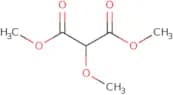
CAS:<p>Bicyclo[3.2.1]octan-2-one is a cyclic ketone that reacts with nucleophiles to form addition products. It can be synthesized by reacting an aldehyde with nitrous acid or hydrocyanic acid, and has been used in the synthesis of various other compounds. Bicyclo[3.2.1]octan-2-one is also used as a solvent for organic reactions, and may be useful in the production of pharmaceuticals and other chemicals.</p>Formula:C8H12OPurity:Min. 95%Molecular weight:124.18 g/molDimethyl Methoxymalonate
CAS:<p>Dimethyl methoxymalonate (DMM) is a synthetic compound that functions as an inhibitor of histone lysine methyltransferases. It may be used to treat cancer and inflammatory bowel disease by inhibiting the growth of cancer cells and reducing inflammation. DMM has been shown to be effective in diabetic patients, as it can improve the optical system in the retina. The drug also has pharmacokinetic properties that are similar to those seen with insulin, making it a potential treatment for insulin resistance and diabetes.</p>Formula:C6H10O5Purity:Min. 95%Molecular weight:162.14 g/mol3-Methyl-octahydro-1H-pyrido[1,2-a]piperazine
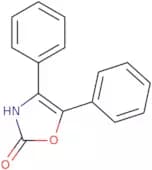
CAS:<p>Versatile small molecule scaffold</p>Formula:C9H18N2Purity:Min. 95%Molecular weight:154.25 g/mol4,5-Diphenyl-2,3-dihydro-1,3-oxazol-2-one
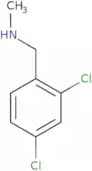
CAS:<p>4,5-Diphenyl-2,3-dihydro-1,3-oxazol-2-one is an antiinflammatory drug that belongs to the group of primary amines. It is a coxib class drug and inhibits COX enzymes by binding to their active site and blocking the formation of prostaglandins. 4,5-Diphenyl-2,3-dihydro-1,3-oxazol-2-one has been found to be selective for COX type 2 inhibition and has been shown to inhibit COX enzyme activity in blood assay experiments. This compound also has a high yield in reaction mixtures and recyclization reactions with benzoin.</p>Formula:C15H11NO2Purity:Min. 95%Molecular weight:237.25 g/mol2,4-Dichloro-N-methylbenzylamine
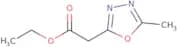
CAS:<p>Versatile small molecule scaffold</p>Formula:C8H9Cl2NPurity:Min. 95%Molecular weight:190.07 g/molEthyl 2-(5-methyl-1,3,4-oxadiazol-2-yl)acetate
CAS:Versatile small molecule scaffoldFormula:C7H10N2O3Purity:Min. 95%Molecular weight:170.17 g/mol2-Bromo-3,3,5-trimethylcyclohexanone
CAS:<p>Versatile small molecule scaffold</p>Formula:C9H15BrOPurity:Min. 95%Molecular weight:219.12 g/mol4-(3,4-Dimethoxyphenyl)-3H,4H,5H,6H,7H-imidazo[4,5-c]pyridine dihydrochloride
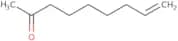
CAS:Versatile small molecule scaffoldFormula:C14H19Cl2N3O2Purity:Min. 95%Molecular weight:332.2 g/molNon-8-en-2-one
CAS:<p>Non-8-en-2-one is a pheromone that is found in the mandibular gland of the hornet. It is an ethyl ester that has been shown to be responsible for attracting males to females during mating. Non-8-en-2-one has been detected with mass spectrometry and fluorescence light, which has been shown to be due to its fatty acid content. The methyl ketones present in this substance have not yet been identified.</p>Formula:C9H16OPurity:Min. 95%Molecular weight:140.22 g/mol7-Methyl-[1,2,4]triazolo[4,3-a]pyridin-3-amine
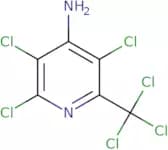
CAS:<p>Versatile small molecule scaffold</p>Formula:C7H8N4Purity:Min. 95%Molecular weight:148.17 g/mol2,3,5-Trichloro-6-(trichloromethyl)pyridin-4-amine
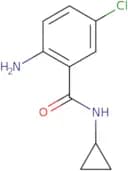
CAS:<p>Versatile small molecule scaffold</p>Formula:C6H2Cl6N2Purity:Min. 95%Molecular weight:314.8 g/mol2-Amino-5-chloro-N-cyclopropylbenzamide
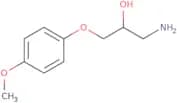
CAS:<p>Versatile small molecule scaffold</p>Formula:C10H11ClN2OPurity:Min. 95%Molecular weight:210.66 g/mol4-(3-Amino-2-hydroxypropoxy)anisole
CAS:<p>Versatile small molecule scaffold</p>Formula:C10H15NO3Purity:Min. 95%Molecular weight:197.23 g/molMethyl 2-{[(propan-2-ylidene)amino]oxy}hexanoate
CAS:<p>Versatile small molecule scaffold</p>Formula:C10H19NO3Purity:Min. 95%Molecular weight:201.26 g/mol2-{[(Propan-2-ylidene)amino]oxy}hexanoic acid
CAS:<p>Versatile small molecule scaffold</p>Formula:C9H17NO3Purity:Min. 95%Molecular weight:187.24 g/mol

![4H,7H-[1,3]Thiazolo[5,4-d]pyrimidin-7-one](/_next/image/?url=https%3A%2Fstatic.cymitquimica.com%2Fproducts%2F3D%2Fthumb-webp%2FFAA02150.webp&w=3840&q=75)
![{Bicyclo[2.2.2]octan-2-yl}methanol](/_next/image/?url=https%3A%2Fstatic.cymitquimica.com%2Fproducts%2F3D%2Fthumb-webp%2FFAA01991.webp&w=3840&q=75)
![{Bicyclo[2.2.2]oct-5-en-2-yl}methanol](/_next/image/?url=https%3A%2Fstatic.cymitquimica.com%2Fproducts%2F3D%2Fthumb-webp%2FFAA01990.webp&w=3840&q=75)
![Bicyclo[3.2.1]octan-2-one](/_next/image/?url=https%3A%2Fstatic.cymitquimica.com%2Fproducts%2F3D%2Fthumb-webp%2FFAA01982.webp&w=3840&q=75)
![3-Methyl-octahydro-1H-pyrido[1,2-a]piperazine](/_next/image/?url=https%3A%2Fstatic.cymitquimica.com%2Fproducts%2F3D%2Fthumb-webp%2FFAA01592.webp&w=3840&q=75)

![4-(3,4-Dimethoxyphenyl)-3H,4H,5H,6H,7H-imidazo[4,5-c]pyridine dihydrochloride](/_next/image/?url=https%3A%2Fstatic.cymitquimica.com%2Fproducts%2F3D%2Fthumb-webp%2FFAA01147.webp&w=3840&q=75)
![7-Methyl-[1,2,4]triazolo[4,3-a]pyridin-3-amine](/_next/image/?url=https%3A%2Fstatic.cymitquimica.com%2Fproducts%2F3D%2Fthumb-webp%2FFAA00656.webp&w=3840&q=75)
![Methyl 2-{[(propan-2-ylidene)amino]oxy}hexanoate](/_next/image/?url=https%3A%2Fstatic.cymitquimica.com%2Fproducts%2F3D%2Fthumb-webp%2FFAA00141.webp&w=3840&q=75)
![2-{[(Propan-2-ylidene)amino]oxy}hexanoic acid](/_next/image/?url=https%3A%2Fstatic.cymitquimica.com%2Fproducts%2F3D%2Fthumb-webp%2FFAA00138.webp&w=3840&q=75)