Building Blocks
This section contains fundamental products for the synthesis of organic and biological compounds. Building blocks are the essential starting materials used to construct complex molecules through various chemical reactions. They play a critical role in drug discovery, material science, and chemical research. At CymitQuimica, we offer a diverse range of high-quality building blocks to support your innovative research and industrial projects, ensuring you have the essential components for successful synthesis.
Subcategories of "Building Blocks"
- Boronic Acids & Boronic Acid Derivatives(5,774 products)
- Chiral Building Blocks(1,237 products)
- Hydrocarbon Building Blocks(6,098 products)
- Organic Building Blocks(60,980 products)
Found 205158 products of "Building Blocks"
Sort by
Purity (%)
0
100
|
0
|
50
|
90
|
95
|
100
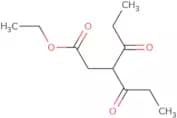
Ethyl 4-oxo-3-propanoylhexanoate
CAS:Versatile small molecule scaffoldFormula:C11H18O4Purity:Min. 95%Molecular weight:214.26 g/mol2-[3-(4-Fluorophenyl)-1-phenyl-1H-pyrazol-4-yl]acetic acid
CAS:Versatile small molecule scaffoldFormula:C17H13FN2O2Purity:Min. 95%Molecular weight:296.29 g/mol2-[3-(4-Bromophenyl)-1-phenyl-1H-pyrazol-4-yl]acetic acid
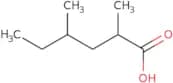
CAS:2-[3-(4-Bromophenyl)-1-phenyl-1H-pyrazol-4-yl]acetic acid is a research tool that can be used to study the interaction of peptides with ion channels, receptors and other proteins. It has been shown to inhibit the activity of various ion channels, including voltage gated sodium channels and calcium channels. 2-[3-(4-Bromophenyl)-1-phenyl-1H-pyrazol-4-yl]acetic acid is also a ligand for various receptors, including opioid receptors and serotonin receptors. This chemical compound has been used in pharmacological studies as a receptor antagonist.Formula:C17H13BrN2O2Purity:Min. 95%Molecular weight:357.2 g/mol2,4-Dimethylhexanoic acid
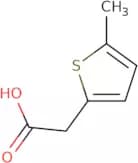
CAS:Versatile small molecule scaffoldFormula:C8H16O2Purity:Min. 95%Molecular weight:144.21 g/mol2-(5-Methylthiophen-2-yl)acetic acid
CAS:2-(5-Methylthiophen-2-yl)acetic acid is an organic compound that is a colorless liquid. It has been reported to be used as a bacteriostatic agent and has been found to inhibit the growth of bacteria in culture. 2-(5-Methylthiophen-2-yl)acetic acid preferentially inhibits aerobic metabolism, which may be due to its ability to inhibit the synthesis of fatty acids. This chemical also undergoes biotransformations in cultures and is readily biodegradable. Analysis of 2-(5-methylthiophen-2-yl)acetic acid can be done by gas chromatography or high performance liquid chromatography.
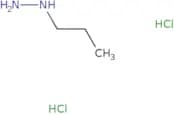
Formula:C7H8O2SPurity:Min. 95%Molecular weight:156.2 g/molPropylhydrazine dihydrochloride
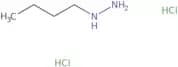
CAS:Propylhydrazine dihydrochloride is a pyrazole derivative that has been shown to have inhibitory effects on the immune system. It has been used as a treatment agent for autoimmune diseases such as rheumatoid arthritis and multiple sclerosis. Propylhydrazine dihydrochloride inhibits inflammatory responses by binding to retinoic acid receptors, blocking the production of inflammatory mediators such as prostaglandins and leukotrienes. In addition, this compound inhibits the release of histamine from mast cells, which may be due to its ability to inhibit the activity of acid receptors in these cells.Formula:C3H12Cl2N2Purity:Min. 95%Molecular weight:147.04 g/molButylhydrazine dihydrochloride
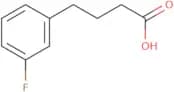
CAS:Butylhydrazine dihydrochloride is a retinoic acid analog that inhibits the production of nerve cells in the brain, thereby preventing degenerative diseases such as Alzheimer's disease. This drug has been shown to inhibit the production of nerve cells and prevent neurodegeneration in mice by targeting retinoic acid receptors. Butylhydrazine dihydrochloride is also used as a diluent for other drugs, such as pyrazolopyrimidine derivatives, which can cause death if administered alone. Butylhydrazine dihydrochloride may have an autoimmune effect, due to its ability to inhibit the production of antibodies and T-cell responses.Formula:C4H14Cl2N2Purity:Min. 95%Molecular weight:161.07 g/mol4-(3-Fluorophenyl)butanoic acid
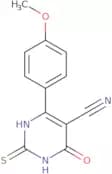
CAS:Versatile small molecule scaffoldFormula:C10H11FO2Purity:Min. 95%Molecular weight:182.19 g/mol4-(4-Methoxyphenyl)-6-oxo-2-sulfanyl-1,6-dihydropyrimidine-5-carbonitrile
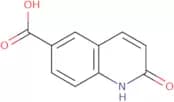
CAS:4-(4-Methoxyphenyl)-6-oxo-2-sulfanyl-1,6-dihydropyrimidine-5-carbonitrile (DMP) is a potentiodynamic polarization and electrochemical impedance spectroscopic technique that can be used to measure the corrosion inhibition efficiency of anodic inhibitors. DMP is an electron donor that can reduce the concentration of chloride ions and copper ions on the anode surface. It also has a strong inhibition effect on both kinetic and equilibrium corrosion reactions. The impedance analysis of DMP shows that it does not have any significant effect on the elements in the solution, such as copper, chloride, or sulfuric acid. This suggests that DMP is a good inhibitor for corrosion reactions in alkaline solutions.Formula:C12H9N3O2SPurity:Min. 95%Molecular weight:259.29 g/mol2-oxo-1,2-dihydroquinoline-6-carboxylic acid
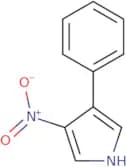
CAS:Quinoline-2-carboxylic acid is a quinoline residue that has been hydrolyzed to the corresponding 2-oxo-1,2-dihydroquinoline-6-carboxylic acid. It is an alkoxy, alkenyl, and cardiotonic drug that has been used as a carbostyril skeleton.Formula:C10H7NO3Purity:Min. 95%Molecular weight:189.17 g/mol3-Nitro-4-phenyl-1H-pyrrole
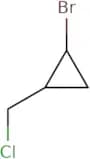
CAS:Versatile small molecule scaffoldFormula:C10H8N2O2Purity:Min. 95%Molecular weight:188.18 g/mol1-Bromo-2-(chloromethyl)cyclopropane
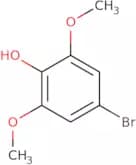
CAS:1-Bromo-2-(chloromethyl)cyclopropane is a methylenecyclopropane that reacts with thiophenol to form an anion. This reaction can be catalyzed by bases or acid. 1-Bromo-2-(chloromethyl)cyclopropane reacts with alcohols to produce nitriles, which are compounds containing the functional group, -C(O)NRR'. Nitriles can also be formed by the direct reaction of anions and alcohols, but this process is less efficient. 1-Bromo-2-(chloromethyl)cyclopropane is used as a solvent in organic chemistry because it reacts with many substances and forms new compounds.Formula:C4H6BrClPurity:Min. 95%Molecular weight:169.4 g/mol4-Bromo-2,6-dimethoxyphenol
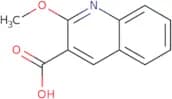
CAS:4-Bromo-2,6-dimethoxyphenol is a synthetic intramolecular nucleophilic substitution product of 2,6-dimethoxybenzaldehyde. The asymmetric synthesis of 4-bromo-2,6-dimethoxyphenol was achieved by the biomimetic strategy. This reaction is catalyzed by palladium and utilizes a chiral phosphine ligand.Formula:C8H9BrO3Purity:Min. 95%Molecular weight:233.06 g/mol2-Methoxyquinoline-3-carboxylic acid
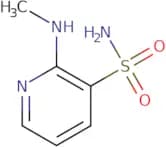
CAS:2-Methoxyquinoline-3-carboxylic acid is an alkaloid that was synthesized by the methoxylation of 2-methoxyquinoline. This compound has been shown to be a good analogue for optimising the reaction between acetone and bromine in order to produce dehydrobrominated compounds. The redox reaction of this compound with hydrogen peroxide is also interesting, as it produces hydrogen gas in addition to the desired products.Formula:C11H9NO3Purity:Min. 95%Molecular weight:203.19 g/mol2-(Methylamino)pyridine-3-sulfonamide
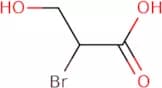
CAS:Versatile small molecule scaffoldFormula:C6H9N3O2SPurity:Min. 95%Molecular weight:187.22 g/mol(2S)-2-Bromo-3-hydroxypropanoic acid
CAS:Versatile small molecule scaffoldFormula:C3H5BrO3Purity:Min. 95%Molecular weight:168.97 g/mol5-Bromo-3-methylbenzo[D]oxazol-2(3H)-one
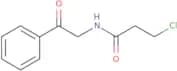
CAS:Versatile small molecule scaffoldFormula:C8H6BrNO2Purity:Min. 95%Molecular weight:228.04 g/mol3-Chloro-N-(2-oxo-2-phenylethyl)propanamide
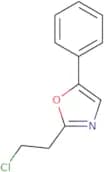
CAS:Versatile small molecule scaffoldFormula:C11H12ClNO2Purity:Min. 95%Molecular weight:225.67 g/mol2-(2-Chloroethyl)-5-phenyl-1,3-oxazole
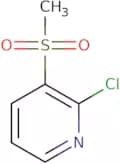
CAS:Versatile small molecule scaffoldFormula:C11H10ClNOPurity:Min. 95%Molecular weight:207.65 g/mol2-chloro-3-(methylsulfonyl)pyridine
CAS:Versatile small molecule scaffoldFormula:C6H6ClNO2SPurity:Min. 95%Molecular weight:191.63 g/mol

![2-[3-(4-Fluorophenyl)-1-phenyl-1H-pyrazol-4-yl]acetic acid](/_next/image/?url=https%3A%2Fstatic.cymitquimica.com%2Fproducts%2F3D%2Fthumb-webp%2FVCA59811.webp&w=3840&q=75)
![2-[3-(4-Bromophenyl)-1-phenyl-1H-pyrazol-4-yl]acetic acid](/_next/image/?url=https%3A%2Fstatic.cymitquimica.com%2Fproducts%2F3D%2Fthumb-webp%2FVCA59812.webp&w=3840&q=75)
![5-Bromo-3-methylbenzo[D]oxazol-2(3H)-one](/_next/image/?url=https%3A%2Fstatic.cymitquimica.com%2Fproducts%2F3D%2Fthumb-webp%2FVCA67282.webp&w=3840&q=75)