Building Blocks
This section contains fundamental products for the synthesis of organic and biological compounds. Building blocks are the essential starting materials used to construct complex molecules through various chemical reactions. They play a critical role in drug discovery, material science, and chemical research. At CymitQuimica, we offer a diverse range of high-quality building blocks to support your innovative research and industrial projects, ensuring you have the essential components for successful synthesis.
Subcategories of "Building Blocks"
- Boronic Acids & Boronic Acid Derivatives(5,756 products)
- Chiral Building Blocks(1,242 products)
- Hydrocarbon Building Blocks(6,095 products)
- Organic Building Blocks(61,055 products)
Found 199650 products of "Building Blocks"
Sort by
Purity (%)
0
100
|
0
|
50
|
90
|
95
|
100
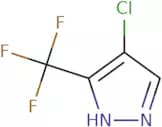
4-Chloro-3-trifluoromethyl-1H-pyrazole
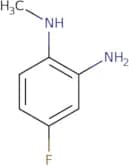
CAS:<p>Versatile small molecule scaffold</p>Formula:C4H2ClF3N2Purity:Min. 95%Molecular weight:170.52 g/mol4-Fluoro-N1-methyl-benzene-1,2-diamine
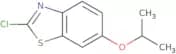
CAS:<p>Versatile small molecule scaffold</p>Formula:C7H9FN2Purity:Min. 95%Molecular weight:140.16 g/mol2-Chloro-6-(propan-2-yloxy)-1,3-benzothiazole
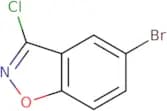
CAS:<p>Versatile small molecule scaffold</p>Formula:C10H10ClNOSPurity:Min. 95%Molecular weight:227.71 g/mol5-bromo-3-chloro-1,2-benzoxazole
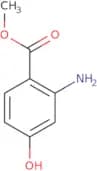
CAS:<p>Versatile small molecule scaffold</p>Formula:C7H3BrClNOPurity:Min. 95%Molecular weight:232.5 g/molmethyl 2-amino-4-hydroxybenzoate
CAS:<p>Methyl 2-amino-4-hydroxybenzoate is a quinazolinone that inhibits the growth of tumor cells and induces apoptosis. It binds to Bcl-2, thereby inhibiting the anti-apoptotic function of this protein and inducing apoptosis. Methyl 2-amino-4-hydroxybenzoate has been shown to inhibit the replication of HIV dna in human T lymphocytes and induce apoptosis in hepg2 cells. Methyl 2-amino-4-hydroxybenzoate also inhibits the production of bclxl protein, which is an important factor for tumor cell survival. This drug may be used as an adjuvant therapy for patients with carcinoma who are taking entecavir or sorafenib.</p>Formula:C8H9NO3Purity:Min. 95%Molecular weight:167.2 g/moltert-Butyl N-[(4-amino-3-methoxyphenyl)methyl]carbamate
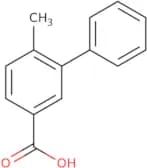
CAS:<p>Versatile small molecule scaffold</p>Formula:C13H20N2O3Purity:Min. 95%Molecular weight:252.31 g/mol4-Methyl-3-phenylbenzoic acid
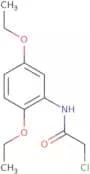
CAS:<p>Versatile small molecule scaffold</p>Formula:C14H12O2Purity:Min. 95%Molecular weight:212.24 g/mol2-chloro-N-(2,5-diethoxyphenyl)acetamide
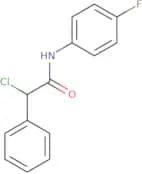
CAS:Versatile small molecule scaffoldFormula:C12H16ClNO3Purity:Min. 95%Molecular weight:257.71 g/mol2-Chloro-N-(4-fluorophenyl)-2-phenylacetamide
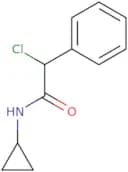
CAS:<p>Versatile small molecule scaffold</p>Formula:C14H11ClFNOPurity:Min. 95%Molecular weight:263.69 g/mol2-Chloro-N-cyclopropyl-2-phenylacetamide
CAS:Versatile small molecule scaffoldFormula:C11H12ClNOPurity:Min. 95%Molecular weight:209.67 g/molN-Ethyl-2,6-difluorobenzamide
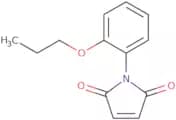
CAS:<p>Versatile small molecule scaffold</p>Formula:C9H9F2NOPurity:Min. 95%Molecular weight:185.17 g/mol1-(2-Propoxyphenyl)-2,5-dihydro-1H-pyrrole-2,5-dione
CAS:<p>Versatile small molecule scaffold</p>Formula:C13H13NO3Purity:Min. 95%Molecular weight:231.25 g/mol3-Oxo-N-[4-(propan-2-yl)phenyl]butanamide
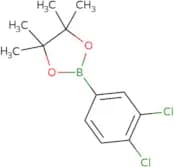
CAS:Versatile small molecule scaffoldFormula:C13H17NO2Purity:Min. 95%Molecular weight:219.28 g/mol3,4-Dichlorophenylboronic acid pinacol ester
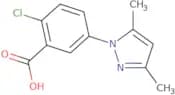
CAS:Versatile small molecule scaffoldFormula:C12H15BCl2O2Purity:Min. 95%Molecular weight:272.96 g/mol2-Chloro-5-(3,5-dimethyl-pyrazol-1-yl)-benzoic acid
CAS:<p>Versatile small molecule scaffold</p>Formula:C12H11ClN2O2Purity:Min. 95%Molecular weight:250.68 g/molN-{2-[1-(Hydroxyimino)ethyl]phenyl}methanesulfonamide
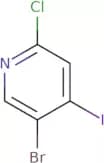
CAS:<p>Versatile small molecule scaffold</p>Formula:C9H12N2O3SPurity:Min. 95%Molecular weight:228.27 g/mol5-Bromo-2-chloro-4-iodopyridine
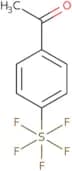
CAS:<p>Versatile small molecule scaffold</p>Formula:C5H2BrClINPurity:Min. 95%Molecular weight:318.34 g/mol4'-(Pentafluorosulfur)acetophenone
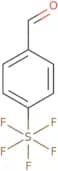
CAS:<p>Versatile small molecule scaffold</p>Formula:C8H7F5OSPurity:Min. 95%Molecular weight:246.2 g/mol4-(Pentafluorothio)benzaldehyde
CAS:<p>4-(Pentafluorothio)benzaldehyde is a natural product that yields in the cancer cell. The fluorine atom has been shown to have a significant effect on the potency of this compound, with ligand binding affinities increasing by two orders of magnitude when fluorine is present. The 4-(Pentafluorothio)benzaldehyde exhibits nanomolar range activity against colon carcinoma cells and translocates inside these cells. This compound also inhibits nf-κb and chiral cycle, which are both important for cancer growth. 4-(Pentafluorothio)benzaldehyde has been shown to inhibit cancer cell proliferation in vitro and in vivo, demonstrating its potential as an anticancer drug.</p>Formula:C7H5F5OSPurity:Min. 95%Molecular weight:232.17 g/mol4-(3-(Piperidin-1-yl)propoxy)phenylboronic acid pinacol ester
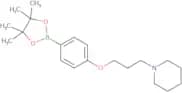
CAS:<p>Versatile small molecule scaffold</p>Formula:C20H32BNO3Purity:Min. 95%Molecular weight:345.28 g/mol

![tert-Butyl N-[(4-amino-3-methoxyphenyl)methyl]carbamate](/_next/image/?url=https%3A%2Fstatic.cymitquimica.com%2Fproducts%2F3D%2Fthumb-webp%2FBRA57338.webp&w=3840&q=75)
![3-Oxo-N-[4-(propan-2-yl)phenyl]butanamide](/_next/image/?url=https%3A%2Fstatic.cymitquimica.com%2Fproducts%2F3D%2Fthumb-webp%2FBRA63934.webp&w=3840&q=75)
![N-{2-[1-(Hydroxyimino)ethyl]phenyl}methanesulfonamide](/_next/image/?url=https%3A%2Fstatic.cymitquimica.com%2Fproducts%2F3D%2Fthumb-webp%2FBRA82947.webp&w=3840&q=75)