Building Blocks
This section contains fundamental products for the synthesis of organic and biological compounds. Building blocks are the essential starting materials used to construct complex molecules through various chemical reactions. They play a critical role in drug discovery, material science, and chemical research. At CymitQuimica, we offer a diverse range of high-quality building blocks to support your innovative research and industrial projects, ensuring you have the essential components for successful synthesis.
Subcategories of "Building Blocks"
- Boronic Acids & Boronic Acid Derivatives(5,756 products)
- Chiral Building Blocks(1,242 products)
- Hydrocarbon Building Blocks(6,095 products)
- Organic Building Blocks(61,037 products)
Found 196139 products of "Building Blocks"
Sort by
Purity (%)
0
100
|
0
|
50
|
90
|
95
|
100
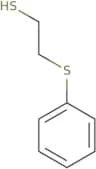
2-(Phenylsulfanyl)ethane-1-thiol
CAS:<p>Versatile small molecule scaffold</p>Formula:C8H10S2Purity:Min. 95%Molecular weight:170.3 g/mol5-Hydroxy-2-methyl-naphtho[1,2-b]furan-3-carboxylic acid
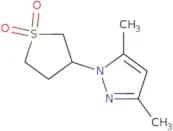
CAS:<p>Versatile small molecule scaffold</p>Formula:C14H10O4Purity:Min. 95%Molecular weight:242.23 g/mol3-(3,5-Dimethyl-1H-pyrazol-1-yl)tetrahydro-1H-thiophene-1,1-dione
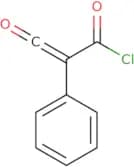
CAS:<p>Versatile small molecule scaffold</p>Formula:C9H14N2O2SPurity:Min. 95%Molecular weight:214.29 g/mol3-Oxo-2-phenylprop-2-enoyl chloride
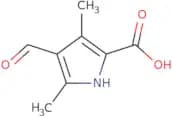
CAS:<p>The molecule 3-oxo-2-phenylprop-2-enoyl chloride is a diazirine, which is an organic compound that consists of two fused rings. It has two possible isomers, the cis and trans forms. The cis form has a molecular ion with a m/z of 170 while the trans form has a molecular ion with a m/z of 172. These molecules are synthesized by reacting phenyl groups with magnesium oxide in dimethyl acetylenedicarboxylate. The cis form can be synthesized using UV irradiation while the trans form cannot.</p>Formula:C9H5ClO2Purity:Min. 95%Molecular weight:180.59 g/mol4-Formyl-3,5-dimethyl-1H-pyrrole-2-carboxylic acid
CAS:<p>Versatile small molecule scaffold</p>Formula:C8H9NO3Purity:Min. 95%Molecular weight:167.16 g/mol4-{[(2E)-2-(Hydroxyimino)ethanoyl]amino}benzoic acid
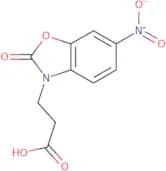
CAS:<p>Versatile small molecule scaffold</p>Formula:C9H8N2O4Purity:Min. 95%Molecular weight:208.17 g/mol3-(6-Nitro-2-oxo-2,3-dihydro-1,3-benzoxazol-3-yl)propanoic acid
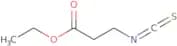
CAS:<p>Versatile small molecule scaffold</p>Formula:C10H8N2O6Purity:Min. 95%Molecular weight:252.18 g/molEthyl 3-isothiocyanatopropionate
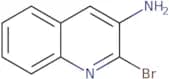
CAS:<p>The chemical structure of ethyl 3-isothiocyanatopropionate is cyclic, linear, pentapeptide, proteolytically, deacylation, chain, residue, peptidic. It is metabolically a non-competitive inhibitor of the enzyme histone deacetylase and an inhibitor of the enzymes that catalyze the formation of protein crosslinks. Ethyl 3-isothiocyanatopropionate is stable in human plasma and has permeable properties. It inhibits the activity of histone deacetylases at high concentrations by binding to a hydrophobic pocket on their surface. Ethyl 3-isothiocyanatopropionate is not metabolized but can be cleaved from its target by proteases or acid treatment.</p>Formula:C6H9NO2SPurity:Min. 95%Molecular weight:159.2 g/mol2-Bromoquinolin-3-amine
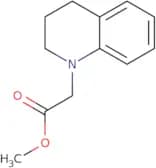
CAS:<p>2-Bromoquinolin-3-amine is a quinazoline alkaloid that has been modified to produce synthetic analogs. It was first synthesized in 1957 by chemical modification of the natural product quinazoline, and is used as a lead compound for the synthesis of other compounds. 2-Bromoquinolin-3-amine has shown biological activity, such as inhibition of protein synthesis in bacteria and fungi, and inhibition of DNA synthesis in human cells. It also has some antimalarial properties.</p>Formula:C9H7BrN2Purity:Min. 95%Molecular weight:223.07 g/molMethyl 2-(3,4-dihydroquinolin-1(2H)-yl)acetate
CAS:<p>Versatile small molecule scaffold</p>Formula:C12H15NO2Purity:Min. 95%Molecular weight:205.25 g/mol3-(Nitromethyl)-1λ⁶-thiolane-1,1-dione
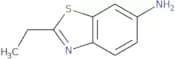
CAS:<p>Versatile small molecule scaffold</p>Formula:C5H9NO4SPurity:Min. 95%Molecular weight:179.2 g/mol2-Ethyl-6-benzothiazolamine
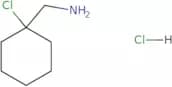
CAS:<p>2-Ethyl-6-benzothiazolamine is a quaternary ammonium salt that is synthesized from 2-ethyl-6-nitrobenzothiazole by reaction with methyl methacrylate. It has a number of photochromic properties, including the ability to undergo reversible color changes in response to light irradiation. This compound can be used to synthesize methacrylic chloride copolymers, which are used in the manufacture of paints and coatings. 2-Ethyl-6-benzothiazolamine has been shown to have nitro and chloride functionalities, which may make it useful as an explosive ingredient.</p>Formula:C9H10N2SPurity:Min. 95%Molecular weight:178.25 g/mol(1-Chlorocyclohexyl)methanamine hydrochloride
CAS:<p>Versatile small molecule scaffold</p>Formula:C7H15Cl2NPurity:Min. 95%Molecular weight:184.1 g/mol5,5-dimethyl-2-phenylmorpholine
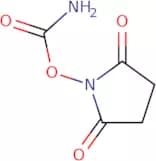
CAS:Controlled Product<p>Versatile small molecule scaffold</p>Formula:C12H17NOPurity:Min. 95%Molecular weight:191.26 g/mol2,5-Dioxopyrrolidin-1-yl carbamate
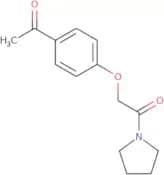
CAS:<p>2,5-Dioxopyrrolidin-1-yl carbamate is a reactive, nucleophilic compound that is used to prepare amines. The pharmacokinetic properties of 2,5-dioxopyrrolidin-1-yl carbamate have been studied with the use of analytical methods such as basic proteins and activated carbon. This compound can be used as an inhibitor of enzymes in biological systems. It reacts with amino acids and other compounds containing nitrogen to form Schiff bases and imine derivatives. These reactions are reversible, so 2,5-dioxopyrrolidin-1-yl carbamate can be used to remove these groups from proteins. It has been shown that exposure to light will cause the decomposition of this compound.</p>Formula:C5H6N2O4Purity:Min. 95%Molecular weight:158.11 g/mol2-(4-Acetylphenoxy)-1-(pyrrolidin-1-yl)ethan-1-one
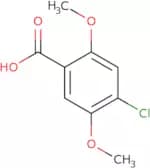
CAS:<p>Versatile small molecule scaffold</p>Formula:C14H17NO3Purity:Min. 95%Molecular weight:247.29 g/mol4-Chloro-2,5-dimethoxy-benzoic acid
CAS:<p>Versatile small molecule scaffold</p>Formula:C9H9ClO4Purity:Min. 95%Molecular weight:216.62 g/mol3-Azatricyclo[7.3.1.0,5,13]trideca-5,7,9(13)-triene hydrochloride
CAS:<p>Versatile small molecule scaffold</p>Formula:C12H16ClNPurity:Min. 95%Molecular weight:209.71 g/mol2-Azatricyclo[7.3.1.0,5,13]trideca-1(12),9(13),10-triene hydrochloride
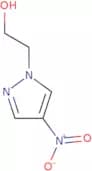
CAS:<p>Versatile small molecule scaffold</p>Formula:C12H16ClNPurity:Min. 95%Molecular weight:209.71 g/mol2-(4-Nitro-pyrazol-1-yl)-ethanol
CAS:<p>2-(4-Nitro-pyrazol-1-yl)-ethanol is a cyclic anion that has been shown to be damaging to DNA. It has been studied by the kinetic methods of anion exchange chromatography and solvent extraction. 2-(4-Nitro-pyrazol-1-yl)-ethanol was found to be a weak base, with a pKb value of 10.2. The compound reacts with glutathione to form 2-(4-nitro-pyrazol-1-yl)-ethanesulfonic acid, which is in equilibrium with the corresponding alcohol. This reaction can be measured by monitoring the changes in absorbance at 260 nm and 280 nm. The nitro group on 2-(4-nitro-pyrazol-1-yl)-ethanol shifts the potentials of methylene blue and methyl green toward more positive values, making them more sensitive to this type of damage.</p>Formula:C5H7N3O3Purity:Min. 95%Molecular weight:157.13 g/mol

![5-Hydroxy-2-methyl-naphtho[1,2-b]furan-3-carboxylic acid](/_next/image/?url=https%3A%2Fstatic.cymitquimica.com%2Fproducts%2F3D%2Fthumb-webp%2FSAA11291.webp&w=3840&q=75)
![4-{[(2E)-2-(Hydroxyimino)ethanoyl]amino}benzoic acid](/_next/image/?url=https%3A%2Fstatic.cymitquimica.com%2Fproducts%2F3D%2Fthumb-webp%2FSAA12278.webp&w=3840&q=75)


![3-Azatricyclo[7.3.1.0,5,13]trideca-5,7,9(13)-triene hydrochloride](/_next/image/?url=https%3A%2Fstatic.cymitquimica.com%2Fproducts%2F3D%2Fthumb-webp%2FSBA02542.webp&w=3840&q=75)
![2-Azatricyclo[7.3.1.0,5,13]trideca-1(12),9(13),10-triene hydrochloride](/_next/image/?url=https%3A%2Fstatic.cymitquimica.com%2Fproducts%2F3D%2Fthumb-webp%2FSBA02545.webp&w=3840&q=75)