Building Blocks
Subcategories of "Building Blocks"
- Boronic Acids & Boronic Acid Derivatives(5,774 products)
- Chiral Building Blocks(1,237 products)
- Hydrocarbon Building Blocks(6,098 products)
- Organic Building Blocks(60,969 products)
Found 205134 products of "Building Blocks"
4-Cyclopropylbutan-2-one
CAS:Versatile small molecule scaffoldFormula:C7H12OPurity:Min. 95%Molecular weight:112.17 g/mol4-[Bis(2-chloroethyl)amino]benzamide
CAS:Versatile small molecule scaffold
Formula:C11H14Cl2N2OPurity:Min. 95%Molecular weight:261.14 g/mol2-(Sulphanylmethyl)pyridine
CAS:2-(Sulphanylmethyl)pyridine is a stabilizer that can be used in fatty acids. It is a reversible covalent bond that can stabilize the sample by reacting with the phosphorothioates of nucleic acids and other nucleophiles, such as sulphydryl groups. 2-(Sulphanylmethyl)pyridine reacts with glycerides to form reaction products, which may be used as additives for oils or fats. This product has been shown to have potential for use in X-ray crystallography studies of phosphorothioates. 2-(Sulphanylmethyl)pyridine stabilizes metal ions and can be used orally as acetyl derivatives.Formula:C6H7NSPurity:Min. 95%Molecular weight:125.19 g/mol3-Oxo-N-(2-phenylethyl)butanamide
CAS:Versatile small molecule scaffold
Formula:C12H15NO2Purity:Min. 95%Molecular weight:205.25 g/mol2-pyridylethylmercaptan
CAS:2-pyridylethylmercaptan is a heterocyclic compound that is used as an adsorbent for the preparation of samples for surface-enhanced Raman spectroscopy. It is also used in cancer research to study the effects of acidic conditions on cancer cells. 2-pyridylethylmercaptan has been shown to be effective in the treatment of myeloma, leukemia, and breast cancer when administered orally. It binds to thiol groups on proteins and forms a covalent bond with sulfur atoms. The formation of this covalent bond leads to the protonation of 2-pyridylethylmercaptan and results in a change in its chemical properties. This covalent bond with sulfur atoms also inhibits the growth of bacteria by interfering with their ability to synthesize proteins.Formula:C7H9NSPurity:Min. 95%Molecular weight:139.22 g/mol[1-(aminomethyl)cyclohexyl]methanol
CAS:Versatile small molecule scaffold
Formula:C8H17NOPurity:Min. 95%Molecular weight:143.23 g/mol2',2,2-trimethylpropiophenone
CAS:Versatile small molecule scaffoldFormula:C12H16OPurity:Min. 95%Molecular weight:176.26 g/mol1-(4-Methoxyphenyl)-2,2-dimethylpropan-1-one
CAS:1-(4-Methoxyphenyl)-2,2-dimethylpropan-1-one is a bioorganic compound with the formula CHClO. It is an aromatic ketone that is used in organic synthesis. The compound is prepared by acylation of 4-methoxybenzaldehyde with chloroacetyl chloride in the presence of aluminum chloride as a catalyst. The reaction is catalyzed by light and proceeds quantitatively at room temperature, affording 1-(4-methoxyphenyl)-2,2-dimethylpropan-1-one in nearly quantitative yield. Friedel–Crafts acylation can be used to synthesize derivatives of this compound, such as benzoyl derivatives. The reaction takes place at room temperature under mild conditions and typically gives products in high yields. The reaction time for Friedel–Crafts acylation depends on the reactivity of the substrate but typically ranges from one to several hours,Formula:C12H16O2Purity:Min. 95%Molecular weight:192.25 g/mol2-Methyl-1-(2-methylphenyl)propan-1-one
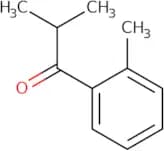
CAS:Versatile small molecule scaffold
Formula:C11H14OPurity:Min. 95%Molecular weight:162.23 g/mol1-(4-Methoxyphenyl)-2-methylpropan-1-one
CAS:1-(4-Methoxyphenyl)-2-methylpropan-1-one is an organic compound with the chemical formula CH3COCH(OCH2CH3). It is a colorless liquid that is soluble in water, ether, and most organic solvents. It has a boiling point of 154 °C at 1 atm and its density is 0.921 g/mL at 25 °C. This compound can be used as an alkylating agent for aromatic compounds, acyl halides, carbonyls, and other reactive groups. The reaction mechanism for this compound begins with a nucleophilic attack on the electrophilic carbon atom by the oxygen atom of the methoxy group to form an acetal intermediate. The intermediate then undergoes hydrolysis to form a new c–h bond and a methyl ether product.
Formula:C11H14O2Purity:Min. 95%Molecular weight:178.23 g/mol2,2-Dimethyl-3,4-dihydro-2H-1-benzopyran-6-carboxylic acid
CAS:Versatile small molecule scaffold
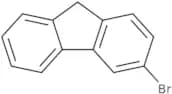
Formula:C12H14O3Purity:Min. 95%Molecular weight:206.24 g/mol3-Bromo-9H-fluorene
CAS:3-Bromo-9H-fluorene is a chemical compound that is used as an intermediate in the synthesis of other chemicals. The acylation reaction of 3-bromo-9H-fluorene with an alkyl halide, such as ethyl bromide, results in the formation of an ester. This reaction can be done in either aqueous or organic solvents and requires hydrochloric acid as a catalyst. The optimal reaction temperature is between 0°C and 20°C, while the optimal pH is between 1 and 2. The redox potentials of 3-bromo-9H-fluorene are +0.77 V for the one electron reduction and -1.33 V for the two electron reduction. This compound has been shown to be toxic to bacteria, plants, and animals due to its ability to cause oxidative stress. Control experiments confirm that 3-bromo-9H-fluFormula:C13H9BrPurity:Min. 95%Molecular weight:245.11 g/mol6-(Methylsulfanyl)pyrimidin-4-amine
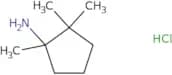
CAS:Versatile small molecule scaffoldFormula:C5H7N3SPurity:Min. 95%Molecular weight:141.2 g/mol1,2,2-Trimethylcyclopentan-1-amine hydrochloride
CAS:Versatile small molecule scaffoldFormula:C8H18ClNPurity:Min. 95%Molecular weight:163.7 g/mol4,4-Dimethyl-5-oxohexanenitrile
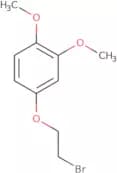
CAS:Versatile small molecule scaffoldFormula:C8H13NOPurity:Min. 95%Molecular weight:139.2 g/mol4-(2-Bromoethoxy)-1,2-dimethoxybenzene
CAS:Versatile small molecule scaffold
Formula:C10H13BrO3Purity:Min. 95%Molecular weight:261.11 g/mol5-Iodo-2,6-dimethylpyrimidin-4-amine
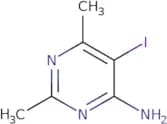
CAS:Versatile small molecule scaffoldFormula:C6H8IN3Purity:Min. 95%Molecular weight:249.05 g/mol2,2,8-Trimethyl-2H,4H-[1,3]dioxino[4,5-c]pyridine-5-carboxylic acid
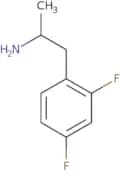
CAS:Versatile small molecule scaffoldFormula:C11H13NO4Purity:Min. 95%Molecular weight:223.22 g/mol1-(2,4-Difluorophenyl)propan-2-amine
CAS:Controlled ProductVersatile small molecule scaffoldFormula:C9H11F2NPurity:Min. 95%Molecular weight:171.19 g/mol2-Hydroxy-N-methyl-2-phenylacetamide
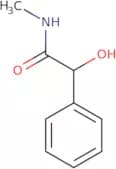
CAS:2-Hydroxy-N-methyl-2-phenylacetamide is a hydroxamic acid, which is an organic compound that contains both a hydroxymethyl and an acyl group. It has been shown to be efficient in the catalyzed production of activated carbonyls from aliphatic amides. This molecule also has electron donating properties, which are demonstrated by its protonation. 2-Hydroxy-N-methyl-2-phenylacetamide is an inorganic molecule that contains a hydroxamic acid moiety with a carbonyl group. The hydroxamic acid moiety can act as an electron acceptor, resulting in the formation of an oxocarbenium ion intermediate. The carbonyl group can act as an electron donor, leading to the formation of a ketone or enolate intermediate after protonation.
Formula:C9H11NO2Purity:Min. 95%Molecular weight:165.19 g/mol


![4-[Bis(2-chloroethyl)amino]benzamide](/_next/image/?url=https%3A%2Fstatic.cymitquimica.com%2Fproducts%2F3D%2Fthumb-webp%2FCAA04542.webp&w=3840&q=75)


![[1-(aminomethyl)cyclohexyl]methanol](/_next/image/?url=https%3A%2Fstatic.cymitquimica.com%2Fproducts%2F3D%2Fthumb-webp%2FCAA04157.webp&w=3840&q=75)





![2,2,8-Trimethyl-2H,4H-[1,3]dioxino[4,5-c]pyridine-5-carboxylic acid](/_next/image/?url=https%3A%2Fstatic.cymitquimica.com%2Fproducts%2F3D%2Fthumb-webp%2FCAA02766.webp&w=3840&q=75)