Building Blocks
This section contains fundamental products for the synthesis of organic and biological compounds. Building blocks are the essential starting materials used to construct complex molecules through various chemical reactions. They play a critical role in drug discovery, material science, and chemical research. At CymitQuimica, we offer a diverse range of high-quality building blocks to support your innovative research and industrial projects, ensuring you have the essential components for successful synthesis.
Subcategories of "Building Blocks"
- Boronic Acids & Boronic Acid Derivatives(5,756 products)
- Chiral Building Blocks(1,242 products)
- Hydrocarbon Building Blocks(6,095 products)
- Organic Building Blocks(61,055 products)
Found 199650 products of "Building Blocks"
Sort by
Purity (%)
0
100
|
0
|
50
|
90
|
95
|
100
3-Isopropoxy-5-(trifluoromethyl)aniline
CAS:<p>Versatile small molecule scaffold</p>Formula:C10H12F3NOPurity:Min. 95%Molecular weight:219.21 g/molFuro[3,2-d]pyrimidin-4(3H)-one
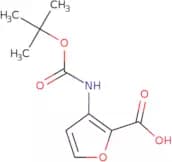
CAS:<p>Furo[3,2-d]pyrimidin-4(3H)-one is a heterocyclic compound that has been reported to have anticoccidial properties. This compound has been shown to inhibit the growth of Eimeria tenella and Eimeria acervulina in vitro. Furo[3,2-d]pyrimidin-4(3H)-one also inhibits the synthesis of DNA in these protozoa.</p>Formula:C6H4N2O2Purity:Min. 95%Molecular weight:136.11 g/mol3-((tert-Butoxycarbonyl)amino)furan-2-carboxylic acid
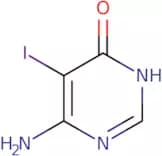
CAS:Versatile small molecule scaffoldFormula:C10H13NO5Purity:Min. 95%Molecular weight:227.21 g/mol6-Amino-5-iodopyrimidin-4-ol
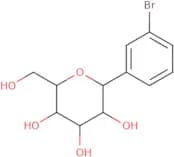
CAS:<p>Versatile small molecule scaffold</p>Formula:C4H4IN3OPurity:Min. 95%Molecular weight:237 g/mol(2S,3R,4R,5S,6R)-2-(3-Bromophenyl)-6-(hydroxymethyl)oxane-3,4,5-triol
CAS:<p>Versatile small molecule scaffold</p>Formula:C12H15BrO5Purity:Min. 95%Molecular weight:319.15 g/molEthyl 8-bromo-5-fluoro-4-hydroxyquinoline-3-carboxylate
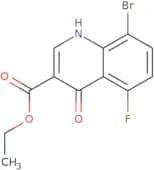
CAS:<p>Ethyl 8-bromo-5-fluoro-4-hydroxyquinoline-3-carboxylate is a potent benzodiazepine receptor antagonist. It binds to the benzodiazepine receptor, preventing the binding of benzodiazepines and other drugs that act on this receptor. This drug has been shown to be a high affinity antagonist and has been successfully used in clinical trials for the treatment of anxiety disorders. The pharmacophore of ethyl 8-bromo-5-fluoro-4-hydroxyquinoline-3 -carboxylate is described by stepwise descriptor analysis, which identifies overlapping profiles with other benzodiazepine antagonists.</p>Formula:C12H9BrFNO3Purity:Min. 95%Molecular weight:314.11 g/moltert-Butyl 4-(2-bromoethyl)piperazine-1-carboxylate
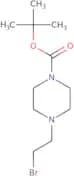
CAS:<p>Versatile small molecule scaffold</p>Formula:C11H21N2O2BrPurity:Min. 95%Molecular weight:293.2 g/mol4-Hydroxy-N-propylbenzene-1-sulfonamide
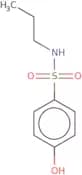
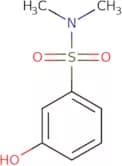
CAS:<p>Versatile small molecule scaffold</p>Formula:C9H13NO3SPurity:Min. 95%Molecular weight:215.3 g/mol3-Hydroxy-N,N-dimethylbenzene-1-sulfonamide
CAS:<p>Versatile small molecule scaffold</p>Formula:C8H11NO3SPurity:Min. 95%Molecular weight:201.25 g/molThiabicyclo[3.1.0]hexane-3,3-dione
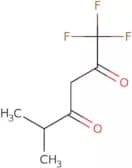
CAS:<p>Versatile small molecule scaffold</p>Formula:C5H8O2SPurity:Min. 95%Molecular weight:132.18 g/mol1,1,1-Trifluoro-5-methylhexane-2,4-dione
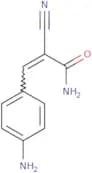
CAS:1,1,1-Trifluoro-5-methylhexane-2,4-dione is a fluorinated organic molecule that has been synthesized in the laboratory. It is an oily liquid with a boiling point of 56 °C and a melting point of -74 °C. The compound has been shown to crystallize in the orthorhombic system. 1,1,1-Trifluoro-5-methylhexane-2,4-dione can be used as a precursor in the synthesis of other compounds. This molecule is also expected to have properties that allow it to be used as an efficient x-ray absorber and x-ray fluorescence agent for spectroscopy studies at synchrotron radiation facilities.Formula:C7H9F3O2Purity:Min. 95%Molecular weight:182.14 g/mol3-(4-Aminophenyl)-2-cyanoprop-2-enamide
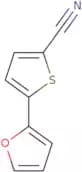
CAS:<p>Versatile small molecule scaffold</p>Formula:C10H9N3OPurity:Min. 95%Molecular weight:187.2 g/mol5-(5-Methylthiophen-2-yl)thiophene-2-carboxylic acid
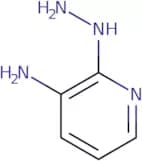
CAS:<p>Versatile small molecule scaffold</p>Formula:C9H5NOSPurity:Min. 95%Molecular weight:175.21 g/mol2-Hydrazinylpyridin-3-amine
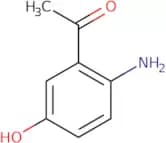
CAS:<p>2-Hydrazinylpyridin-3-amine is an anticancer drug that functions as a prodrug. The hydrochloride salt of 2-hydrazinylpyridin-3-amine is formed by the reaction of the drug with hydrochloric acid. This product has been shown to have anticancer activity in vitro and in vivo and can be used for the treatment of breast cancer. It is also used for other types of cancer, such as prostate cancer or pancreatic cancer. The mechanism by which 2-hydrazinylpyridin-3-amine induces cell death is unclear, but it may involve inhibition of DNA synthesis and prevention of DNA repair.</p>Formula:C5H8N4Purity:Min. 95%Molecular weight:124.14 g/mol1-(2-Amino-5-hydroxyphenyl)ethanone
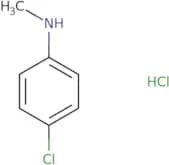
CAS:<p>1-(2-Amino-5-hydroxyphenyl)ethanone is an inhibitor of topoisomerase enzymes. It binds to the enzyme, preventing it from breaking and rejoining DNA strands. This inhibition leads to abnormal DNA replication and cell death. The potency of this compound is determined by its ability to inhibit the enzyme in a kinetically competitive manner. 1-(2-Amino-5-hydroxyphenyl)ethanone has been shown to have inhibitory properties against acetaminophen (APAP)-induced liver injury in rats, and can be used as a synthetic intermediate for other drugs or chemical compounds.</p>Formula:C8H9NO2Purity:Min. 95%Molecular weight:151.16 g/molN-Methyl 4-chloroaniline hydrochloride
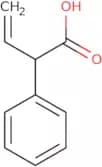
CAS:<p>N-Methyl 4-chloroaniline hydrochloride is a cholinesterase inhibitor that belongs to the group of organochlorines. It has been shown to be effective in demethylation and epoxidase activity in vitro. N-Methyl 4-chloroaniline hydrochloride is also an aminotransferase inhibitor, which inhibits the synthesis of the amino acid methionine. This drug has been shown to have an effect on rat liver microsomes and has been used as a model system for studying enzyme activities. The fluorescence assay shows that this compound binds to DNA and inhibits its transcription and replication, inhibiting cell growth.</p>Formula:C7H9Cl2NPurity:Min. 95%Molecular weight:178.06 g/mol2-Phenylbut-3-enoic acid
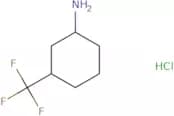
CAS:<p>2-Phenylbut-3-enoic acid is an organic compound that contains a hydroxyl group in its molecular structure. This compound can be synthesized by the ring opening of a cyclopropane carboxylic acid and an alkene. The reaction takes place at temperatures between -78 and -35 degrees Celsius, which is below the boiling point of water. 2-Phenylbut-3-enoic acid is often used as a reagent for catalyzing reactions, especially those that are kinetically controlled. The nucleophile (a reactive chemical species with an affinity for positively charged regions of other molecules) can react with protonated carbonyl groups to form acylium ions, which are highly reactive. These reactions are known as carbonyl addition reactions or Michael reactions. 2-Phenylbut-3-enoic acid also has the ability to act as a nucleophile and react with alkyl halides, such as methoxy</p>Formula:C10H10O2Purity:Min. 95%Molecular weight:162.18 g/molrac-(1R,3S)-3-(Trifluoromethyl)cyclohexan-1-amine hydrochloride
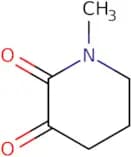
CAS:<p>Versatile small molecule scaffold</p>Formula:C7H13ClF3NPurity:Min. 95%Molecular weight:203.63 g/mol1-Methylpiperidine-2,3-dione
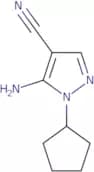
CAS:<p>Versatile small molecule scaffold</p>Formula:C6H9NO2Purity:Min. 95%Molecular weight:127.14 g/mol5-Amino-1-cyclopentyl-1H-pyrazole-4-carbonitrile
CAS:<p>Versatile small molecule scaffold</p>Formula:C9H12N4Purity:Min. 95%Molecular weight:176.22 g/mol


![Furo[3,2-d]pyrimidin-4(3H)-one](/_next/image/?url=https%3A%2Fstatic.cymitquimica.com%2Fproducts%2F3D%2Fthumb-webp%2FFBB25508.webp&w=3840&q=75)
![Thiabicyclo[3.1.0]hexane-3,3-dione](/_next/image/?url=https%3A%2Fstatic.cymitquimica.com%2Fproducts%2F3D%2Fthumb-webp%2FFBA98834.webp&w=3840&q=75)