Building Blocks
This section contains fundamental products for the synthesis of organic and biological compounds. Building blocks are the essential starting materials used to construct complex molecules through various chemical reactions. They play a critical role in drug discovery, material science, and chemical research. At CymitQuimica, we offer a diverse range of high-quality building blocks to support your innovative research and industrial projects, ensuring you have the essential components for successful synthesis.
Subcategories of "Building Blocks"
- Boronic Acids & Boronic Acid Derivatives(5,756 products)
- Chiral Building Blocks(1,242 products)
- Hydrocarbon Building Blocks(6,095 products)
- Organic Building Blocks(61,038 products)
Found 196817 products of "Building Blocks"
Sort by
Purity (%)
0
100
|
0
|
50
|
90
|
95
|
100
2H,3H-[1,4]Dioxino[2,3-b]pyridin-6-amine hydrochloride
CAS:<p>Versatile small molecule scaffold</p>Formula:C7H9ClN2O2Purity:Min. 95%Molecular weight:188.61 g/mol5-(Piperazine-1-sulfonyl)furan-2-carboxylic acid hydrochloride
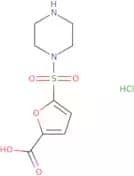
CAS:<p>Versatile small molecule scaffold</p>Formula:C9H13ClN2O5SPurity:Min. 95%Molecular weight:296.73 g/mol2-[(tert-Butoxy)carbonyl]bicyclo[2.2.1]heptane-2-carboxylic acid
CAS:<p>Versatile small molecule scaffold</p>Formula:C13H20O4Purity:Min. 95%Molecular weight:240.29 g/moltert-Butyl 2-amino-5H,6H,7H,8H-imidazo[1,2-a]pyridine-3-carboxylate
CAS:<p>Versatile small molecule scaffold</p>Formula:C12H19N3O2Purity:Min. 95%Molecular weight:237.3 g/mol(1,1-Dioxo-1λ⁶-thiolan-2-yl)methanesulfonyl chloride
CAS:<p>Versatile small molecule scaffold</p>Formula:C5H9ClO4S2Purity:Min. 95%Molecular weight:232.7 g/mol5-(Chloromethyl)-1-methyl-2-[(trifluoromethyl)sulfanyl]-1H-imidazole hydrochloride
CAS:<p>Versatile small molecule scaffold</p>Formula:C6H7Cl2F3N2SPurity:Min. 95%Molecular weight:267.1 g/mol2H,3H,4H,5H,6H,7H,8H-[1,2]Oxazolo[5,4-c]azepin-3-one hydrochloride
CAS:<p>Versatile small molecule scaffold</p>Formula:C7H11ClN2O2Purity:Min. 95%Molecular weight:190.63 g/moltert-Butyl N-[5-chloro-2-(oxolane-2-carbonyl)phenyl]carbamate
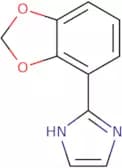
CAS:<p>Versatile small molecule scaffold</p>Formula:C16H20ClNO4Purity:Min. 95%Molecular weight:325.79 g/mol2-(1,3-Dioxaindan-4-yl)-1H-imidazole
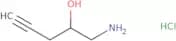
CAS:<p>Versatile small molecule scaffold</p>Formula:C10H8N2O2Purity:Min. 95%Molecular weight:188.18 g/mol1-Aminopent-4-yn-2-ol hydrochloride
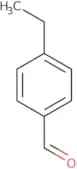
CAS:<p>Versatile small molecule scaffold</p>Formula:C5H10ClNOPurity:Min. 95%Molecular weight:135.59 g/mol4-Ethylbenzaldehyde
CAS:<p>4-Ethylbenzaldehyde is a chemical compound that belongs to the group of fatty acids. It has been shown to have biological properties, such as antiviral potency and genotoxic effects. This chemical compound also has a gas sensor property and is used as an exothermic reactant in organic synthesis reactions. 4-Ethylbenzaldehyde has been shown to inhibit the growth of bacteria, fungi, and viruses by blocking the synthesis of viral nucleic acid or inhibiting viral protein synthesis. The magnetic resonance spectroscopy (NMR) spectral data for 4-ethylbenzaldehyde show that this chemical compound contains two methyl groups, one on each side of the benzene ring, with a hydroxyl group on one end. The carbon atoms are bonded together in an alternating pattern of single and double bonds. The molecular formula for 4-ethylbenzaldehyde is C9H10O2.</p>Formula:C9H10OPurity:Min. 96.0%Color and Shape:PowderMolecular weight:134.18 g/mol2-Amino-N-(4-hydroxyphenyl)acetamide hydrochloride
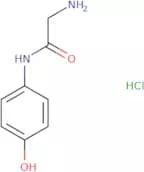
CAS:<p>Versatile small molecule scaffold</p>Formula:C8H11ClN2O2Purity:Min. 95%Molecular weight:202.64 g/mol(1,2,3,4-Tetrahydro-isoquinolin-1-yl)-acetic acid
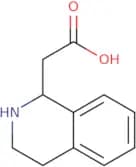
CAS:<p>(1,2,3,4-Tetrahydro-isoquinolin-1-yl)-acetic acid is a chemical compound that belongs to the esters family. It is enzymatically hydrolyzed by lipase and reactivity depends on the concentration of unreacted (1,2,3,4-tetrahydro-isoquinolin-1-yl)-acetic acid. The ester reacts with methoxyethyl chloride via displacement of the chloride group by an alcohol group in the presence of base to produce (1,2,3,4-tetrahydro-isoquinolin-1-yl)-acetate. This reaction is enantioselective and produces two enantiomers. The hydrolysis of the ester group occurs at a higher rate than that of the acetate group due to its lower polarity.</p>Formula:C11H13NO2Purity:Min. 95%Molecular weight:191.23 g/mol2-[3-Methyl-4-(propan-2-yl)phenoxy]acetic acid
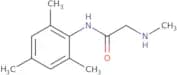
CAS:<p>Versatile small molecule scaffold</p>Formula:C12H16O3Purity:Min. 95%Molecular weight:208.25 g/mol2-(Methylamino)-N-(2,4,6-trimethylphenyl)acetamide
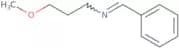
CAS:<p>Versatile small molecule scaffold</p>Formula:C12H18N2OPurity:Min. 95%Molecular weight:206.28 g/mol(3-Methoxypropyl)(phenylmethylidene)amine
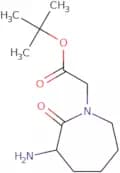
CAS:<p>Versatile small molecule scaffold</p>Formula:C11H15NOPurity:Min. 95%Molecular weight:177.24 g/moltert-Butyl 2-(3-amino-2-oxoazepan-1-yl)acetate
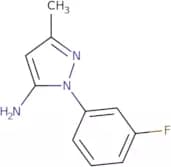
CAS:<p>Versatile small molecule scaffold</p>Formula:C12H22N2O3Purity:Min. 95%Molecular weight:242.31 g/mol1-(3-Fluorophenyl)-3-methyl-1H-pyrazol-5-amine
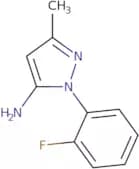
CAS:<p>Versatile small molecule scaffold</p>Formula:C10H10FN3Purity:Min. 95%Molecular weight:191.2 g/mol1-(2-Fluorophenyl)-3-methyl-1H-pyrazol-5-amine
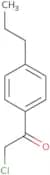
CAS:<p>Versatile small molecule scaffold</p>Formula:C10H10FN3Purity:Min. 95%Molecular weight:191.2 g/mol2-Chloro-1-(4-propylphenyl)ethan-1-one
CAS:<p>Versatile small molecule scaffold</p>Formula:C11H13ClOPurity:Min. 95%Molecular weight:196.67 g/mol
![2H,3H-[1,4]Dioxino[2,3-b]pyridin-6-amine hydrochloride](/_next/image/?url=https%3A%2Fstatic.cymitquimica.com%2Fproducts%2F3D%2Fthumb-webp%2FFDD53064.webp&w=3840&q=75)

![2-[(tert-Butoxy)carbonyl]bicyclo[2.2.1]heptane-2-carboxylic acid](/_next/image/?url=https%3A%2Fstatic.cymitquimica.com%2Fproducts%2F3D%2Fthumb-webp%2FFDD53074.webp&w=3840&q=75)
![tert-Butyl 2-amino-5H,6H,7H,8H-imidazo[1,2-a]pyridine-3-carboxylate](/_next/image/?url=https%3A%2Fstatic.cymitquimica.com%2Fproducts%2F3D%2Fthumb-webp%2FFDD53077.webp&w=3840&q=75)

![5-(Chloromethyl)-1-methyl-2-[(trifluoromethyl)sulfanyl]-1H-imidazole hydrochloride](/_next/image/?url=https%3A%2Fstatic.cymitquimica.com%2Fproducts%2F3D%2Fthumb-webp%2FFDD53082.webp&w=3840&q=75)
![2H,3H,4H,5H,6H,7H,8H-[1,2]Oxazolo[5,4-c]azepin-3-one hydrochloride](/_next/image/?url=https%3A%2Fstatic.cymitquimica.com%2Fproducts%2F3D%2Fthumb-webp%2FFDD53090.webp&w=3840&q=75)
![tert-Butyl N-[5-chloro-2-(oxolane-2-carbonyl)phenyl]carbamate](/_next/image/?url=https%3A%2Fstatic.cymitquimica.com%2Fproducts%2F3D%2Fthumb-webp%2FFDD53098.webp&w=3840&q=75)
![2-[3-Methyl-4-(propan-2-yl)phenoxy]acetic acid](/_next/image/?url=https%3A%2Fstatic.cymitquimica.com%2Fproducts%2F3D%2Fthumb-webp%2FFEA40143.webp&w=3840&q=75)