Building Blocks
This section contains fundamental products for the synthesis of organic and biological compounds. Building blocks are the essential starting materials used to construct complex molecules through various chemical reactions. They play a critical role in drug discovery, material science, and chemical research. At CymitQuimica, we offer a diverse range of high-quality building blocks to support your innovative research and industrial projects, ensuring you have the essential components for successful synthesis.
Subcategories of "Building Blocks"
- Boronic Acids & Boronic Acid Derivatives(5,778 products)
- Chiral Building Blocks(1,242 products)
- Hydrocarbon Building Blocks(6,098 products)
- Organic Building Blocks(61,034 products)
Found 199601 products of "Building Blocks"
Sort by
Purity (%)
0
100
|
0
|
50
|
90
|
95
|
100
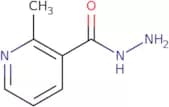
2-Methyl-nicotinic acid hydrazide
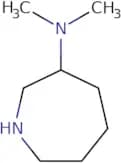
CAS:<p>Versatile small molecule scaffold</p>Formula:C7H9N3OPurity:Min. 95%Molecular weight:151.17 g/mol(3S)-N,N-Dimethylazepan-3-amine
CAS:<p>Versatile small molecule scaffold</p>Formula:C8H18N2Purity:Min. 95%Molecular weight:142.24 g/mol[3-(1H-Pyrazol-3-yl)phenyl]methanol
CAS:Versatile small molecule scaffoldFormula:C10H10N2OPurity:Min. 95%Molecular weight:174.2 g/mol6,7-Dihydropyrazolo[1,5-a]pyridin-4(5H)-one
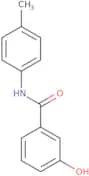
CAS:<p>Versatile small molecule scaffold</p>Formula:C7H8N2OPurity:Min. 95%Molecular weight:136.15 g/mol3-Hydroxy-N-(4-methylphenyl)benzamide
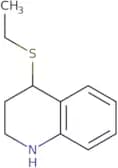
CAS:<p>Versatile small molecule scaffold</p>Formula:C14H13NO2Purity:Min. 95%Molecular weight:227.26 g/mol4-(Ethylsulfanyl)-1,2,3,4-tetrahydroquinoline
CAS:<p>Versatile small molecule scaffold</p>Formula:C11H15NSPurity:Min. 95%Molecular weight:193.3 g/mol(1R,3S,5R)-2-(tert-Butoxycarbonyl)-2-azabicyclo[3.1.0]hexane-3-carboxylic Acid
CAS:<p>(1R,3S,5R)-2-(tert-Butoxycarbonyl)-2-azabicyclo[3.1.0]hexane-3-carboxylic Acid is a stereoselective and scalable synthesis of (1R,3S,5R)-2-(tert-butoxycarbonyl)-2-azabicyclo[3.1.0]hexane-3-carboxylic acid that can be synthesized in a two step sequence with high yield and high stereoselectivity. The cyclopropanation of the carboxylate group with allyl bromide provides the desired product in good yield and high selectivity (>90% ee).</p>Formula:C11H17NO4Purity:Min. 95%Molecular weight:227.26 g/mol(1S,3S,5S)-2-[(tert-butoxy)carbonyl]-2-azabicyclo[3.1.0]hexane-3-carboxylic acid
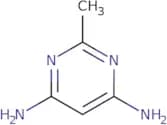
CAS:<p>Versatile small molecule scaffold</p>Formula:C11H17NO4Purity:Min. 95%Molecular weight:227.3 g/mol2-Methylpyrimidine-4,6-diamine
CAS:<p>Versatile small molecule scaffold</p>Formula:C5H8N4Purity:Min. 95%Molecular weight:124.14 g/mol3-[(benzyloxy)methyl]cyclobutan-1-ol
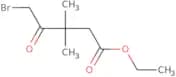
CAS:<p>3-[(Benzyloxy)methyl]cyclobutan-1-ol is a crystalline solid with a melting point of 174.5°C and density of 0.989 g/mL at 20°C. It has been shown to be an intermediate in the synthesis of various organic compounds, including dichloroketene, benzyl ethers, and allyl ethers. 3-[(Benzyloxy)methyl]cyclobutan-1-ol has been crystallographically characterized by X-ray diffraction and has been shown to undergo cycloaddition reactions with allene or 1,3-butadiene to form hexahydrobenzofurans or tetrahydrofurans, respectively.</p>Formula:C12H16O2Purity:Min. 95%Molecular weight:192.26 g/molEthyl 5-bromo-3,3-dimethyl-4-oxopentanoate
CAS:<p>Versatile small molecule scaffold</p>Formula:C9H15BrO3Purity:Min. 95%Molecular weight:251.12 g/mol5-{[(9H-Fluoren-9-yl)methoxy]carbonyl}-4H,5H,6H,7H-thieno[3,2-c]pyridine-2-carboxylic acid
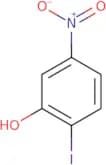
CAS:<p>Versatile small molecule scaffold</p>Formula:C23H19NO4SPurity:Min. 95%Molecular weight:405.5 g/mol2-Iodo-5-nitrophenol
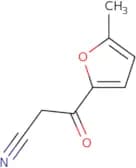
CAS:<p>2-Iodo-5-nitrophenol is an organic compound that is synthesized from the reaction of sodium azide and 2,6-dichloro-4-(trimethylammonium)benzene. The photoluminescence of this compound has been shown to be efficient, with a maximum emission wavelength of 590 nm. This chemical is soluble in a variety of solvents, including cyclodextrin and organic solvents such as acetone. This chemical can also be used in the synthesis of other compounds, such as alkynyl groups or ortho permethylated compounds.</p>Formula:C6H4INO3Purity:Min. 95%Molecular weight:265.01 g/mol3-(5-Methylfuran-2-yl)-3-oxopropanenitrile
CAS:<p>Versatile small molecule scaffold</p>Formula:C8H7NO2Purity:Min. 95%Molecular weight:149.15 g/molrac-(4aR,7aR)-Octahydro-1H-cyclopenta[C]pyridine-3,6-dione
CAS:<p>Versatile small molecule scaffold</p>Formula:C8H11NO2Purity:Min. 95%Molecular weight:153.18 g/mol4-[(2-Cyanophenyl)carbamoyl]butanoic acid
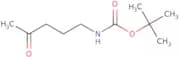
CAS:<p>Versatile small molecule scaffold</p>Formula:C12H12N2O3Purity:Min. 95%Molecular weight:232.23 g/moltert-Butyl N-(4-oxopentyl)carbamate
CAS:<p>Versatile small molecule scaffold</p>Formula:C10H19NO3Purity:Min. 95%Molecular weight:201.26 g/mol7-Amino-5-oxo-4H,5H-pyrazolo[1,5-a]pyrimidine-2-carboxylic acid
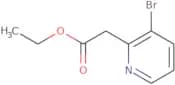
CAS:Versatile small molecule scaffoldFormula:C7H6N4O3Purity:Min. 95%Molecular weight:194.15 g/molEthyl 2-(3-bromopyridin-2-yl)acetate
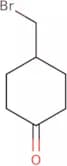
CAS:<p>Ethyl 2-(3-bromopyridin-2-yl)acetate is a synthetic compound that has been used in the treatment of cancer. It has been shown to be effective against colon cancer and cancer cell lines. Ethyl 2-(3-bromopyridin-2-yl)acetate binds to DNA and inhibits the activity of topoisomerase II, which is an enzyme that maintains the integrity of DNA. This inhibition leads to disruption of DNA synthesis and replication, leading to cell death. The antitumour activity of this compound is due to its ability to create reactive oxygen species (ROS), which lead to oxidative stress in cells.</p>Formula:C9H10BrNO2Purity:Min. 95%Molecular weight:244.09 g/mol4-(Bromomethyl)cyclohexan-1-one
CAS:<p>The bis-Grignard reagent, also known as a bifunctional organometallic compound, is an organic chemistry reactive intermediate used in the synthesis of diverse organic molecules. This type of reagent is prepared by the reaction of a magnesium halide with an alkyl or aryl halide. The Grignard reagent reacts with electrophiles to form carbon-carbon bonds. The catellani reaction is an example of this type of reaction. A new method for the efficient synthesis of 4-(bromomethyl)cyclohexan-1-one has been developed using a cross-coupling strategy and a phosphine ligand. This process begins with the formation of a palladium catalyst via oxidative addition, followed by nucleophilic displacement with methyl iodide to give 4-(bromomethyl)cyclohexan-1-one in high yield and excellent purity.</p>Formula:C7H11BrOPurity:Min. 95%Molecular weight:191.07 g/mol

![[3-(1H-Pyrazol-3-yl)phenyl]methanol](/_next/image/?url=https%3A%2Fstatic.cymitquimica.com%2Fproducts%2F3D%2Fthumb-webp%2FXHA09323.webp&w=3840&q=75)
![6,7-Dihydropyrazolo[1,5-a]pyridin-4(5H)-one](/_next/image/?url=https%3A%2Fstatic.cymitquimica.com%2Fproducts%2F3D%2Fthumb-webp%2FXHA09419.webp&w=3840&q=75)
![(1R,3S,5R)-2-(tert-Butoxycarbonyl)-2-azabicyclo[3.1.0]hexane-3-carboxylic Acid](/_next/image/?url=https%3A%2Fstatic.cymitquimica.com%2Fproducts%2F3D%2Fthumb-webp%2FXHA14234.webp&w=3840&q=75)
![(1S,3S,5S)-2-[(tert-butoxy)carbonyl]-2-azabicyclo[3.1.0]hexane-3-carboxylic acid](/_next/image/?url=https%3A%2Fstatic.cymitquimica.com%2Fproducts%2F3D%2Fthumb-webp%2FXHA14236.webp&w=3840&q=75)
![3-[(benzyloxy)methyl]cyclobutan-1-ol](/_next/image/?url=https%3A%2Fstatic.cymitquimica.com%2Fproducts%2F3D%2Fthumb-webp%2FXHA16753.webp&w=3840&q=75)
![5-{[(9H-Fluoren-9-yl)methoxy]carbonyl}-4H,5H,6H,7H-thieno[3,2-c]pyridine-2-carboxylic acid](/_next/image/?url=https%3A%2Fstatic.cymitquimica.com%2Fproducts%2F3D%2Fthumb-webp%2FXHA23814.webp&w=3840&q=75)
![rac-(4aR,7aR)-Octahydro-1H-cyclopenta[C]pyridine-3,6-dione](/_next/image/?url=https%3A%2Fstatic.cymitquimica.com%2Fproducts%2F3D%2Fthumb-webp%2FXHA25070.webp&w=3840&q=75)
![4-[(2-Cyanophenyl)carbamoyl]butanoic acid](/_next/image/?url=https%3A%2Fstatic.cymitquimica.com%2Fproducts%2F3D%2Fthumb-webp%2FXHA31078.webp&w=3840&q=75)
![7-Amino-5-oxo-4H,5H-pyrazolo[1,5-a]pyrimidine-2-carboxylic acid](/_next/image/?url=https%3A%2Fstatic.cymitquimica.com%2Fproducts%2F3D%2Fthumb-webp%2FXHA36786.webp&w=3840&q=75)