


Building Blocks
This section contains fundamental products for the synthesis of organic and biological compounds. Building blocks are the essential starting materials used to construct complex molecules through various chemical reactions. They play a critical role in drug discovery, material science, and chemical research. At CymitQuimica, we offer a diverse range of high-quality building blocks to support your innovative research and industrial projects, ensuring you have the essential components for successful synthesis.
Subcategories of "Building Blocks"
- Boronic Acids & Boronic Acid Derivatives(5,756 products)
- Chiral Building Blocks(1,242 products)
- Hydrocarbon Building Blocks(6,095 products)
- Organic Building Blocks(61,038 products)
Found 196817 products of "Building Blocks"
Sort by
Purity (%)
0
100
|
0
|
50
|
90
|
95
|
100
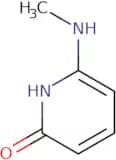
6-(Methylamino)pyridin-2-ol
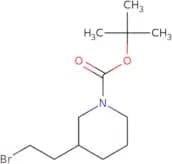
CAS:<p>Versatile small molecule scaffold</p>Formula:C6H8N2OPurity:Min. 95%Molecular weight:124.14 g/moltert-Butyl 3-(2-bromoethyl)piperidine-1-carboxylate
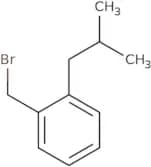
CAS:<p>Versatile small molecule scaffold</p>Formula:C12H22BrNO2Purity:Min. 95%Molecular weight:292.22 g/mol1-(Bromomethyl)-2-(2-methylpropyl)benzene
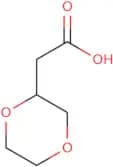
CAS:<p>Versatile small molecule scaffold</p>Formula:C11H15BrPurity:Min. 95%Molecular weight:227.14 g/mol1,4-dioxane-2-acetic acid
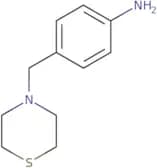
CAS:<p>1,4-dioxane-2-acetic acid is a polar molecule with an acid functional group. It can be extracted from hexanoic acid or synthesized by the reaction of isophorone and nitrosurea. It reacts with proton transfer to form a hexanoyl anion, which is then hydrolyzed to form the hexanoic acid product. The rate of this reaction depends on the concentration of 1,4-dioxane-2-acetic acid and proton donor. This reaction mechanism is characterized by its kinetic constants, which are temperature dependent.<br>1,4-dioxane-2-acetic acid has been used in the synthesis of hexanoic acid derivatives that are used as food additives and preservatives.</p>Formula:C6H10O4Purity:Min. 95%Molecular weight:146.14 g/mol4-(Thiomorpholin-4-ylmethyl)aniline
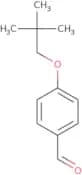
CAS:<p>Versatile small molecule scaffold</p>Formula:C11H16N2SPurity:Min. 95%Molecular weight:208.33 g/mol4-(2,2-Dimethylpropoxy)benzaldehyde
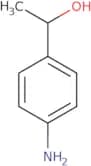
CAS:<p>Versatile small molecule scaffold</p>Formula:C12H16O2Purity:Min. 95%Molecular weight:192.25 g/mol(1R)-1-(4-Aminophenyl)ethan-1-ol
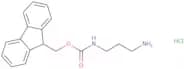
CAS:<p>Versatile small molecule scaffold</p>Formula:C8H11NOPurity:Min. 95%Molecular weight:137.18 g/molFmoc-DAP.HCl
CAS:<p>Versatile small molecule scaffold</p>Formula:C18H21ClN2O2Purity:Min. 95%Molecular weight:332.83 g/mol1-[2,4-Bis(difluoromethoxy)phenyl]ethan-1-one
CAS:<p>Versatile small molecule scaffold</p>Formula:C10H8F4O3Purity:Min. 95%Molecular weight:252.16 g/mol3-(4-Aminophenyl)cyclopentan-1-one
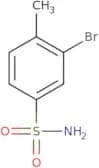
CAS:<p>Versatile small molecule scaffold</p>Formula:C11H13NOPurity:Min. 95%Molecular weight:175.2 g/mol3-Bromo-4-methylbenzenesulfonamide
CAS:<p>Versatile small molecule scaffold</p>Formula:C7H8BrNO2SPurity:Min. 95%Molecular weight:250.12 g/mol1-(3-Bromophenyl)cyclobutan-1-ol
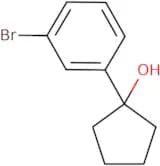
CAS:<p>Versatile small molecule scaffold</p>Formula:C10H11BrOPurity:Min. 95%Molecular weight:227.1 g/mol1-(3-Bromophenyl)cyclopentan-1-ol
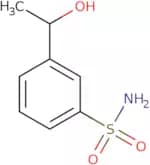
CAS:<p>Versatile small molecule scaffold</p>Formula:C11H13BrOPurity:Min. 95%Molecular weight:241.12 g/mol3-(1-Hydroxyethyl)benzene-1-sulfonamide
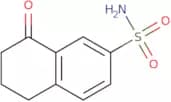
CAS:<p>Versatile small molecule scaffold</p>Formula:C8H11NO3SPurity:Min. 95%Molecular weight:201.25 g/mol8-Oxo-5,6,7,8-tetrahydronaphthalene-2-sulfonamide
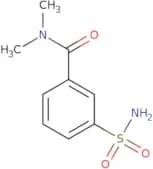
CAS:<p>Versatile small molecule scaffold</p>Formula:C10H11NO3SPurity:Min. 95%Molecular weight:225.27 g/molN,N-Dimethyl-3-sulfamoylbenzamide
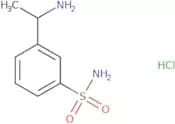
CAS:<p>Versatile small molecule scaffold</p>Formula:C9H12N2O3SPurity:Min. 95%Molecular weight:228.27 g/mol3-(1-Aminoethyl)benzene-1-sulfonamide hydrochloride
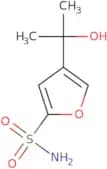
CAS:<p>Versatile small molecule scaffold</p>Formula:C8H13ClN2O2SPurity:Min. 95%Molecular weight:236.72 g/mol4-(2-Hydroxypropan-2-yl)furan-2-sulfonamide
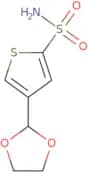
CAS:<p>Versatile small molecule scaffold</p>Formula:C7H11NO4SPurity:Min. 95%Molecular weight:205.23 g/mol4-(1,3-Dioxolan-2-yl)thiophene-2-sulfonamide
CAS:<p>Versatile small molecule scaffold</p>Formula:C7H9NO4S2Purity:Min. 95%Molecular weight:235.3 g/mol4H,5H,6H,7H-[1,2,3]Triazolo[1,5-a]pyridine
CAS:<p>4H,5H,6H,7H-[1,2,3]Triazolo[1,5-a]pyridine (TP) is a pyridyl-containing heterocycle that has been reported to act as a catalyst for organic reactions. TP is used in the synthesis of natural products and other organic compounds. In addition to being an effective catalyst for various organic reactions, TP also forms ionic liquid complexes with ionic solvents such as 1-butyl-3-methylimidazolium chloride and 1-butyl-3-methylpyrrolidinium chloride. The solvent properties of these complexes are optimized by the presence of the TP moiety.</p>Formula:C6H9N3Purity:Min. 95%Molecular weight:123.16 g/mol

![1-[2,4-Bis(difluoromethoxy)phenyl]ethan-1-one](/_next/image/?url=https%3A%2Fstatic.cymitquimica.com%2Fproducts%2F3D%2Fthumb-webp%2FKIA81649.webp&w=3840&q=75)
![4H,5H,6H,7H-[1,2,3]Triazolo[1,5-a]pyridine](/_next/image/?url=https%3A%2Fstatic.cymitquimica.com%2Fproducts%2F3D%2Fthumb-webp%2FKIA88066.webp&w=3840&q=75)