Building Blocks
This section contains fundamental products for the synthesis of organic and biological compounds. Building blocks are the essential starting materials used to construct complex molecules through various chemical reactions. They play a critical role in drug discovery, material science, and chemical research. At CymitQuimica, we offer a diverse range of high-quality building blocks to support your innovative research and industrial projects, ensuring you have the essential components for successful synthesis.
Subcategories of "Building Blocks"
- Boronic Acids & Boronic Acid Derivatives(5,756 products)
- Chiral Building Blocks(1,242 products)
- Hydrocarbon Building Blocks(6,095 products)
- Organic Building Blocks(61,055 products)
Found 199650 products of "Building Blocks"
Sort by
Purity (%)
0
100
|
0
|
50
|
90
|
95
|
100
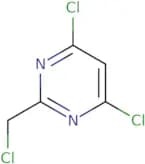
4,6-Dichloro-2-(chloromethyl)pyrimidine
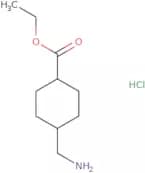
CAS:<p>Versatile small molecule scaffold</p>Formula:C5H3Cl3N2Purity:Min. 95%Molecular weight:197.45 g/moltrans-Ethyl (1r,4r)-4-(aminomethyl)cyclohexane-1-carboxylate hydrochloride
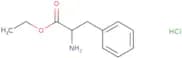
CAS:<p>Versatile small molecule scaffold</p>Formula:C10H20ClNO2Purity:Min. 95%Molecular weight:221.72 g/molethyl 3-phenyl-DL-alaninate hydrochloride
CAS:<p>Ethyl 3-phenyl-DL-alaninate hydrochloride (3PA) is a potent and selective inhibitor of protein synthesis. It has been shown to inhibit the production of pro-inflammatory cytokines, such as tumor necrosis factor α (TNF-α), in vitro. 3PA is an amide that shows no significant toxicity or adverse effects in rats. This drug inhibits the enzyme activity of protein kinase C, which affects the function of several other enzymes, including cyclooxygenase and lipoxygenase. 3PA also has a skeletal effect by inhibiting the metabolism of amino acids and glycosides. The drug can be formulated as an ester hydrochloride salt for oral administration.</p>Formula:C11H16ClNO2Purity:Min. 95%Molecular weight:229.7 g/mol2-[(ethoxycarbonyl)amino]-3-phenylpropanoic acid
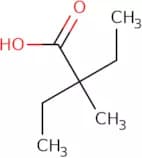
CAS:<p>2-[(Ethoxycarbonyl)amino]-3-phenylpropanoic acid is an organic compound that is used as a reagent for the synthesis of esters. It has been used in the synthesis of methylene, carbonic, and chiral pentafluorophenol. 2-[(Ethoxycarbonyl)amino]-3-phenylpropanoic acid has also been shown to be analogous to ethyl chloroformate, yielding high yields with less reactive conditions than ethyl chloroformate. 2-[(Ethoxycarbonyl)amino]-3-phenylpropanoic acid can be used to synthesize active esters such as 1-hydroxybenzotriazole by reacting with n-hydroxysuccinimide and chloroformate.</p>Formula:C12H15NO4Purity:Min. 95%Molecular weight:237.26 g/mol2-Ethyl-2-methylbutanoic acid
CAS:<p>2-Ethyl-2-methylbutanoic acid is a molecule that can be used to produce trimethylacetic acid, which is an intermediate in the production of biodegradable plastic. The trimerization of 2-ethyl-2-methylbutanoic acid to form trimethylacetic acid can be achieved by reacting with trimethylacetate and ethylene. 2-Ethyl-2-methylbutanoic acid can also be converted into formic acid and butyric acid by carbonylation. Zeolites are often used as catalysts during this reaction. 2-Ethyl-2-methylbutanoic acid has the ability to react with alcohols, such as methanol, ethanol, or propanol, and form esters. These reactions occur through a process called esterification.</p>Formula:C7H14O2Purity:Min. 95%Molecular weight:130.2 g/mol(1S,3S,5S)-6,6-Dimethyl-2-methylidenebicyclo[3.1.1]heptan-3-ol
CAS:(1S,3S,5S)-6,6-Dimethyl-2-methylidenebicyclo[3.1.1]heptan-3-ol is a monoterpene hydrocarbon that has been found to be an allelopathic agent. It inhibits the growth of plants by interfering with their ability to produce energy and may have a role in the natural regulation of plant communities. This compound is found in the essential oils of Onobrychis viciifolia and other plants, and is used as a natural nutrient for cell culture. The molecular weight of (1S,3S,5S)-6,6-dimethyl-2-methylidenebicyclo[3.1.1]heptan-3-ol is 172.21 g/mol and it has a melting point of 106°C. This compound also has two enantiomers: (1R,3R,5RFormula:C10H16OPurity:Min. 95%Molecular weight:152.23 g/mol(1R,3S,5R)-6,6-Dimethyl-2-methylidenebicyclo[3.1.1]heptan-3-ol
CAS:<p>(1R,3S,5R)-6,6-Dimethyl-2-methylidenebicyclo[3.1.1]heptan-3-ol is a natural product with β-pinene and α-pinene as its main components. The enantiomers of this compound have been analysed by gas chromatography and mass spectrometry (GC/MS). The 1H and 13C nuclear magnetic resonance (NMR) spectra of the enantiomer in cell culture media were obtained. Lanthanide shift experiments were performed to determine if lanthanides could be used as a weighting agent for the NMR spectra. The 1H NMR spectrum was obtained from a cell free system using the residuals from cells cultured with the enantiomer. A residual spectrum was obtained from the cells cultured with (1R,3S,5R)-6,6-dimethylbicyclo[3.1.1</p>Formula:C10H16OPurity:Min. 95%Molecular weight:152.23 g/mol6-Chloro-3H-imidazo[4,5-b]pyridine-2-thiol
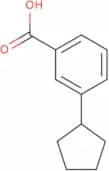
CAS:<p>Versatile small molecule scaffold</p>Formula:C6H4ClN3SPurity:Min. 95%Molecular weight:185.64 g/mol3-Cyclopentylbenzoic acid
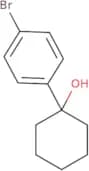
CAS:<p>Versatile small molecule scaffold</p>Formula:C12H14O2Purity:Min. 95%Molecular weight:190.24 g/mol1-(4-Bromophenyl)cyclohexanol
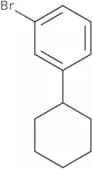
CAS:<p>Versatile small molecule scaffold</p>Formula:C12H15BrOPurity:Min. 95%Molecular weight:255.15 g/mol1-Bromo-3-cyclohexylbenzene
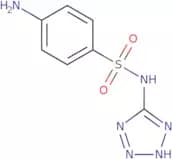
CAS:<p>Versatile small molecule scaffold</p>Formula:C12H15BrPurity:Min. 95%Molecular weight:239.15 g/mol4-Amino-N-(1H-tetrazol-5-yl)benzenesulfonamide
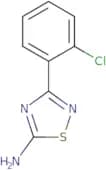
CAS:Versatile small molecule scaffoldFormula:C7H8N6O2SPurity:Min. 95%Molecular weight:240.25 g/mol3-(2-Chlorophenyl)-1,2,4-thiadiazol-5-amine
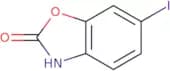
CAS:<p>Versatile small molecule scaffold</p>Formula:C8H6ClN3SPurity:Min. 95%Molecular weight:211.67 g/mol6-Iodo-2,3-dihydro-1,3-benzoxazol-2-one
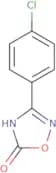
CAS:<p>Versatile small molecule scaffold</p>Formula:C7H4INO2Purity:Min. 95%Molecular weight:261.02 g/mol3-(4-Chlorophenyl)-1,2,4-oxadiazol-5(2H)-one
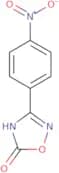
CAS:<p>Versatile small molecule scaffold</p>Formula:C8H5ClN2O2Purity:Min. 95%Molecular weight:196.59 g/mol3-(4-Nitrophenyl)-4,5-dihydro-1,2,4-oxadiazol-5-one
CAS:Versatile small molecule scaffoldFormula:C8H5N3O4Purity:Min. 95%Molecular weight:207.14 g/mol1-Phenyl-pyrazolidine-3,5-dione
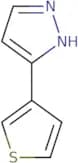
CAS:<p>1-Phenyl-pyrazolidine-3,5-dione is a synthetic compound that has been synthesized as an analog of the natural product pyrazolidine. It is a potential antibacterial agent that has shown in vitro activity against bacteria such as Escherichia coli and Pseudomonas aeruginosa. 1-Phenyl-pyrazolidine-3,5-dione inhibits protein synthesis by inhibiting tyrosine kinase, which is required for the production of proteins vital to cell division. It also exhibits antiinflammatory properties.</p>Formula:C9H8N2O2Purity:Min. 95%Molecular weight:176.18 g/mol5-(3-Thienyl)-1H-pyrazole
CAS:<p>Versatile small molecule scaffold</p>Formula:C7H6N2SPurity:Min. 95%Molecular weight:150.2 g/molN-{[5-(4-Nitrophenyl)furan-2-yl]methylidene}hydroxylamine
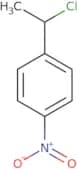
CAS:<p>Versatile small molecule scaffold</p>Formula:C11H8N2O4Purity:Min. 95%Molecular weight:232.19 g/mol1-(1-Chloroethyl)-4-nitrobenzene
CAS:<p>1-(1-Chloroethyl)-4-nitrobenzene is a nitrate that is used as a reagent in organic synthesis. It is prepared by the reaction of 1-chloroethyl nitrate with sodium nitrite and ether in diethyl ether at reflux. The anion of this compound reacts with toluene, forming a tosylate salt. This reagent can be used for the cleavage of esters and amides.</p>Formula:C8H8ClNO2Purity:Min. 95%Molecular weight:185.61 g/mol

![2-[(ethoxycarbonyl)amino]-3-phenylpropanoic acid](/_next/image/?url=https%3A%2Fstatic.cymitquimica.com%2Fproducts%2F3D%2Fthumb-webp%2FUAA88732.webp&w=3840&q=75)
![(1S,3S,5S)-6,6-Dimethyl-2-methylidenebicyclo[3.1.1]heptan-3-ol](/_next/image/?url=https%3A%2Fstatic.cymitquimica.com%2Fproducts%2F3D%2Fthumb-webp%2FUAA88999.webp&w=3840&q=75)
![(1R,3S,5R)-6,6-Dimethyl-2-methylidenebicyclo[3.1.1]heptan-3-ol](/_next/image/?url=https%3A%2Fstatic.cymitquimica.com%2Fproducts%2F3D%2Fthumb-webp%2FUAA89498.webp&w=3840&q=75)
![6-Chloro-3H-imidazo[4,5-b]pyridine-2-thiol](/_next/image/?url=https%3A%2Fstatic.cymitquimica.com%2Fproducts%2F3D%2Fthumb-webp%2FUAA91837.webp&w=3840&q=75)

![N-{[5-(4-Nitrophenyl)furan-2-yl]methylidene}hydroxylamine](/_next/image/?url=https%3A%2Fstatic.cymitquimica.com%2Fproducts%2F3D%2Fthumb-webp%2FUAA93432.webp&w=3840&q=75)