Building Blocks
This section contains fundamental products for the synthesis of organic and biological compounds. Building blocks are the essential starting materials used to construct complex molecules through various chemical reactions. They play a critical role in drug discovery, material science, and chemical research. At CymitQuimica, we offer a diverse range of high-quality building blocks to support your innovative research and industrial projects, ensuring you have the essential components for successful synthesis.
Subcategories of "Building Blocks"
- Boronic Acids & Boronic Acid Derivatives(5,756 products)
- Chiral Building Blocks(1,242 products)
- Hydrocarbon Building Blocks(6,095 products)
- Organic Building Blocks(61,038 products)
Found 196817 products of "Building Blocks"
Sort by
Purity (%)
0
100
|
0
|
50
|
90
|
95
|
100
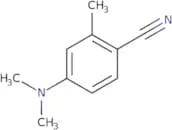
4-(Dimethylamino)-2-methylbenzonitrile
CAS:<p>4-(Dimethylamino)-2-methylbenzonitrile is a picosecond laser dye that is used for analysing the kinetics of chemical reactions. It is used in organic chemistry to study reaction rates and mechanisms, as well as to determine the orientation and isomerisation of molecules in a reaction. 4-(Dimethylamino)-2-methylbenzonitrile can be mixed with acetonitrile to produce a fluorescent substance that can be detected by high pressure fluorescence spectroscopy.</p>Formula:C10H12N2Purity:Min. 95%Molecular weight:160.22 g/mol7,8-Dimethyl-1,2,3,4-tetrahydroquinoline
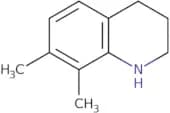
CAS:<p>Versatile small molecule scaffold</p>Formula:C11H15NPurity:Min. 95%Molecular weight:161.24 g/mol5,7-Dimethyl-1,2,3,4-tetrahydroquinoline
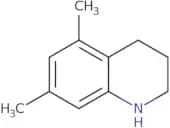
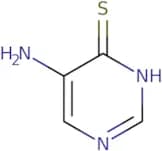
CAS:<p>Versatile small molecule scaffold</p>Formula:C11H15NPurity:Min. 95%Molecular weight:161.24 g/mol5-Amino-3,4-dihydropyrimidine-4-thione
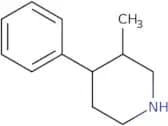
CAS:<p>5-Amino-3,4-dihydropyrimidine-4-thione is a crystalline compound that belongs to the class of organic compounds. It is a white or almost colorless solid with a melting point of 147°C. 5-Amino-3,4-dihydropyrimidine-4-thione has been used as a catalyst in organic synthesis and as a reagent in organic chemistry. This substance can be found in both crystalline and amorphous forms. 5-Amino-3,4-dihydropyrimidine-4-thione is soluble in ethanol and acrylonitrile, but insoluble in water.</p>Formula:C4H5N3SPurity:Min. 95%Molecular weight:127.17 g/mol3-Methyl-4-phenylpiperidine
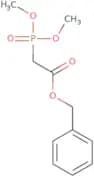
CAS:<p>3-Methyl-4-phenylpiperidine is a ligand that binds to the κ opioid receptor. It has high affinity binding and can be used as a radioligand for the κ opioid receptor. 3-Methyl-4-phenylpiperidine has been shown to have a conformation that is similar to morphine, but with less affinity for the μ and δ receptors. Structural modifications have been made to this compound in order to find compounds with improved properties. These modifications include adding an isopropyl group on the piperidine ring and replacing the phenyl ring with a methyl group.</p>Formula:C12H17NPurity:Min. 95%Molecular weight:175.27 g/molBenzyl Dimethylphosphonoacetate
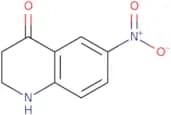
CAS:<p>Benzyl dimethylphosphonoacetate (BDP) is a chiral compound that has been used as a fluorophore, and has shown to be an enhancer for fluorescence. It has also been used in the synthesis of carboxylic acids and hydroxyl groups. BDP is unsymmetrical, containing both a c1-c6 alkoxy group and a halogeno group. The hydroxyl group makes it useful for lipid synthesis, while the halogeno group gives it the ability to bind to cholesterol. BDP also has neuropathic effects and can inhibit macrolide resistance. The c1-c6 alkoxy group allows it to act as a hydroxamic acid, which inhibits cholesterol synthesis by inhibiting HMG-CoA reductase. Finally, its fluorophore properties allow it to be used in heterocycle synthesis.</p>Formula:C11H15O5PPurity:Min. 95%Molecular weight:258.21 g/mol6-Nitro-1,2,3,4-tetrahydroquinolin-4-one
CAS:<p>6-Nitro-1,2,3,4-tetrahydroquinolin-4-one is a quinolinone that can be prepared by the reaction of potassium hydroxide with acrylic acid in the presence of anhydrous acetic acid. It has been shown to have a molecular weight of 197.24 and a melting point of 159.5°C. The compound has been used as a starting material for the synthesis of other compounds such as 4-nitrocatechol and 3,6-dinitrocatechol. 6-Nitro-1,2,3,4-tetrahydroquinolin-4-one is used as a reagent in various organic reactions and it is also used as an intermediate for the synthesis of catechols.</p>Formula:C9H8N2O3Purity:Min. 95%Molecular weight:192.17 g/molChloromethylstyrene (m- and p- mixture) (stabilized with TBC + ONP + o-Nitrocresol)
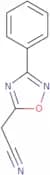
CAS:<p>Chloromethylstyrene is a hydrophobic chemical that is soluble in organic solvents. It is used as a monomer and crosslinker in the production of polymers, such as polypropylene, polyethylene, and polyvinyl chloride. Chloromethylstyrene (m- and p- mixture) (stabilized with TBC + ONP + o-Nitrocresol) also has an affinity for metal hydroxides and can be used to remove these substances from wastewater. This chemical is highly stable in the presence of radiation and many other chemicals. Chloromethylstyrene has been shown to have good performance as a polymerization initiator for organic reactions and is used in the production of membranes. The Langmuir adsorption isotherm model has been used to study chloromethylstyrene's reaction with chloride ions, nitrogen atoms, and oligosaccharides.</p>Formula:C9H9ClPurity:Min. 95%Molecular weight:152.62 g/mol2-(3-Phenyl-1,2,4-oxadiazol-5-yl)acetonitrile
CAS:<p>Versatile small molecule scaffold</p>Formula:C10H7N3OPurity:Min. 95%Molecular weight:185.18 g/mol6-Methoxy-2-methyl-3,4-dihydro-2H-1,4-benzoxazin-3-one
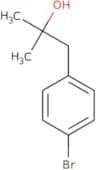
CAS:<p>Versatile small molecule scaffold</p>Formula:C10H11NO3Purity:Min. 95%Molecular weight:193.2 g/mol1-(4-Bromophenyl)-2-methylpropan-2-ol
CAS:<p>Versatile small molecule scaffold</p>Formula:C10H13BrOPurity:Min. 95%Molecular weight:229.11 g/molrac-Ethyl (3aR,7aS)-2-oxo-octahydro-1H-indole-3a-carboxylate
CAS:<p>Versatile small molecule scaffold</p>Formula:C11H17NO3Purity:Min. 95%Molecular weight:211.3 g/mol3-Hydroxy-1-benzofuran-2-carbonitrile
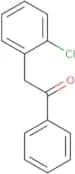
CAS:<p>Versatile small molecule scaffold</p>Formula:C9H5NO2Purity:Min. 95%Molecular weight:159.14 g/mol2-(2-Chlorophenyl)-1-phenylethan-1-one
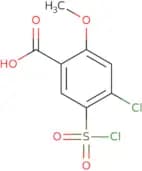
CAS:<p>Versatile small molecule scaffold</p>Formula:C14H11ClOPurity:Min. 95%Molecular weight:230.69 g/mol4-chloro-5-(chlorosulfonyl)-2-methoxybenzoic acid
CAS:<p>Versatile small molecule scaffold</p>Formula:C8H6Cl2O5SPurity:Min. 95%Molecular weight:285.09 g/molBenzeneacetic acid, 3,4-dimethyl-, methyl ester
CAS:<p>Versatile small molecule scaffold</p>Formula:C11H14O2Purity:Min. 95%Molecular weight:178.23 g/mol(2R)-2-Amino-3-(methyldisulfanyl)propanoic acid hydrochloride
CAS:<p>Versatile small molecule scaffold</p>Formula:C4H10ClNO2S2Purity:Min. 95%Molecular weight:203.7 g/molPyrazolo[1,5-a]pyrimidin-7(1H)-one
CAS:<p>Pyrazolo[1,5-a]pyrimidin-7(1H)-one (PPY) is a natural product that has been shown to be active against tuberculosis in humans. PPY inhibits the activity of fatty acid synthase and cyclooxygenase, which are enzymes that play a role in the biosynthesis of prostaglandin E2. PPY also inhibits the proliferation of ovary cells and increases hyperactivity in mammalian cells. It has been shown to have antidepressant effects and may be used for treatment of depression.</p>Formula:C6H5N3OPurity:Min. 95%Molecular weight:135.12 g/mol1-Aminopyrazin-1-ium 2,4,6-trimethylbenzene-1-sulfonate
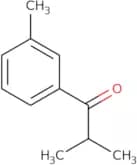
CAS:<p>Versatile small molecule scaffold</p>Formula:C13H17N3O3SPurity:Min. 95%Molecular weight:295.36 g/mol2-Methyl-1-(3-methylphenyl)propan-1-one
CAS:<p>Versatile small molecule scaffold</p>Formula:C11H14OPurity:Min. 95%Molecular weight:162.23 g/mol






![Pyrazolo[1,5-a]pyrimidin-7(1H)-one](/_next/image/?url=https%3A%2Fstatic.cymitquimica.com%2Fproducts%2F3D%2Fthumb-webp%2FHCA48979.webp&w=3840&q=75)