Building Blocks
This section contains fundamental products for the synthesis of organic and biological compounds. Building blocks are the essential starting materials used to construct complex molecules through various chemical reactions. They play a critical role in drug discovery, material science, and chemical research. At CymitQuimica, we offer a diverse range of high-quality building blocks to support your innovative research and industrial projects, ensuring you have the essential components for successful synthesis.
Subcategories of "Building Blocks"
- Boronic Acids & Boronic Acid Derivatives(5,756 products)
- Chiral Building Blocks(1,242 products)
- Hydrocarbon Building Blocks(6,095 products)
- Organic Building Blocks(61,055 products)
Found 199650 products of "Building Blocks"
Sort by
Purity (%)
0
100
|
0
|
50
|
90
|
95
|
100
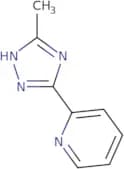
2-(3-Methyl-1H-1,2,4-triazol-5-yl)pyridine
CAS:<p>2-(3-Methyl-1H-1,2,4-triazol-5-yl)pyridine is a cytotoxic compound that can be used to induce cell death. It binds to cisplatin, forming a covalent bond with the sulfur atom of the ligand. This process results in DNA crosslinking and inhibition of RNA synthesis. The compound can also be used as a radioprotective agent. 2-(3-Methyl-1H-1,2,4-triazol-5-yl)pyridine has been shown to have antihemolytic properties and is not toxic to human cells at low concentrations.</p>Formula:C8H8N4Purity:Min. 95%Molecular weight:160.18 g/mol1-Methyl-5-phenyl-1h-imidazole-2-thiol
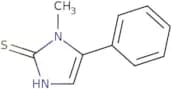
CAS:1-Methyl-5-phenyl-1H-imidazole-2-thiol (1MPHT) is an experimental drug that has been shown to be an active inhibitor of the enzyme protein kinase C delta (PKCδ). PKCδ is a serine/threonine kinase that is involved in inflammatory bowel disease and hepatic steatosis. 1MPHT has also been shown to inhibit dextran sulfate, a molecule that activates Toll-like receptor 4 (TLR4), which plays a role in the pathogenesis of inflammatory bowel disease. More research needs to be done to determine the effects of 1MPHT on cancer cell viability.Formula:C10H10N2SPurity:Min. 95%Molecular weight:190.27 g/mol2-(Methylsulfanyl)-4-phenyl-1H-imidazole
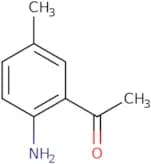
CAS:<p>Versatile small molecule scaffold</p>Formula:C10H10N2SPurity:Min. 95%Molecular weight:190.27 g/mol1-(2-Amino-5-methylphenyl)ethan-1-one
CAS:<p>Versatile small molecule scaffold</p>Formula:C9H11NOPurity:Min. 95%Molecular weight:149.19 g/molPropyl 4-methylpentanoate
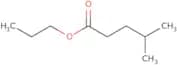
CAS:<p>Propyl 4-methylpentanoate is a carboxylic acid that has been shown to have antibacterial activity. It is used in the production of perfumes and flavors, as well as in the manufacture of polymers. The compound has a taste that is described as slightly acidic with a phenolic odor. It was also found to be effective at inhibiting the growth of bacteria such as Staphylococcus aureus and Streptococcus pyogenes.</p>Formula:C9H18O2Purity:Min. 95%Molecular weight:158.24 g/mol2-tert-Butyl-5-chloroaniline
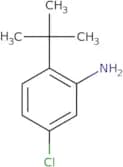
CAS:<p>Versatile small molecule scaffold</p>Formula:C10H14ClNPurity:Min. 95%Molecular weight:183.68 g/mol3-Cyclohexyl-2-hydroxypropanoic acid
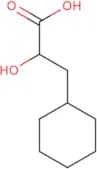
CAS:<p>Versatile small molecule scaffold</p>Formula:C9H16O3Purity:Min. 95%Molecular weight:172.22 g/mol(2-Chloro-2-phenylacetyl)urea
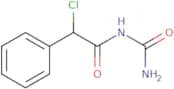
CAS:<p>Clorpheniramine is a drug that blocks the action of acetylcholine in the central and peripheral nervous system. It is used to relieve the symptoms of allergies, such as runny nose and watery eyes, and also to control coughing. Clorpheniramine has been found to be safe for use in children. The drug acts by blocking the receptors for acetylcholine on neuronal cells, which prevents stimulation of these cells by acetylcholine. Clorpheniramine also affects ion channels and prevents normal nerve transmission. Clorpheniramine has a wide spectrum of activity, which includes disorders of the nervous system and ectopic expression in normal tissues. This drug may be prescribed for subtypes of nervous system disorders such as neurodevelopmental disorders, where it has been shown to normalize sodium channel function.</p>Formula:C9H9ClN2O2Purity:Min. 95%Molecular weight:212.63 g/mol2-(1-Acetylpiperidin-2-yl)acetic acid
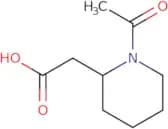
CAS:<p>Versatile small molecule scaffold</p>Formula:C9H15NO3Purity:Min. 95%Molecular weight:185.22 g/mol2-Hydroxy-5-iodo-3-nitropyridine
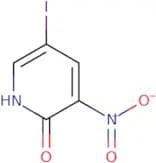
CAS:<p>Versatile small molecule scaffold</p>Formula:C5H3IN2O3Purity:Min. 95%Molecular weight:265.99 g/mol3-Iodo-5-nitropyridine
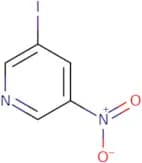
CAS:<p>Versatile small molecule scaffold</p>Formula:C5H3IN2O2Purity:Min. 95%Molecular weight:249.99 g/mol1-Chloro-5-methylhexan-2-one
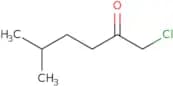
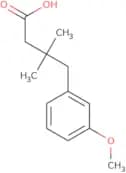
CAS:<p>Versatile small molecule scaffold</p>Formula:C7H13ClOPurity:Min. 95%Molecular weight:148.63 g/mol4-(3-Methoxyphenyl)-3,3-dimethylbutanoic acid
CAS:Versatile small molecule scaffoldFormula:C13H18O3Purity:Min. 95%Molecular weight:222.28 g/mol2-Phenylindolizine
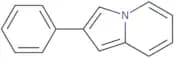
CAS:<p>2-Phenylindolizine is a chemical compound that can be used in the synthesis of other compounds. It has been shown to react with acrylonitrile to form a nitrile, which is an important intermediate in organic chemistry. 2-Phenylindolizine has also been shown to react with benzaldehyde, creating an acetal and a diazo compound. The reaction of 2-phenylindolizine with a chiral electrophile yields two different products. This reaction is highly efficient and can be screened for desirable products using fluorescence and yield measurements.</p>Formula:C14H11NPurity:Min. 95%Molecular weight:193.24 g/mol2-Imidazol-1-yl-benzylamine
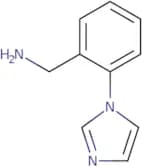
CAS:<p>Versatile small molecule scaffold</p>Formula:C10H11N3Purity:Min. 95%Molecular weight:173.22 g/mol1-(2,6-Diethylphenyl)-1H-imidazole-2-thiol
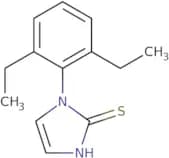
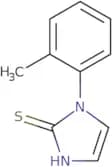
CAS:<p>Versatile small molecule scaffold</p>Formula:C13H16N2SPurity:Min. 95%Molecular weight:232.35 g/mol1-(2-methylphenyl)-1H-imidazole-2-thiol
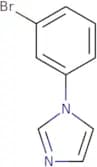
CAS:<p>Versatile small molecule scaffold</p>Formula:C10H10N2SPurity:Min. 95%Molecular weight:190.26 g/mol1-(3-Bromophenyl)-1H-imidazole
CAS:<p>Versatile small molecule scaffold</p>Formula:C9H7BrN2Purity:Min. 95%Molecular weight:223.07 g/moltert-Butyl N-methyl-N-[(4-methylbenzenesulfonyl)oxy]carbamate
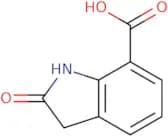
CAS:<p>Versatile small molecule scaffold</p>Formula:C13H19NO5SPurity:Min. 95%Molecular weight:301.36 g/mol2-oxo-Indoline-7-carboxylic acid
CAS:<p>2-Oxo-indoline-7-carboxylic acid is an antiinflammatory agent that belongs to the class of hydrazines. It has been shown to have antiinflammatory activity in stepwise manner, which starts with a hydrazine group attacking the carbonyl group of a carboxylic acid and forming a new heterocyclic ring. 2-Oxo-indoline-7-carboxylic acid also has esterase inhibitory effect and can be used for the treatment of inflammatory diseases such as rheumatoid arthritis.</p>Formula:C9H7NO3Purity:Min. 95%Molecular weight:177.16 g/mol


![tert-Butyl N-methyl-N-[(4-methylbenzenesulfonyl)oxy]carbamate](/_next/image/?url=https%3A%2Fstatic.cymitquimica.com%2Fproducts%2F3D%2Fthumb-webp%2FABA37096.webp&w=3840&q=75)