Building Blocks
This section contains fundamental products for the synthesis of organic and biological compounds. Building blocks are the essential starting materials used to construct complex molecules through various chemical reactions. They play a critical role in drug discovery, material science, and chemical research. At CymitQuimica, we offer a diverse range of high-quality building blocks to support your innovative research and industrial projects, ensuring you have the essential components for successful synthesis.
Subcategories of "Building Blocks"
- Boronic Acids & Boronic Acid Derivatives(5,756 products)
- Chiral Building Blocks(1,242 products)
- Hydrocarbon Building Blocks(6,093 products)
- Organic Building Blocks(60,522 products)
Found 195533 products of "Building Blocks"
Sort by
Purity (%)
0
100
|
0
|
50
|
90
|
95
|
100
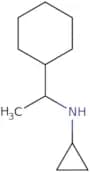
N-(1-Cyclohexylethyl)cyclopropanamine
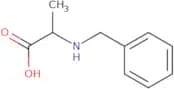
CAS:<p>Versatile small molecule scaffold</p>Formula:C11H21NPurity:Min. 95%Molecular weight:167.29 g/mol(2S)-2-(Benzylamino)propanoic acid
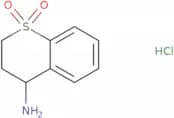
CAS:<p>(2S)-2-(Benzylamino)propanoic acid is an optical prodrug that has a high selectivity index against viruses. It is hydrolyzed to formamide and benzylamine in the presence of water, which can be used as a precursor for the synthesis of purines. 2-(Benzylamino)propanoic acid also has antiviral activity and can be used to synthesize nitroaromatic compounds. This compound displays nonlinear optical properties with an effective wavelength range of 400-500 nm, making it useful for applications such as laser treatment and photodynamic therapy. The solvents used in this reaction are n-dimethyl formamide (DMF) and hydrochloric acid.</p>Formula:C10H13NO2Purity:Min. 95%Molecular weight:179.22 g/mol3,4-Dihydro-2H-thiochromen-4-amine 1,1-dioxide hydrochloride
CAS:<p>Versatile small molecule scaffold</p>Formula:C9H12ClNO2SPurity:Min. 95%Molecular weight:233.72 g/mol1-(4-Methyl-1,3-thiazol-2-yl)ethan-1-ol
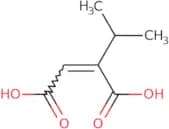
CAS:<p>Versatile small molecule scaffold</p>Formula:C6H9NOSPurity:Min. 95%Molecular weight:143.21 g/mol(2E)-2-(Propan-2-yl)but-2-enedioic acid
CAS:<p>(2E)-2-(Propan-2-yl)but-2-enedioic acid is a solid catalyst for the oxidation of alcohols to carbonyl compounds. It is used in vitro to study the effects of genotoxic agents on cells and to evaluate the efficacy of cancer treatments. (2E)-2-(Propan-2-yl)but-2-enedioic acid has been shown to induce mutations in corynebacterium, corynebacterium glutamicum, and other bacteria. This compound can also be used as a neutral pH buffer in assays. The gene product catalyzes the conversion of oxaloacetate into acetyl coenzyme A (acetyl CoA). Acetyl CoA is an important intermediate in cellular respiration that helps to generate energy. In vivo tests have shown that (2E)-2-(Propan-2-yl)but-2-enedioic acid inhibits the growth</p>Formula:C7H10O4Purity:Min. 95%Molecular weight:158.15 g/mol4-Hydroxy-1-benzofuran-6-carboxylic acid
CAS:<p>Versatile small molecule scaffold</p>Formula:C9H6O4Purity:Min. 95%Molecular weight:178.14 g/mol3-[(Piperidin-1-yl)methyl]benzoic acid hydrochloride
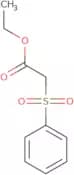
CAS:<p>Versatile small molecule scaffold</p>Formula:C13H18ClNO2Purity:Min. 95%Molecular weight:255.74 g/molEthyl Phenylsulfonylacetate
CAS:<p>Ethyl phenylsulfonylacetate (EPSA) is an organic compound that contains a hydroxy group, halides, and a hydrogen bond. EPSA inhibits the activity of palladium complexes by binding to the active methylene group. The phosphite group in EPSA may act as an absorber for electron density in the benzyl groups. This results in an intramolecular hydrogen bond formation and asymmetric synthesis that leads to higher isolated yields of EPSA.</p>Formula:C10H12O4SPurity:Min. 95%Molecular weight:228.26 g/mol(R)-1-(Pyridin-3-yl)ethanol
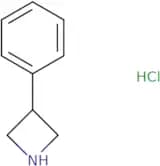
CAS:<p>The reaction rate of (R)-1-(pyridin-3-yl)ethanol is dependent on the type of organic ligands that are present. The biotransformations of this compound include triazolium, mutant, and biomolecular stereoselective reactions. The coordination of this compound with ionic liquids has been shown to be stereoselective. This molecule has also been synthesized using chiral ruthenium complexes as catalysts in order to generate a chiral product.</p>Formula:C7H9NOPurity:Min. 95%Molecular weight:123.16 g/mol3-Phenylazetidine hydrochloride
CAS:<p>Versatile small molecule scaffold</p>Formula:C9H11N·HClPurity:Min. 95%Molecular weight:133.19 g/mol3-(4-Chlorophenyl)azetidine hydrochloride
CAS:<p>Versatile small molecule scaffold</p>Formula:C9H11Cl2NPurity:Min. 95%Molecular weight:204.09 g/mol4-(Azetidin-3-yl)phenol hydrochloride
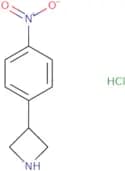
CAS:<p>Versatile small molecule scaffold</p>Formula:C9H12ClNOPurity:Min. 95%Molecular weight:185.7 g/mol3-(4-Nitrophenyl)azetidine hydrochloride
CAS:<p>Versatile small molecule scaffold</p>Formula:C9H11ClN2O2Purity:Min. 95%Molecular weight:214.65 g/mol3-(4-Methoxyphenyl)azetidine hydrochloride
CAS:<p>Versatile small molecule scaffold</p>Formula:C10H14ClNOPurity:Min. 95%Molecular weight:199.68 g/mol3-Cyclohexylazetidine hydrochloride
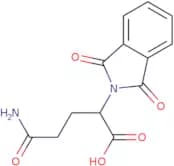
CAS:<p>Versatile small molecule scaffold</p>Formula:C9H18ClNPurity:Min. 95%Molecular weight:175.7 g/mol5-Amino-2-(1,3-dioxoisoindolin-2-yl)-5-oxopentanoic Acid
CAS:<p>5-Amino-2-(1,3-dioxoisoindolin-2-yl)-5-oxopentanoic acid is a synthetic derivative that is used as a drug substance. It has been shown to inhibit the activity of glycosylases and eicosatetraynoic acid in human serum. The drug also inhibits the growth of cancer cells in CD-1 mice and humans. 5-Amino-2-(1,3-dioxoisoindolin-2-yl)-5-oxopentanoic acid has been shown to be reactive with hydroxyl ions, nucleophilic attacks, and nucleophilic groups. This drug can be used for the treatment of diseases such as HIV/AIDS and cancer.</p>Formula:C13H12N2O5Purity:Min. 95%Molecular weight:276.25 g/mol2-tert-Butylsulfanylbenzoic acid
CAS:<p>Versatile small molecule scaffold</p>Formula:C11H14O2SPurity:Min. 95%Molecular weight:210.29 g/mol4-(Bromomethyl)benzenesulfonyl fluoride
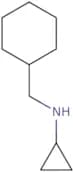
CAS:<p>4-(Bromomethyl)benzenesulfonyl fluoride (BMF) is a covalent inhibitor that binds to the active site of serum albumin and reversibly inhibits the enzyme. It has been shown to be an effective inhibitor, with low toxicity and high specificity for human serum albumin. BMF has been shown to inhibit the synthesis of glycosaminoglycans in human fibroblast cells. It also inhibits cellular protein synthesis and reduces the amount of albumin in serum.</p>Formula:C7H6BrFO2SPurity:Min. 95%Molecular weight:253.09 g/molN-(Cyclohexylmethyl)cyclopropanamine
CAS:<p>Versatile small molecule scaffold</p>Formula:C10H19NPurity:Min. 95%Molecular weight:153.26 g/mol1-Bromo-2-(2-bromoethanesulfonyl)ethane
CAS:<p>Versatile small molecule scaffold</p>Formula:C4H8Br2O2SPurity:Min. 95%Molecular weight:279.98 g/mol



![3-[(Piperidin-1-yl)methyl]benzoic acid hydrochloride](/_next/image/?url=https%3A%2Fstatic.cymitquimica.com%2Fproducts%2F3D%2Fthumb-webp%2FHAA59682.webp&w=3840&q=75)