Building Blocks
This section contains fundamental products for the synthesis of organic and biological compounds. Building blocks are the essential starting materials used to construct complex molecules through various chemical reactions. They play a critical role in drug discovery, material science, and chemical research. At CymitQuimica, we offer a diverse range of high-quality building blocks to support your innovative research and industrial projects, ensuring you have the essential components for successful synthesis.
Subcategories of "Building Blocks"
- Boronic Acids & Boronic Acid Derivatives(5,756 products)
- Chiral Building Blocks(1,242 products)
- Hydrocarbon Building Blocks(6,095 products)
- Organic Building Blocks(61,038 products)
Found 196817 products of "Building Blocks"
Sort by
Purity (%)
0
100
|
0
|
50
|
90
|
95
|
100
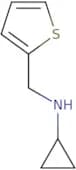
Cyclopropyl-thiophen-2-ylmethyl-amine
CAS:<p>Versatile small molecule scaffold</p>Formula:C8H11NSPurity:Min. 95%Molecular weight:153.25 g/mol(E)-3-(m-Tolyl)acrylic acid
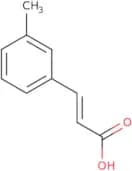
CAS:<p>(E)-3-(m-Tolyl)acrylic acid is a natural flavonoid compound found in plants. It is an intermediate in the biosynthesis of phenylpropanoids, which are a group of plant secondary metabolites. (E)-3-(m-Tolyl)acrylic acid has been shown to inhibit the production of heterocyclic amines, which are carcinogenic compounds formed during the cooking process of meat and fish. In addition, this compound has been shown to have cytotoxic effects on cancer cells and inhibitory effects on malonic acid production in plants. (E)-3-(m-Tolyl)acrylic acid is synthesized from cinnamic acid derivatives and hydroxyl groups. It is also produced by sulfonation of eugenol with sulfuric acid followed by oxidation with hydrogen peroxide.</p>Formula:C10H10O2Purity:Min. 95%Molecular weight:162.19 g/mol3-Chlorocinnamic acid
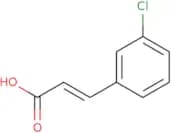
CAS:<p>3-Chlorocinnamic acid is a potential anticancer agent that has been shown to stimulate the growth of epidermal cells. It inhibits the activity of epidermal growth factor (EGF) and is active against some forms of cancer. 3-Chlorocinnamic acid binds to an activated form of the epidermal growth factor receptor and prevents its activation. 3-Chlorocinnamic acid also inhibits pro-apoptotic protein kinase activities, which may be useful for treating conditions such as tuberculosis. The chemical group in this compound is responsible for its optical properties and its ability to bind to proteins with cinnamoyl groups.</p>Formula:C9H7ClO2Purity:Min. 95%Molecular weight:182.6 g/mol3,5,5-Trimethyl-2-pyrrolidinone
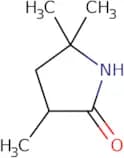
CAS:<p>3,5,5-Trimethyl-2-pyrrolidinone is a cyclic hydrocarbon that is produced by the photolysis of acetonylacetone. It undergoes hydrolysis to form 3,5,5-trimethyl-3-oxazolidinone and 2-oxopropanal. The former reacts with nitrones to form oxaziridines and pyrrolidinones. 3,5,5-Trimethyl-2-pyrrolidinone can be used as a protecting group for hydroxyl groups in organic synthesis.</p>Formula:C7H13NOPurity:Min. 95%Molecular weight:127.18 g/mol1-Amino-1,2,3,4-tetrahydropyrimidine-2,4-dione
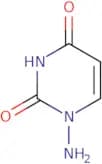
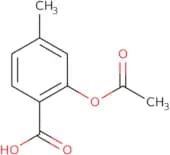
CAS:<p>1-Amino-1,2,3,4-tetrahydropyrimidine-2,4-dione is an alkynyl amine that is used in the agricultural industry as a binding agent for acid. It has been shown to bind to cyanoalkyl, haloalkyl and aminouracil groups. The compound also has a variety of other uses in the pharmaceutical industry including use as a nerve toxin. 1-Amino-1,2,3,4-tetrahydropyrimidine-2,4-dione is also used as a spectrum diluent and can be used in refluxing reactions with nitro compounds.</p>Formula:C4H5N3O2Purity:Min. 95%Molecular weight:127.1 g/mol2-(Acetyloxy)-4-methylbenzoic acid
CAS:<p>2-(Acetyloxy)-4-methylbenzoic acid (AMBA) is a compound that is used in the field of health care. It has been shown to have neuroprotective effects and to reduce neuronal apoptosis, which may be due to its ability to attenuate proinflammatory responses. AMBA has also been shown to inhibit the formation of amyloid plaques in Alzheimer's disease. This compound has also shown anti-inflammatory properties and can be used as a treatment for neuroinflammation. AMBA inhibits the activation of caspases, which are responsible for initiating the apoptosis pathway by cleaving proteins necessary for cell survival, such as PARP1 or Bcl-2. The mechanism of action is not fully understood but it appears that AMBA alters mitochondrial function and reduces intracellular calcium levels.</p>Formula:C10H10O4Purity:Min. 95%Molecular weight:194.18 g/mol2-(Acetyloxy)-5-methylbenzoic acid
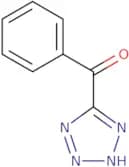
CAS:<p>Versatile small molecule scaffold</p>Formula:C10H10O4Purity:Min. 95%Molecular weight:194.18 g/mol5-Benzoyl-2H-1,2,3,4-tetrazole
CAS:<p>5-Benzoyl-2H-1,2,3,4-tetrazole is a pyrazole compound that can be synthesized by reacting an aliphatic azide with a sulfoxide. The reaction of the sulfoxide with potassium hydroxide and dimethylbenzoyl chloride produces the desired product. 5-Benzoyl-2H-1,2,3,4-tetrazole is used in research as a short term substrate for enzymes such as diazo compounds and tetrazole. It has also been shown to be capable of forming covalent bonds with alkali metal ions such as sodium and potassium. This compound is also useful for the synthesis of 2H-1,2,3,4-tetrazoles via diazotization.</p>Formula:C8H6N4OPurity:Min. 95%Molecular weight:174.16 g/mol5H,6H,7H,8H-Imidazo[1,5-c]pyrimidin-5-one
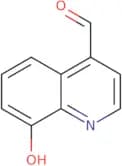
CAS:<p>5H,6H,7H,8H-Imidazo[1,5-c]pyrimidin-5-one is a marine alkaloid that belongs to the family of histamine. It is found in the sponge pseudoceratina and has been shown to have antifouling properties. 5H,6H,7H,8H-Imidazo[1,5-c]pyrimidin-5-one can be used as a treatment for hyperhistaminemia and may inhibit tyrosine hydroxylase activity.</p>Formula:C6H7N3OPurity:Min. 95%Molecular weight:137.14 g/mol8-Hydroxy-4-quinolinecarboxaldehyde
CAS:<p>8-Hydroxy-4-quinolinecarboxaldehyde is an alkaloid that is found in the bark of Broussonetia papyrifera, a tree native to Asia. Alkaloids are nitrogenous organic compounds that contain basic properties. 8-Hydroxy-4-quinolinecarboxaldehyde can be synthesized by reacting oxime with hydroquinone. This compound has been studied using spectroscopic methods and can be used as a starting point for the synthesis of other alkaloids.</p>Formula:C10H7NO2Purity:Min. 95%Molecular weight:173.17 g/mol2-Amino-3-[(2-phenylethyl)sulfanyl]propanoic acid
CAS:<p>Versatile small molecule scaffold</p>Formula:C11H15NO2SPurity:Min. 95%Molecular weight:225.31 g/mol[(2-Chloroethyl)(dimethylamino)phosphoryl]dimethylamine
CAS:<p>Versatile small molecule scaffold</p>Formula:C6H16ClN2OPPurity:Min. 95%Molecular weight:198.63 g/molSpiro[4.5]dec-6-en-8-one
CAS:<p>Spiro[4.5]dec-6-en-8-one is a natural product isolated from the leaves of plants in Madagascar. It has an inhibitory effect on insects and was sampled by researchers at the University of Florida. Spiro[4.5]dec-6-en-8-one can be extracted from camphene, naphthalene, and solenopsis. The compound inhibits the growth of insects through its inhibitory effects on protein synthesis by binding to ribosomal RNA. This activity is more pronounced in insect cells than in human cells, which may be due to a lower expression of ribosomal RNA in human cells.</p>Formula:C10H14OPurity:Min. 95%Color and Shape:Clear LiquidMolecular weight:150.22 g/mol7-Diethylamino-4-hydroxy-chromen-2-one
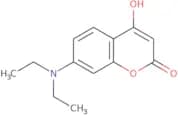
CAS:<p>7-Diethylamino-4-hydroxy-chromen-2-one is a fluorescent chemical compound that belongs to the family of atypical fluorophores. It has a number of photophysical properties, including fluorescence and regression, which are characteristic of amines. 7-Diethylamino-4-hydroxy-chromen-2-one can be synthesized from diazonium salt and 4-hydroxycoumarin. This chemical compound has been used as a fluorescent probe for nucleophilic reactions in various types of organic molecules. The nature of this fluorophore is unknown, but it may be due to its ability to shift the wavelength of fluorescence by up to 400 nm.</p>Formula:C13H15NO3Purity:Min. 95%Molecular weight:233.26 g/mol5-Methyl-3-oxohexanenitrile
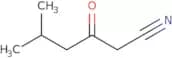
CAS:<p>5-Methyl-3-oxohexanenitrile is a dialkylamino compound that has been used as a reagent in organic chemistry. It is tautomeric and can exist as both an amide and an isoxazole. The pyridine ring of 5-methyl-3-oxohexanenitrile can be either substituted with a carbamate, nitro, or alkenyl group, depending on the substitution pattern. 5-Methyl-3-oxohexanenitrile reacts with dinitrophenyl to form an N–N bond, which is then cleaved by amines in order to generate the corresponding carbamate or amide. 5-Methyl-3-oxohexanenitrile also reacts with copper to form the corresponding nitro or alkenyl group.</p>Formula:C7H11NOPurity:Min. 95%Molecular weight:125.17 g/mol3-Amino-1-(4-ethoxyphenyl)thiourea
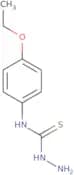
CAS:<p>Versatile small molecule scaffold</p>Formula:C9H13N3OSPurity:Min. 95%Molecular weight:211.29 g/mol3-Amino-1-(2,5-dimethylphenyl)thiourea
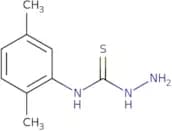
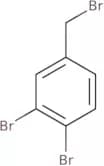
CAS:<p>Versatile small molecule scaffold</p>Formula:C9H13N3SPurity:Min. 95%Molecular weight:195.29 g/mol1,2-Dibromo-4-(bromomethyl)benzene
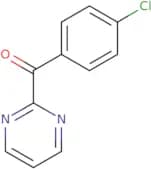
CAS:<p>1,2-Dibromo-4-(bromomethyl)benzene is a brominated organic compound that has been shown to act as a potent agonist for the peroxisome proliferator-activated receptor delta (PPARδ). It has been shown to have structural and biological effects on PPARδ. This compound has been used as a template in the synthesis of many other compounds. 1,2-Dibromo-4-(bromomethyl)benzene is non-selective and bioavailable, which means it can be taken orally or applied topically.</p>Formula:C7H5Br3Purity:Min. 95%Molecular weight:328.83 g/mol2-(4-Chlorobenzoyl)pyrimidine
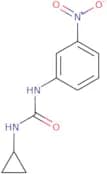
CAS:<p>Versatile small molecule scaffold</p>Formula:C11H7ClN2OPurity:Min. 95%Molecular weight:218.64 g/mol3-Cyclopropyl-1-(3-nitrophenyl)urea
CAS:<p>Versatile small molecule scaffold</p>Formula:C10H11N3O3Purity:Min. 95%Molecular weight:221.21 g/mol


![5H,6H,7H,8H-Imidazo[1,5-c]pyrimidin-5-one](/_next/image/?url=https%3A%2Fstatic.cymitquimica.com%2Fproducts%2F3D%2Fthumb-webp%2FPAA50966.webp&w=3840&q=75)
![2-Amino-3-[(2-phenylethyl)sulfanyl]propanoic acid](/_next/image/?url=https%3A%2Fstatic.cymitquimica.com%2Fproducts%2F3D%2Fthumb-webp%2FPAA51018.webp&w=3840&q=75)
![[(2-Chloroethyl)(dimethylamino)phosphoryl]dimethylamine](/_next/image/?url=https%3A%2Fstatic.cymitquimica.com%2Fproducts%2F3D%2Fthumb-webp%2FPAA51801.webp&w=3840&q=75)
![Spiro[4.5]dec-6-en-8-one](/_next/image/?url=https%3A%2Fstatic.cymitquimica.com%2Fproducts%2F3D%2Fthumb-webp%2FPAA52353.webp&w=3840&q=75)