Building Blocks
This section contains fundamental products for the synthesis of organic and biological compounds. Building blocks are the essential starting materials used to construct complex molecules through various chemical reactions. They play a critical role in drug discovery, material science, and chemical research. At CymitQuimica, we offer a diverse range of high-quality building blocks to support your innovative research and industrial projects, ensuring you have the essential components for successful synthesis.
Subcategories of "Building Blocks"
- Boronic Acids & Boronic Acid Derivatives(5,756 products)
- Chiral Building Blocks(1,242 products)
- Hydrocarbon Building Blocks(6,095 products)
- Organic Building Blocks(61,055 products)
Found 199650 products of "Building Blocks"
Sort by
Purity (%)
0
100
|
0
|
50
|
90
|
95
|
100
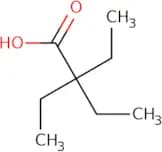
2,2-Diethylbutanoic acid
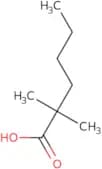
CAS:<p>2,2-Diethylbutanoic acid is a fluorescent probe that can be used to detect messenger RNA (mRNA). It is believed that 2,2-diethylbutanoic acid binds to the dinucleotide phosphate and inhibits the synthesis of proteins. This compound has been shown to inhibit tumor growth in mice by binding to the carboxylate and hydroxyl groups of the cell membrane. 2,2-Diethylbutanoic acid has also been used as an analog for clopidogrel, which is a drug that inhibits platelet aggregation.</p>Formula:C8H16O2Purity:Min. 95%Molecular weight:144.21 g/mol2,2-Dimethylhexanoic Acid
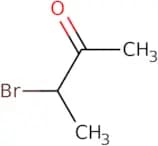
CAS:<p>2,2-Dimethylhexanoic Acid is an organic compound that belongs to the group of polycarboxylic acids. It is a colorless liquid with a strong odor and is soluble in water. 2,2-Dimethylhexanoic acid is used in wastewater treatment as a coagulant and flocculent. It has been shown to be effective at removing metals from wastewater, such as copper and nickel. This chemical also has high resistance to biological activity and can be used as a reactant in the synthesis of cationic surfactants and metal chelates. 2,2-Dimethylhexanoic acid has also been shown to inhibit viruses such as HIV, influenza A virus (IAV), and herpes simplex virus type 1 (HSV-1).</p>Formula:C8H16O2Purity:Min. 95%Molecular weight:144.21 g/mol3-Bromo-2-butanone
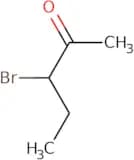
CAS:<p>3-Bromo-2-butanone is a chemical compound that has been detected in the lithosphere and is produced by the action of phosphorus pentoxide on brominated hydrocarbons. 3-Bromo-2-butanone can be used as an analog for acetaldehyde to study the effects of reactive species. It was found that 3-bromo-2-butanone reacts with phosphite in acetic acid to form a chlamydozonium ion and an acid catalyst, which leads to the formation of acetaldehyde. The reaction mechanism is shown below: 3BrCH=CHBr + P(O)OH → CH=CHCOH + H+ The overall reaction can be represented as: 3BrCH=CHBr + P(O)OH → CH=CHCOH + H+ HOAc + H+ → HOAc</p>Formula:C4H7BrOPurity:Min. 95%Color and Shape:Clear LiquidMolecular weight:151 g/mol3-Bromopentan-2-one
CAS:<p>3-Bromopentan-2-one is a furanone that has significant activity in biological screening. It is bicyclic and has an unsaturated five member ring. 3-Bromopentan-2-one is biologically active and can be used in the synthesis of both natural products and pharmaceuticals. The compound has been found to have significant activity against a variety of bacteria, fungi, and parasites. This drug also has anti-inflammatory activities and is being investigated for use in the treatment of psoriasis.</p>Formula:C5H9BrOPurity:Min. 95%Molecular weight:165.03 g/mol2-Bromo-3-pentanone
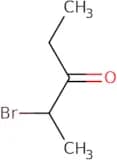
CAS:<p>2-Bromo-3-pentanone is a chemical reagent that is used in the synthesis of β-unsaturated ketones. It is produced by the alkylation of sodium hydroxide solution with 2-bromopentane, followed by the reaction with a ruthenium complex. The product can also be obtained from β-unsaturated ketones by reducing anhydrous sodium and sodium carbonate in a hydroxide solution. This process converts the carbonyl group to an alkene group. Cyclopentenones are obtained by dehydrogenation of ethyl esters, which can be achieved through reductive or stereoselective methods. Halides can be added as substituents to produce stereoisomers in stepwise reactions.</p>Formula:C5H9BrOPurity:Min. 95%Molecular weight:165.03 g/mol[2-(Cyclopentyloxy)-4-methylphenyl]methanamine
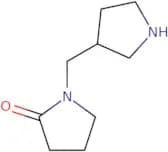
CAS:<p>Versatile small molecule scaffold</p>Formula:C13H19NOPurity:Min. 95%Molecular weight:205.3 g/mol1-(Pyrrolidin-3-ylmethyl)pyrrolidin-2-one
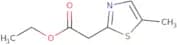
CAS:<p>Versatile small molecule scaffold</p>Formula:C9H16N2OPurity:Min. 95%Molecular weight:168.24 g/molEthyl 2-(5-methyl-1,3-thiazol-2-yl)acetate
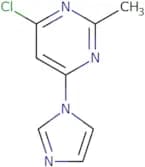
CAS:<p>Versatile small molecule scaffold</p>Formula:C8H11NO2SPurity:Min. 95%Molecular weight:185.25 g/mol4-Chloro-6-(1H-imidazol-1-yl)-2-methylpyrimidine
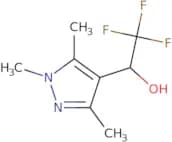
CAS:<p>Versatile small molecule scaffold</p>Formula:C8H7ClN4Purity:Min. 95%Molecular weight:194.62 g/mol2,2,2-Trifluoro-1-(trimethyl-1H-pyrazol-4-yl)ethan-1-ol
CAS:<p>Versatile small molecule scaffold</p>Formula:C8H11F3N2OPurity:Min. 95%Molecular weight:208.18 g/mol1-[(1-Ethyl-1H-pyrazol-4-yl)methyl]-1,4-diazepane
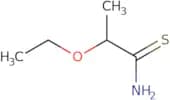
CAS:<p>Versatile small molecule scaffold</p>Formula:C11H20N4Purity:Min. 95%Molecular weight:208.3 g/mol2-Ethoxypropanethioamide
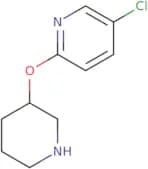
CAS:<p>Versatile small molecule scaffold</p>Formula:C5H11NOSPurity:Min. 95%Molecular weight:133.21 g/mol5-Chloro-2-(piperidin-3-yloxy)pyridine
CAS:<p>Versatile small molecule scaffold</p>Formula:C10H13ClN2OPurity:Min. 95%Molecular weight:212.67 g/mol[1-(Propan-2-yloxy)cyclohexyl]methanamine
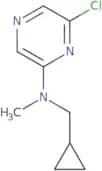
CAS:<p>Versatile small molecule scaffold</p>Formula:C10H21NOPurity:Min. 95%Molecular weight:171.28 g/mol6-Chloro-N-(cyclopropylmethyl)-N-methylpyrazin-2-amine
CAS:<p>Versatile small molecule scaffold</p>Formula:C9H12ClN3Purity:Min. 95%Molecular weight:197.66 g/mol2-[3-Methyl-1-(3-methylbutyl)-5-oxo-4,5-dihydro-1H-pyrazol-4-yl]acetic acid
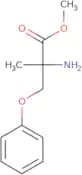
CAS:<p>Versatile small molecule scaffold</p>Formula:C11H18N2O3Purity:Min. 95%Molecular weight:226.27 g/molMethyl 2-amino-2-methyl-3-phenoxypropanoate
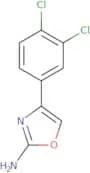
CAS:<p>Versatile small molecule scaffold</p>Formula:C11H15NO3Purity:Min. 95%Molecular weight:209.24 g/mol4-(3,4-Dichlorophenyl)-1,3-oxazol-2-amine
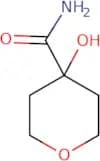
CAS:<p>Versatile small molecule scaffold</p>Formula:C9H6Cl2N2OPurity:Min. 95%Molecular weight:229.06 g/mol4-Hydroxyoxane-4-carboxamide
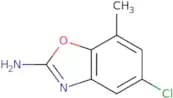
CAS:<p>Versatile small molecule scaffold</p>Formula:C6H11NO3Purity:Min. 95%Molecular weight:145.16 g/mol5-Chloro-7-methyl-1,3-benzoxazol-2-amine
CAS:<p>Versatile small molecule scaffold</p>Formula:C8H7ClN2OPurity:Min. 95%Molecular weight:182.61 g/mol

![[2-(Cyclopentyloxy)-4-methylphenyl]methanamine](/_next/image/?url=https%3A%2Fstatic.cymitquimica.com%2Fproducts%2F3D%2Fthumb-webp%2FAAC16762.webp&w=3840&q=75)
![1-[(1-Ethyl-1H-pyrazol-4-yl)methyl]-1,4-diazepane](/_next/image/?url=https%3A%2Fstatic.cymitquimica.com%2Fproducts%2F3D%2Fthumb-webp%2FAAC18330.webp&w=3840&q=75)
![[1-(Propan-2-yloxy)cyclohexyl]methanamine](/_next/image/?url=https%3A%2Fstatic.cymitquimica.com%2Fproducts%2F3D%2Fthumb-webp%2FAAC18841.webp&w=3840&q=75)
![2-[3-Methyl-1-(3-methylbutyl)-5-oxo-4,5-dihydro-1H-pyrazol-4-yl]acetic acid](/_next/image/?url=https%3A%2Fstatic.cymitquimica.com%2Fproducts%2F3D%2Fthumb-webp%2FAAC19754.webp&w=3840&q=75)