Building Blocks
This section contains fundamental products for the synthesis of organic and biological compounds. Building blocks are the essential starting materials used to construct complex molecules through various chemical reactions. They play a critical role in drug discovery, material science, and chemical research. At CymitQuimica, we offer a diverse range of high-quality building blocks to support your innovative research and industrial projects, ensuring you have the essential components for successful synthesis.
Subcategories of "Building Blocks"
- Boronic Acids & Boronic Acid Derivatives(5,780 products)
- Chiral Building Blocks(1,241 products)
- Hydrocarbon Building Blocks(6,100 products)
- Organic Building Blocks(61,029 products)
Found 205306 products of "Building Blocks"
Sort by
Purity (%)
0
100
|
0
|
50
|
90
|
95
|
100
2,2-Dimethyl-3,4-dihydronaphthalen-1-one
CAS:Versatile small molecule scaffoldFormula:C12H14OPurity:Min. 95%Molecular weight:174.24 g/mol2,2-Dimethylpent-4-enenitrile
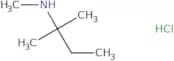
CAS:2,2-Dimethylpent-4-enenitrile is an organic compound that can be synthesized by the reaction of bromomethyl cyclopropane with a Grignard reagent. It is a useful synthetic intermediate for the synthesis of imines and carbonitriles. Grignard reagents are nucleophilic and react with alkenes to form addition products called imines. 2,2-Dimethylpent-4-enenitrile is a cyclic molecule that reacts with nucleophiles such as Grignard reagents in a nucleophilic substitution reaction. The addition product formed is known as an imine.Formula:C7H11NPurity:Min. 95%Molecular weight:109.17 g/molMethyl(2-methylbutan-2-yl)amine hydrochloride
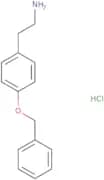
CAS:Versatile small molecule scaffoldFormula:C6H16ClNPurity:Min. 95%Molecular weight:137.65 g/mol4-Benzyloxy-Phenethylamine hydrochloride
CAS:Versatile small molecule scaffoldFormula:C15H18ClNOPurity:Min. 95%Molecular weight:263.77 g/molEthyl 2-Ethylbutyrate
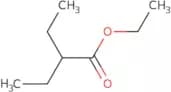
CAS:Ethyl 2-ethylbutyrate is a fatty acid ester that is synthesized from butyric acid and ethanol. It has been shown to have anti-inflammatory properties, which may be due to its ability to suppress pro-inflammatory cytokines such as IL-6 and TNF-α. This compound also suppresses the production of IL-10, an anti-inflammatory cytokine. The activity index of this product is 1.5.Formula:C8H16O2Purity:Min. 95%Molecular weight:144.21 g/mol3-(Cyclopropylmethoxy)propan-1-amine
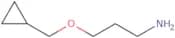
CAS:Versatile small molecule scaffoldFormula:C7H15NOPurity:Min. 95%Molecular weight:129.2 g/mol(6-Aminohexyl)(methyl)amine
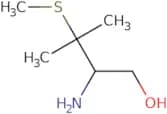
CAS:Versatile small molecule scaffoldFormula:C7H18N2Purity:Min. 95%Molecular weight:130.23 g/mol(2S)-2-Amino-3-methyl-3-(methylsulfanyl)butan-1-ol
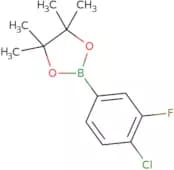
CAS:Versatile small molecule scaffoldFormula:C6H15NOSPurity:Min. 95%Molecular weight:149.3 g/mol2-(4-Chloro-3-fluorophenyl)-4,4,5,5-tetramethyl-1,3,2-dioxaborolane
CAS:Versatile small molecule scaffoldFormula:C12H15BClFO2Purity:Min. 95%Molecular weight:256.51 g/mol3-(Trifluoromethyl)-5-fluorophenylboronic acid pinacol ester
CAS:Versatile small molecule scaffold
Formula:C13H15BF4O2Purity:Min. 95%Molecular weight:290.06 g/mol2-[3-(Difluoromethyl)phenyl]-4,4,5,5-tetramethyl-1,3,2-dioxaborolane
CAS:Versatile small molecule scaffoldFormula:C13H17BF2O2Purity:Min. 95%Molecular weight:254.08 g/mol2-[3-(Difluoromethyl)-5-fluorophenyl]-4,4,5,5-tetramethyl-1,3,2-dioxaborolane
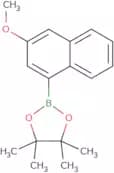
CAS:Versatile small molecule scaffoldFormula:C13H16BF3O2Purity:Min. 95%Molecular weight:272.07 g/mol2-(3-Methoxynaphthalen-1-yl)-4,4,5,5-tetramethyl-1,3,2-dioxaborolane
CAS:Versatile small molecule scaffoldFormula:C17H21BO3Purity:Min. 95%Molecular weight:284.2 g/mol2-[2-Fluoro-3-(trifluoromethyl)phenyl]-4,4,5,5-tetramethyl-1,3,2-dioxaborolane
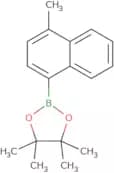
CAS:Versatile small molecule scaffoldFormula:C13H15BF4O2Purity:Min. 95%Molecular weight:290.06 g/mol4-Methylnaphthalene-1-boronic acid pinacol ester
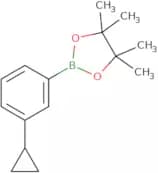
CAS:Versatile small molecule scaffoldFormula:C17H21BO2Purity:Min. 95%Molecular weight:268.16 g/mol2-(3-Cyclopropylphenyl)-4,4,5,5-tetramethyl-1,3,2-dioxaborolane
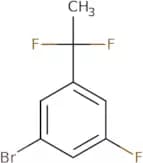
CAS:Versatile small molecule scaffoldFormula:C15H21BO2Purity:Min. 95%Molecular weight:244.14 g/mol1-Bromo-3-(1,1-difluoroethyl)-5-fluorobenzene
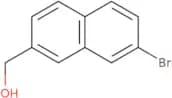
CAS:Versatile small molecule scaffoldFormula:C8H6BrF3Purity:Min. 95%Molecular weight:239.03 g/mol(7-Bromonaphthalen-2-yl)methanol
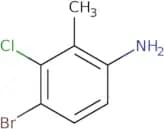
CAS:Versatile small molecule scaffoldFormula:C11H9BrOPurity:Min. 95%Molecular weight:237.09 g/mol4-Bromo-3-chloro-2-methylaniline
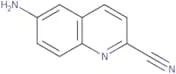
CAS:4-Bromo-3-chloro-2-methylaniline is a heterocyclic compound that is used in organic synthesis. It is a precursor in the preparation of saccharin, indoxyls and other heterocycles, as well as glycosylations. 4-Bromo-3-chloro-2-methylaniline can be prepared by the transfer of chlorine from chlorosulfonic acid to an alkene with bromine. The reaction yields a mixture of products, including glycosylations. This process can be monitored using thin layer chromatography or by enzymatic hydrolysis. The yield of this reaction is low, so it may need to be scaled up for industrial applications. 4-Bromo-3-chloro-2-methylaniline can also be prepared from indoxyls using halides. This process is mediated by sodium methoxide and potassium tetrachFormula:C7H7BrClNPurity:Min. 95%Molecular weight:220.49 g/mol6-Aminoquinoline-2-carbonitrile
CAS:Versatile small molecule scaffoldFormula:C10H7N3Purity:Min. 95%Molecular weight:169.18 g/mol



![2-[3-(Difluoromethyl)phenyl]-4,4,5,5-tetramethyl-1,3,2-dioxaborolane](/_next/image/?url=https%3A%2Fstatic.cymitquimica.com%2Fproducts%2F3D%2Fthumb-webp%2FCAB52589.webp&w=3840&q=75)
![2-[3-(Difluoromethyl)-5-fluorophenyl]-4,4,5,5-tetramethyl-1,3,2-dioxaborolane](/_next/image/?url=https%3A%2Fstatic.cymitquimica.com%2Fproducts%2F3D%2Fthumb-webp%2FCAB52604.webp&w=3840&q=75)
![2-[2-Fluoro-3-(trifluoromethyl)phenyl]-4,4,5,5-tetramethyl-1,3,2-dioxaborolane](/_next/image/?url=https%3A%2Fstatic.cymitquimica.com%2Fproducts%2F3D%2Fthumb-webp%2FCAB52648.webp&w=3840&q=75)