Building Blocks
This section contains fundamental products for the synthesis of organic and biological compounds. Building blocks are the essential starting materials used to construct complex molecules through various chemical reactions. They play a critical role in drug discovery, material science, and chemical research. At CymitQuimica, we offer a diverse range of high-quality building blocks to support your innovative research and industrial projects, ensuring you have the essential components for successful synthesis.
Subcategories of "Building Blocks"
- Boronic Acids & Boronic Acid Derivatives(5,756 products)
- Chiral Building Blocks(1,242 products)
- Hydrocarbon Building Blocks(6,095 products)
- Organic Building Blocks(61,037 products)
Found 196200 products of "Building Blocks"
Sort by
Purity (%)
0
100
|
0
|
50
|
90
|
95
|
100
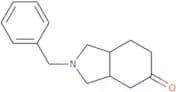
2-Benzyl-octahydro-1H-isoindol-5-one
CAS:<p>Versatile small molecule scaffold</p>Formula:C15H19NOPurity:Min. 95%Molecular weight:229.32 g/mol3-Phenylbicyclo[2.2.1]heptan-2-amine hydrochloride
CAS:<p>Versatile small molecule scaffold</p>Formula:C13H18ClNPurity:Min. 95%Molecular weight:223.74 g/mol1-Ethyl-3-(2-hydroxyethyl)urea
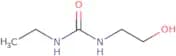
CAS:<p>1-Ethyl-3-(2-hydroxyethyl)urea is a chemical compound that is an equimolar mixture of two isomers, 1-ethyl-3-(2-hydroxyethyl)urea and 3-(2-hydroxyethyl)-1-methylurea. It has been shown to induce death in tumor cells, but not in normal cells. The molecular targets for this compound are the mitochondria and the DNA, which are essential for cell growth and division. This drug also has carcinogenic properties, meaning that it can cause cancer. In animal studies, 1-ethyl-3-(2-hydroxyethyl)urea has been shown to cause thyroid tumors and astrocytomas (brain tumors). In addition, this drug causes hepatocellular carcinoma in rats and gliomas (brain tumors) in animals.</p>Formula:C5H12N2O2Purity:Min. 95%Molecular weight:132.16 g/mol2-(5-Methyl-1,2,4-oxadiazol-3-yl)aniline
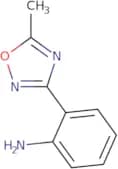
CAS:<p>Versatile small molecule scaffold</p>Formula:C9H9N3OPurity:Min. 95%Molecular weight:175.19 g/mol9-Methyl-9H-carbazole-3,6-dicarbaldehyde
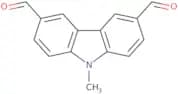
CAS:<p>Versatile small molecule scaffold</p>Formula:C15H11NO2Purity:Min. 95%Molecular weight:237.25 g/mol(2R)-1-Phenylbutan-2-ol
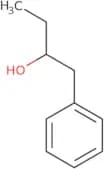
CAS:<p>(2R)-1-Phenylbutan-2-ol is an isomer of 1-phenyl-2-propanol. It has been shown to have potent antituberculosis activity, with a high yield and good stereochemical purity. In the tautomeric form, it inhibits the growth of Mycobacterium tuberculosis by inhibiting protein synthesis.</p>Formula:C10H14OPurity:Min. 95%Molecular weight:150.22 g/mol5-acetyltetrahydrofuran-2-one
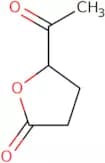
CAS:<p>5-acetyltetrahydrofuran-2-one (5AHT) is a natural compound that has been shown to have antimicrobial and antioxidant properties. It is a biomimetic of glutamic acid, which has been shown to have biological properties such as anti-inflammatory, antipyretic, analgesic and antidiabetic effects. 5AHT has been used in the preparation of diethyl succinate, an organic acid that has potential applications in food chemistry. The chemical structure of 5AHT consists of two carbonyl groups bonded to a furan ring with two hydroxyl groups on the other side. The resonance mass spectrum of 5AHT consists of an acetaldehyde peak at 20 ppm and a peak at 77 ppm for the methylene protons. The 5AHT molecule can exist in two isomers: <br>5AHT (E)-OCH3 or 5AHT (Z)-OCH3</p>Formula:C6H8O3Purity:Min. 95%Molecular weight:128.13 g/molN,N-Dimethyl-2-(N-methylacetamido)acetamide
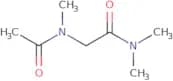
CAS:<p>N,N-Dimethyl-2-(N-methylacetamido)acetamide is an amide compound that is used as a solvent. It has a molecular weight of 143.16 and boiling point of 209 °C. This compound has been experimentally shown to have n-terminal kinetic stabilization and orbital interaction with the acceptor molecule. N,N-Dimethyl-2-(N-methylacetamido)acetamide is also underivatized, meaning it does not contain any functional groups for further chemical reactions. The conformational stability of this compound is dependent on the carbonyl oxygen at the c-terminus in addition to its electron affinities.</p>Formula:C7H14N2O2Purity:Min. 95%Molecular weight:158.2 g/mol1-Bromo-1,3-diphenylpropan-2-one
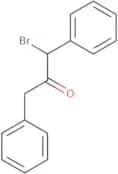
CAS:<p>Versatile small molecule scaffold</p>Formula:C15H13BrOPurity:Min. 95%Molecular weight:289.17 g/mol1-Methoxy-3-phenylpropan-2-one
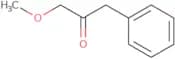
CAS:<p>Versatile small molecule scaffold</p>Formula:C10H12O2Purity:Min. 95%Molecular weight:164.2 g/mol2-Bromobenzohydrazide
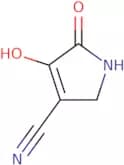
CAS:<p>2-Bromobenzohydrazide is an antibacterial agent that has been shown to have good intestinal absorption. It is a crystalline solid, which is soluble in organic solvents and insoluble in water. The molecular weight of 2-bromobenzohydrazide is 238.24 g/mol, with a melting point of 108°C. 2-Bromobenzohydrazide has been shown to be active against Streptococcus aureus, Mycobacterium tuberculosis, and other bacterial strains. The mechanism of action for 2-bromobenzohydrazide involves the formation of a covalent bond with amino groups on the cell wall or membrane surface of bacteria, which results in damage to the bacterial cell membrane. This inhibits the synthesis of proteins and nucleic acids as well as causes death by inhibiting cellular respiration.</p>Formula:C7H7BrN2OPurity:Min. 95%Molecular weight:215.05 g/mol4-Hydroxy-5-oxo-2,5-dihydro-1H-pyrrole-3-carbonitrile
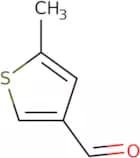
CAS:<p>Versatile small molecule scaffold</p>Formula:C5H4N2O2Purity:Min. 95%Molecular weight:124.1 g/mol5-Methylthiophene-3-carbaldehyde
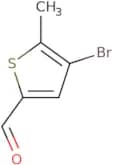
CAS:<p>5-Methylthiophene-3-carbaldehyde is a ketone that is the product of the reaction between 3,4-dimethoxybenzaldehyde and acetic acid. It is a colorless liquid with a sweet odor. 5-Methylthiophene-3-carbaldehyde has been used as a reagent for the synthesis of benzylic alcohols and as a starting material for other organic compounds.</p>Formula:C6H6OSPurity:Min. 95%Molecular weight:126.18 g/mol4-Bromo-5-methylthiophene-2-carboxaldehyde
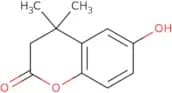
CAS:<p>4-Bromo-5-methylthiophene-2-carboxaldehyde (BMTCA) is a chemical that is synthesised by the reaction of ethylene with irradiation. It has been shown to have photochromic properties and can be used as an alternative to 4,4'-dithiodimorpholine (DIMO). BMTCA is hydrophilic and can be used for the synthesis of homologues. It also undergoes an x-ray structure analysis, yielding information on its physical properties and how it reacts with other chemicals. The process of digitalization allows for the conversion of analog signals into digital signals. This process uses a shift register, which is a device that stores data in sequential memory cells and outputs them on a single line. The diels–alder reaction is a chemical reaction between two unsaturated compounds to form 1,3-dienes or 1,4-diynes. This reaction is highly useful because it can</p>Formula:C6H5BrOSPurity:Min. 95%Molecular weight:205.07 g/mol6-Hydroxy-4,4-dimethyl-3,4-dihydro-2H-1-benzopyran-2-one
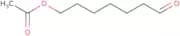
CAS:<p>6-Hydroxy-4,4-dimethyl-3,4-dihydro-2H-1-benzopyran-2-one (6HDM) is a lipid lowering agent that has been shown to have antibacterial activity. It is a synthetic drug with an optical imaging technique that has been shown to inhibit the growth of cancer cells in vitro. 6HDM also inhibits UVB induced skin cancer by decreasing the expression of p65. 6HDM inhibits the biosynthesis of nucleic acids and protein synthesis in cancer cells by acting as a competitive inhibitor for intramolecular hydrogen transfer. This leads to cell death through apoptosis and necrosis.</p>Formula:C11H12O3Purity:Min. 95%Molecular weight:192.21 g/mol7-Oxoheptyl acetate
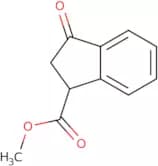
CAS:<p>7-Oxoheptyl acetate is a synthetic pheromone that has been shown to be an attractant for Lepidoptera. It is one of many compounds in the synthetic mixture 7-oxo-6,7,8,9-tetrahydro-1,4-benzodioxepin and it is used as an alternative to the natural pheromone (Z)-7-dodecenol. This compound has been shown to be stereoselective with respect to its ability to attract male moths. The compound was synthesized by Wittig reaction between the nitro group and hydroxyl group of 7-oxoheptanol.</p>Formula:C9H16O3Purity:Min. 95%Molecular weight:172.22 g/molMethyl 3-Oxoindane-1-carboxylate
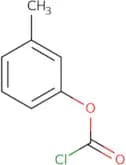
CAS:<p>Versatile small molecule scaffold</p>Formula:C11H10O3Purity:Min. 95%Molecular weight:190.2 g/mol3-Methylphenyl chloroformate
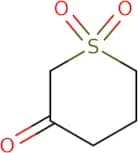
CAS:<p>Versatile small molecule scaffold</p>Formula:C8H7ClO2Purity:Min. 95%Molecular weight:170.59 g/molDihydro-2H-thiopyran-3(4H)-one-1,1-dioxide
CAS:<p>Dihydro-2H-thiopyran-3(4H)-one-1,1-dioxide is a cyclic compound that has been the subject of extensive study and research. Its synthesis was first reported in 1887, but it was not until 1985 that its chemical structure was elucidated. It has been shown to be an effective inhibitor of acetylcholinesterase. Dihydro-2H-thiopyran-3(4H)-one-1,1-dioxide is used as a reagent in screening for active methylene compounds. It can be used to synthesize aldehydes and azides. This molecule has also been studied extensively by x-ray crystallography and other techniques.</p>Formula:C5H8O3SPurity:Min. 95%Molecular weight:148.18 g/mol2,3-Dimethylthiomorpholine
CAS:<p>Versatile small molecule scaffold</p>Formula:C6H13NSPurity:Min. 95%Molecular weight:131.24 g/mol

![3-Phenylbicyclo[2.2.1]heptan-2-amine hydrochloride](/_next/image/?url=https%3A%2Fstatic.cymitquimica.com%2Fproducts%2F3D%2Fthumb-webp%2FEBA34514.webp&w=3840&q=75)