Building Blocks
This section contains fundamental products for the synthesis of organic and biological compounds. Building blocks are the essential starting materials used to construct complex molecules through various chemical reactions. They play a critical role in drug discovery, material science, and chemical research. At CymitQuimica, we offer a diverse range of high-quality building blocks to support your innovative research and industrial projects, ensuring you have the essential components for successful synthesis.
Subcategories of "Building Blocks"
- Boronic Acids & Boronic Acid Derivatives(5,756 products)
- Chiral Building Blocks(1,242 products)
- Hydrocarbon Building Blocks(6,095 products)
- Organic Building Blocks(61,051 products)
Found 199813 products of "Building Blocks"
Sort by
Purity (%)
0
100
|
0
|
50
|
90
|
95
|
100
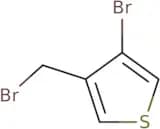
3-Bromo-4-(bromomethyl)thiophene
CAS:<p>Versatile small molecule scaffold</p>Formula:C5H4Br2SPurity:Min. 95%Molecular weight:255.96 g/mol3-Pyridin-4-ylaniline
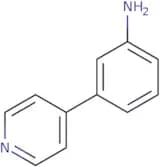
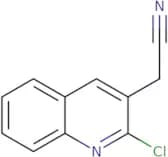
CAS:<p>3-Pyridin-4-ylaniline is a chemotherapeutic that can be used to treat cancer. It has been shown to inhibit the growth of tumors in mice with leukemia, and it inhibits the replication of human cancer cells in vitro. The chemical structure of 3-Pyridin-4-ylaniline includes a nitrogen atom connected to an aromatic ring. The nitrogen atom is also bonded to two ligands, which are pyridazine and carbonyl groups. 3-Pyridin-4-ylaniline binds to purines, a type of molecule that are found in DNA and RNA. This binding prevents the incorporation of purines into DNA and inhibits cancer cell proliferation by blocking DNA synthesis.</p>Formula:C11H10N2Purity:Min. 95%Molecular weight:170.21 g/mol2-(2-Chloroquinolin-3-yl)acetonitrile
CAS:<p>Versatile small molecule scaffold</p>Formula:C11H7ClN2Purity:Min. 95%Molecular weight:202.64 g/mol3,5-Dimethylphenyl Isothiocyanate
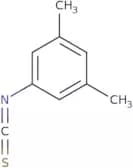
CAS:<p>3,5-Dimethylphenyl Isothiocyanate is a sulfur analogue that has the same molecular weight and chemical properties as 3,5-dimethylthiophenol. It is used to derivatize organic compounds with thiol groups via reactions with aliphatic, aromatic, and heterocyclic systems. The enantiomer of this compound is called S-(+)-3,5-dimethylphenyl isothiocyanate.</p>Formula:C9H9NSPurity:Min. 95%Molecular weight:163.24 g/mol6-(Benzyloxy)-1H-indole-2-carboxylic acid
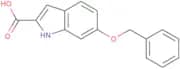
CAS:<p>Versatile small molecule scaffold</p>Formula:C16H13NO3Purity:Min. 95%Molecular weight:267.28 g/mol2-Methyl-1H-imidazole-4,5-dicarbonitrile
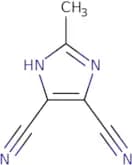
CAS:<p>Versatile small molecule scaffold</p>Formula:C6H4N4Purity:Min. 95%Molecular weight:132.12 g/mol2-[(Cyclopropylcarbonyl)amino]Benzoic Acid
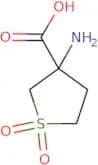
CAS:<p>Versatile small molecule scaffold</p>Formula:C11H11NO3Purity:Min. 95%Molecular weight:205.21 g/mol3-Aminotetrahydro-3-thiophenecarboxylic acid 1,1-dioxide
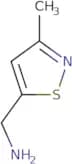
CAS:<p>Versatile small molecule scaffold</p>Formula:C5H9NO4SPurity:Min. 95%Molecular weight:179.2 g/mol(3-Methyl-1,2-thiazol-5-yl)methanamine
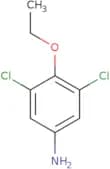
CAS:<p>Versatile small molecule scaffold</p>Formula:C5H8N2SPurity:Min. 95%Molecular weight:128.2 g/mol3,5-Dichloro-4-ethoxyaniline
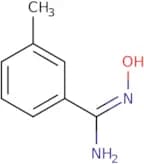
CAS:<p>Versatile small molecule scaffold</p>Formula:C8H9Cl2NOPurity:Min. 95%Molecular weight:206.07 g/mol3-Methylbenzamide oxime
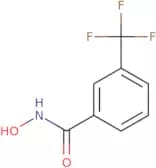
CAS:<p>3-Methylbenzamide oxime is a chemical compound that has the chemical formula C6H5N3O. It is used as a reagent in organic synthesis. 3-Methylbenzamide oxime also acts as a silver-containing oxidant, which can be used to generate hydrogen peroxide or silver oxide.</p>Formula:C8H10N2OPurity:Min. 95%Molecular weight:150.18 g/molN-Hydroxy-3-(trifluoromethyl)benzamide
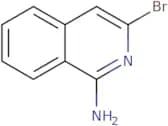
CAS:N-Hydroxymethyl-3-(trifluoromethyl)benzamide is an oxidative and reductive elimination agent that can be used in a variety of synthetic reactions. This compound can be used to synthesize hydroxamic acids, alkenylations, carboxylates, and other functionalized organic compounds. This compound is also useful for the preparation of aromatic carboxylic acid derivatives. The mechanism for this reaction is the hydroxamic acid formation through reductive elimination followed by the addition of an alcohol or amine. The reaction begins with the oxidative cleavage of an ester or amide bond to form a carbonyl group and a hydroxylamine moiety. The hydroxylamine then undergoes reductive elimination to yield a hydroxamic acid. This process is catalyzed by metal ions such as copper (Cu), zinc (Zn), and iron (Fe).Formula:C8H6F3NO2Purity:Min. 95%Molecular weight:205.13 g/mol3-bromoisoquinolin-1-amine
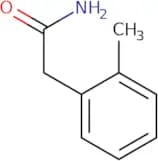
CAS:<p>Versatile small molecule scaffold</p>Formula:C9H7BrN2Purity:Min. 95%Molecular weight:223.1 g/mol2-(2-Methylphenyl)acetamide
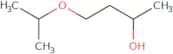
CAS:<p>Versatile small molecule scaffold</p>Formula:C9H11NOPurity:Min. 95%Molecular weight:149.19 g/mol4-(Propan-2-yloxy)butan-2-ol
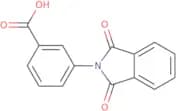
CAS:<p>Versatile small molecule scaffold</p>Formula:C7H16O2Purity:Min. 95%Molecular weight:132.2 g/mol3-(1,3-Dioxo-1,3-dihydroisoindol-2-yl)benzoic acid
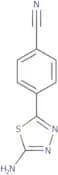
CAS:<p>Versatile small molecule scaffold</p>Formula:C15H9NO4Purity:Min. 95%Molecular weight:267.24 g/mol4-(5-Amino-1,3,4-thiadiazol-2-yl)benzonitrile
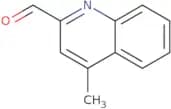
CAS:<p>Versatile small molecule scaffold</p>Formula:C9H6N4SPurity:Min. 95%Molecular weight:202.24 g/mol4-Methylquinoline-2-carboxaldehyde
CAS:<p>4-Methylquinoline-2-carboxaldehyde is a formylating agent that is used in the synthesis of heterocycles. It has been shown to react with methanol and mediated by oxidative conditions to produce formaldehyde. This reagent can be used for the functionalization of biomolecules by reacting with amines, thiols, and hydroxyl groups. 4-Methylquinoline-2-carboxaldehyde can also be used for the oxidative coupling of phenols and naphthols. The functional group on this compound is a carboxylic acid (-COH).</p>Formula:C11H9NOPurity:Min. 95%Molecular weight:171.19 g/mol8-Thia-4,6-diazatricyclo[7.5.0.0,2,7]tetradeca-1(9),2(7),5-trien-3-one
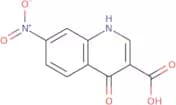
CAS:<p>8-Thia-4,6-diazatricyclo[7.5.0.0,2,7]tetradeca-1(9),2(7),5-trien-3-one is a synthetic antifungal molecule with inhibitory properties against the growth of fungi. This compound inhibits the biosynthesis of ergosterol, an essential component of the fungal cell membrane, by inhibiting the enzyme squalene epoxidase. 8-Thia-4,6-diazatricyclo[7.5.0.0,2,7]tetradeca-1(9),2(7),5-trien-3-one has been shown to be effective in killing Candida albicans and other species of pathogenic fungi in cell culture and animal models.</p>Formula:C11H12N2OSPurity:Min. 95%Molecular weight:220.29 g/mol4-Hydroxy-7-nitroquinoline-3-carboxylic acid
CAS:<p>Versatile small molecule scaffold</p>Formula:C10H6N2O5Purity:Min. 95%Molecular weight:234.16 g/mol

![2-[(Cyclopropylcarbonyl)amino]Benzoic Acid](/_next/image/?url=https%3A%2Fstatic.cymitquimica.com%2Fproducts%2F3D%2Fthumb-webp%2FQBA05721.webp&w=3840&q=75)
![8-Thia-4,6-diazatricyclo[7.5.0.0,2,7]tetradeca-1(9),2(7),5-trien-3-one](/_next/image/?url=https%3A%2Fstatic.cymitquimica.com%2Fproducts%2F3D%2Fthumb-webp%2FQBA10631.webp&w=3840&q=75)