


Building Blocks
This section contains fundamental products for the synthesis of organic and biological compounds. Building blocks are the essential starting materials used to construct complex molecules through various chemical reactions. They play a critical role in drug discovery, material science, and chemical research. At CymitQuimica, we offer a diverse range of high-quality building blocks to support your innovative research and industrial projects, ensuring you have the essential components for successful synthesis.
Subcategories of "Building Blocks"
- Boronic Acids & Boronic Acid Derivatives(5,756 products)
- Chiral Building Blocks(1,242 products)
- Hydrocarbon Building Blocks(6,095 products)
- Organic Building Blocks(61,037 products)
Found 196200 products of "Building Blocks"
Sort by
Purity (%)
0
100
|
0
|
50
|
90
|
95
|
100
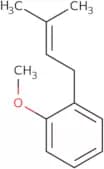
1-Methoxy-2-(3-methylbut-2-en-1-yl)benzene
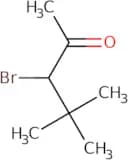
CAS:<p>Versatile small molecule scaffold</p>Formula:C12H16OPurity:Min. 95%Molecular weight:176.25 g/mol3-Bromo-4,4-dimethylpentan-2-one
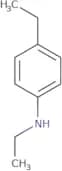
CAS:<p>Versatile small molecule scaffold</p>Formula:C7H13BrOPurity:Min. 95%Molecular weight:193.08 g/molN,4-Diethylaniline
CAS:<p>Versatile small molecule scaffold</p>Formula:C10H15NPurity:Min. 95%Molecular weight:149.23 g/mol2-[4-(2-Aminoethyl)phenoxy]ethan-1-ol
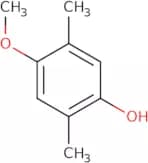
CAS:<p>Versatile small molecule scaffold</p>Formula:C10H15NO2Purity:Min. 95%Molecular weight:181.23 g/mol4-Methoxy-2,5-dimethylphenol
CAS:<p>Versatile small molecule scaffold</p>Formula:C9H12O2Purity:Min. 95%Molecular weight:152.19 g/mol1-(2-Bromoethoxy)-2-methylpropane
CAS:<p>Versatile small molecule scaffold</p>Formula:C6H13BrOPurity:Min. 95%Molecular weight:181.07 g/mol1-Phenyl-1λ⁵-phospholan-1-one
CAS:<p>1-Phenyl-1λ⁵-phospholan-1-one is a reagent that is used in organic synthesis to generate carbon-carbon bonds. This reagent can be activated with phosphorus and rearranged to form new carbon-carbon bonds. It can also be used as an electron donor, which enables it to activate other molecules, such as phosphines, phenyl borane, and hydrocarbons. 1-Phenyl-1λ⁵-phospholan-1-one is a stereoselective reagent that produces only one enantiomer of the product in high yields. It can be used to synthesize analogues of carbons and triaryl compounds.</p>Formula:C10H13OPPurity:Min. 95%Molecular weight:180.18 g/mol7-Bromo-2-methylquinoline
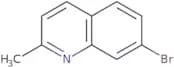
CAS:<p>7-Bromo-2-methylquinoline is a heterocyclic compound that is selectively activated by protonation. The reaction involves the formation of a carbocation at the carbon atom adjacent to the bromine atom. This intermediate is then attacked by an electrophile, such as an alcohol or a carboxylic acid. The reaction proceeds via an S2 mechanism and can be accelerated by using certain metals as catalysts, such as copper and palladium. 7-Bromo-2-methylquinoline has been used in cross coupling reactions with various arenes to form c–h bonds and halides, which have been analysed through mass spectroscopy.</p>Formula:C10H8BrNPurity:Min. 95%Molecular weight:222.08 g/mol4-Hydroxy-6-methyl-3-nitro-2-pyridone
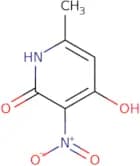
CAS:<p>4-Hydroxy-6-methyl-3-nitro-2-pyridone is a synthetic molecule that can be synthesized from dipropylamine and ethanolamine, two commercially available compounds. It has been shown to inhibit the growth of Mycobacterium tuberculosis, one of the most common bacteria that causes tuberculosis, in a metal ion sensor system. 4-Hydroxy-6-methyl-3-nitro-2-pyridone also inhibits the synthesis of protein, DNA and RNA by binding to amines. This compound is irradiated with lithium metal and emits an infrared frequency shift.</p>Formula:C6H6N2O4Purity:Min. 95%Molecular weight:170.12 g/molFuran-2,4-dione
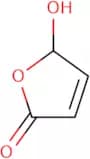
CAS:<p>Furan-2,4-dione is a hydroxylated furan derivative that is used as an antimicrobial agent. It has a high degree of resistance to hydrochloric acid and human serum. Furan-2,4-dione reacts with the thiol groups on the mitochondrial membrane potential to create a disulfide bond, which leads to depolarization of the mitochondria and cell death. Furan-2,4-dione also inhibits tetronic acid dehydrogenase and tetronic acid reductase enzymes in cancer cells, leading to inhibition of tumor growth. The structure of furan-2,4-dione consists of a bicyclic heterocycle with basic properties.</p>Purity:Min. 95%1-Methyl-4-[(methylsulfanyl)sulfonyl]benzene
CAS:<p>Versatile small molecule scaffold</p>Formula:C8H10O2S2Purity:Min. 95%Molecular weight:202.3 g/mol4'-Chlorobutyrophenone
CAS:<p>4'-Chlorobutyrophenone is a chlorinated aromatic compound that is synthesized by the Friedel-Crafts reaction of anhydrous aluminum chloride with 4-chlorobenzene. This reaction requires palladium as a catalyst. The product of this reaction has been shown to be a high yield, selective, and inexpensive method for the synthesis of aromatic compounds. 4'-Chlorobutyrophenone may also be used in the synthesis of other organic compounds. The chloride group on the phenyl ring provides unsaturation, which can be used for further reactions such as alkylation or arylation.</p>Formula:C10H11ClOPurity:Min. 95%Molecular weight:182.65 g/mol1-Benzylbenzoimidazole
CAS:<p>1-Benzylbenzoimidazole is a benzimidazole derivative that inhibits the growth of fungi by inhibiting the production of mitochondrial membrane potential. It has been shown to inhibit angiogenesis and reduce tumor size in vivo, which may be due to its ability to induce apoptosis in endothelial cells. 1-Benzylbenzoimidazole also inhibits the synthesis of 2-hydroxyphenylacetic acid and nitrogen atoms from nitric oxide, which may be due to its ability to bind with chlorine atoms. 1-Benzylbenzoimidazole is not active against bacteria or mammalian cells, but it does inhibit the growth of fungi by binding with hydrogen bonds at the fungal cell wall.</p>Formula:C14H12N2Purity:Min. 95%Molecular weight:208.26 g/mol4,6-Dinitrobenzene-1,3-diamine
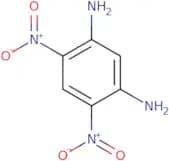
CAS:<p>4,6-Dinitrobenzene-1,3-diamine is an impurity in the manufacture of 4,6-dinitrotoluene. It was first synthesized by heating dinitrotoluene with nitric acid and ammonium hydroxide. The compound crystallizes as a trimorphic mixture of three polymorphs: α (monoclinic), β (orthorhombic), and γ (tetragonal). The α form has a melting point of 114°C, while the β form melts at 107°C. This compound has been used as a solvent for xylene and glycol ethers.</p>Formula:C6H6N4O4Purity:Min. 95%Molecular weight:198.14 g/mol6-Hydroxy-1,3-benzoxathiol-2-one
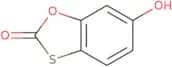
CAS:<p>6-Hydroxy-1,3-benzoxathiol-2-one is a solute compound that has been used as a food additive. It has been shown to inhibit the growth of various microorganisms including bacteria, yeast, and fungi. 6-Hydroxy-1,3-benzoxathiol-2-one is an inhibitor of enzymes such as beta-glucosidase and alpha amylase. It also has inhibitory properties against autoimmune diseases and bowel disease. Angelicae Dahuricae (AD) extract can be used as an alternative for 6HBO to treat leishmania infection. AD extract has synergistic antifungal activity with metal hydroxides or benzalkonium chloride when combined in vitro.</p>Formula:C7H4O3SPurity:Min. 95%Molecular weight:168.17 g/mol7-Methoxy-2-oxo-2H-1,3-benzoxathiole-5-carbaldehyde
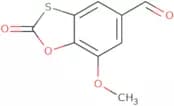
CAS:<p>Versatile small molecule scaffold</p>Formula:C9H6O4SPurity:Min. 95%Molecular weight:210.21 g/mol2-(1,2-Oxazol-5-yl)acetic acid
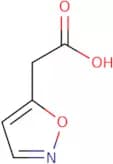
CAS:<p>2-(1,2-Oxazol-5-yl)acetic acid is a cell-permeable compound that induces death of cancer cells via apoptosis. It has been shown to be effective in vitro against mouse melanoma cells, as well as in vivo treatment of mice with xenografts of human melanoma cells. This drug activates caspase 3 by inhibiting the mitochondrial membrane potential and releasing cytochrome C from mitochondria into the cytosol. 2-(1,2-Oxazol-5-yl)acetic acid also mediates apoptotic cell death by activating the chloride channel, reactive oxygen species (ROS), and voltage gated ion channels. In addition, it inhibits viral replication by inducing autophagic cell death and has tumoricidal effects when given to mice with established tumors.<br>br></p>Formula:C5H5NO3Purity:Min. 95%Molecular weight:127.1 g/mol3-(2-Aminoethyl)-1,3-dihydro-2H-indol-2-onehydrochloride
CAS:<p>Versatile small molecule scaffold</p>Formula:C10H13ClN2OPurity:Min. 95%Molecular weight:212.68 g/mol5,6-Dimethylthieno[2,3-d]pyrimidin-4-amine
CAS:<p>5,6-Dimethylthieno[2,3-d]pyrimidin-4-amine is an ester of sucralose. It is a sweetener that can be used in sweetner compositions or solvates. 5,6-Dimethylthieno[2,3-d]pyrimidin-4-amine is an intermediate in the synthesis of sucralose.</p>Formula:C8H9N3SPurity:Min. 95%Molecular weight:179.24 g/mol3-(Pyrrolidin-1-yl)propanamide hydrochloride
CAS:<p>Versatile small molecule scaffold</p>Formula:C7H15ClN2OPurity:Min. 95%Molecular weight:178.66 g/mol

![2-[4-(2-Aminoethyl)phenoxy]ethan-1-ol](/_next/image/?url=https%3A%2Fstatic.cymitquimica.com%2Fproducts%2F3D%2Fthumb-webp%2FEAA96064.webp&w=3840&q=75)


![1-Methyl-4-[(methylsulfanyl)sulfonyl]benzene](/_next/image/?url=https%3A%2Fstatic.cymitquimica.com%2Fproducts%2F3D%2Fthumb-webp%2FEAA97366.webp&w=3840&q=75)



![5,6-Dimethylthieno[2,3-d]pyrimidin-4-amine](/_next/image/?url=https%3A%2Fstatic.cymitquimica.com%2Fproducts%2F3D%2Fthumb-webp%2FEAA99489.webp&w=3840&q=75)
