


Building Blocks
This section contains fundamental products for the synthesis of organic and biological compounds. Building blocks are the essential starting materials used to construct complex molecules through various chemical reactions. They play a critical role in drug discovery, material science, and chemical research. At CymitQuimica, we offer a diverse range of high-quality building blocks to support your innovative research and industrial projects, ensuring you have the essential components for successful synthesis.
Subcategories of "Building Blocks"
- Boronic Acids & Boronic Acid Derivatives(5,756 products)
- Chiral Building Blocks(1,242 products)
- Hydrocarbon Building Blocks(6,095 products)
- Organic Building Blocks(61,038 products)
Found 196817 products of "Building Blocks"
Sort by
Purity (%)
0
100
|
0
|
50
|
90
|
95
|
100
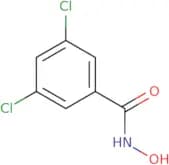
3,5-Dichloro-N-hydroxybenzamide
CAS:<p>3,5-Dichloro-N-hydroxybenzamide is a drug that belongs to the group of diuretics and has been used as an ophthalmic and pharmacological agent. It has been shown to be effective in the treatment of infantile spasms and as an adjuvant therapy for chronic glaucoma. 3,5-Dichloro-N-hydroxybenzamide is also used in various formulations with other drugs such as trichlormethiazide, which acts by potentiating the effect of 3,5-dichloro-N-hydroxybenzamide on potassium excretion. The physicochemical properties of this drug are studied using gel formulations, which have a greater affinity for proteins than water. This drug may also be able to bind to plasma proteins and thus have a longer half life. 3,5-Dichloro-N-hydroxybenzamide is metabolized through methylation reactions</p>Formula:C7H5Cl2NO2Purity:Min. 95%Molecular weight:206.02 g/mol2-Chloro-6-iodo-9H-purine
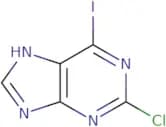
CAS:<p>2-Chloro-6-iodo-9H-purine is an antiviral agent that inhibits the activity of a viral enzyme, thymidine kinase. This drug binds to the active site of this enzyme, preventing it from phosphorylating and thereby inactivating dTTP (a nucleotide precursor) to dTMP (a nucleotide product). 2-Chloro-6-iodo-9H-purine is not used clinically because it has toxic side effects such as hepatotoxicity and myelosuppression. However, this drug has been used in the past for research purposes and in animal studies.</p>Formula:C5H2ClIN4Purity:Min. 95%Molecular weight:280.45 g/molMethyl 3-amino-2-methylbenzoate
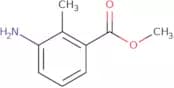
CAS:<p>Methyl 3-amino-2-methylbenzoate is a chloroformate that can participate in coordination reactions. It has shown potent antitumor activity and is an efficient method for the synthesis of pyridinecarboxylic acids. This compound has been shown to be an inhibitor of tumor cell lines and to have a skeleton with potential antitumor activity. It also has potent antibacterial activity against gram-positive bacteria and methoxy groups that are known to be important for DNA binding. Methyl 3-amino-2-methylbenzoate also possesses a phenyl ring and diterpenes that make it a potential anticancer drug candidate.</p>Formula:C9H11NO2Purity:Min. 95%Molecular weight:165.19 g/molEthyl 2-hydroxy-2-(4-methylphenyl)acetate
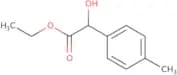
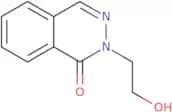
CAS:<p>Versatile small molecule scaffold</p>Formula:C11H14O3Purity:Min. 95%Molecular weight:194.23 g/mol2-(2-Hydroxyethyl)phthalazin-1-one
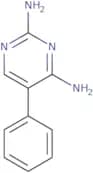
CAS:<p>2-(2-Hydroxyethyl)phthalazin-1-one is a molecule that stabilizes benzene rings in the crystal by forming hydrogen bonds with the hydroxyl groups. The interplanar and intermolecular interactions between molecules are weak, but the coplanar and dihedral interactions are strong. This stabilizing effect leads to an increase in the melting point and boiling point of benzene. 2-(2-Hydroxyethyl)phthalazin-1-one has been shown to have a crystalline structure with a space group of P21/c.</p>Formula:C10H10N2O2Purity:Min. 95%Molecular weight:190.2 g/mol5-Phenylpyrimidine-2,4-diamine
CAS:<p>5-Phenylpyrimidine-2,4-diamine is an antiparasitic agent that belongs to the group of derivs. It has been shown to inhibit coccidian growth in vitro and has antiparasitic activity against bacteria and protozoa. 5-Phenylpyrimidine-2,4-diamine binds to the enzyme acetyl coenzyme A synthetase in the parasite's mitochondria and prevents the synthesis of ATP. This leads to cell death.</p>Formula:C10H10N4Purity:Min. 95%Molecular weight:186.21 g/mol2-(Thiophen-2-yl)quinazoline-4-thiol
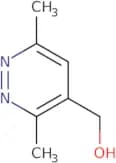
CAS:<p>Versatile small molecule scaffold</p>Formula:C12H8N2S2Purity:Min. 95%Molecular weight:244.3 g/mol(3,6-Dimethylpyridazin-4-yl)methanol
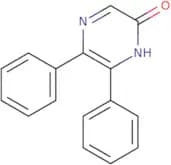
CAS:<p>Versatile small molecule scaffold</p>Formula:C7H10N2OPurity:Min. 95%Molecular weight:138.17 g/mol5,6-Diphenylpyrazinol
CAS:<p>5,6-Diphenylpyrazinol is a nitrated derivative of pyrazine. It is synthesized by nitrating 5,6-diphenylpyrazine with a mixture of sulfuric and nitric acid. The product is isolated by fractional distillation.</p>Formula:C16H12N2OPurity:Min. 95%Molecular weight:248.28 g/mol3-Amino-6-methylpyridazine
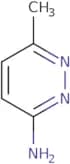
CAS:<p>3-Amino-6-methylpyridazine is a pro-apoptotic molecule that interacts with the kinase domain of the pro-apoptotic protein Bax, inducing programmed cell death. This compound has been shown to be homologous with other compounds that inhibit mycobacterium avium and staphylococcus in vitro. 3-Amino-6-methylpyridazine inhibits the replication of tuberculosis bacteria by inhibiting DNA synthesis. It also has a cytotoxic effect on mycobacterium avium cells, which may be due to its ability to induce apoptosis.<br>3-Amino-6-methylpyridazine has an antiinflammatory effect on macrophages by inhibiting cyclooxygenase and lipoxygenase activity.</p>Purity:Min. 95%Ethyl 2-(cinnolin-4-yl)acetate
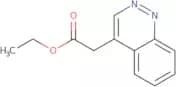
CAS:<p>Versatile small molecule scaffold</p>Formula:C12H12N2O2Purity:Min. 95%Molecular weight:216.24 g/mol2,5,6-Trimethyl-3H,4H-thieno[2,3-d]pyrimidin-4-one
CAS:<p>Versatile small molecule scaffold</p>Formula:C9H10N2OSPurity:Min. 95%Molecular weight:194.26 g/mol3-Methyl-2-(propan-2-yl)butan-1-ol
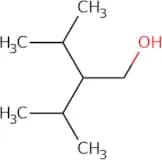
CAS:<p>Versatile small molecule scaffold</p>Formula:C8H18OPurity:Min. 95%Molecular weight:130.23 g/molMethyl 2-amino-6-methylbenzoate
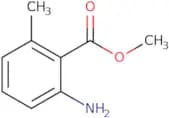
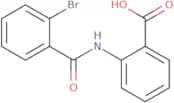
CAS:<p>Methyl 2-amino-6-methylbenzoate (MMAB) is a prophylactic agent that inhibits the growth of tumor cells. It is used for prophylactic treatment of patients with a syndrome in which there is an increased risk of tumor formation. MMAB inhibits the production of DNA and RNA, which are needed for cell division. The drug also inhibits the activity of ribonucleotide reductase and deoxyribonucleotide reductase, which are enzymes involved in DNA synthesis. MMAB has been shown to inhibit the growth of tumor cells and may be useful in preventing tumors from forming.</p>Formula:C9H11NO2Purity:Min. 95%Molecular weight:165.19 g/mol2-(2-Bromobenzamido)benzoic acid
CAS:<p>Versatile small molecule scaffold</p>Formula:C14H10BrNO3Purity:Min. 95%Molecular weight:320.14 g/mol5-Iodofuran-2-carboxylic acid
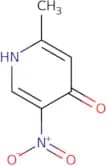
CAS:<p>5-Iodofuran-2-carboxylic acid is an ionic compound that acts as a serotonin reuptake inhibitor. It is a hardener in liquid crystal display (LCD) screens, and has been used to increase the hardness of epoxy resin in coatings for plastic. 5-Iodofuran-2-carboxylic acid inhibits the serotonin transporter (SERT), which is responsible for the reuptake of serotonin from the synaptic cleft. This inhibition leads to increased extracellular concentrations of serotonin, which can result in serotonergic side effects such as nausea, vomiting, and headache.</p>Formula:C5H3IO3Purity:Min. 95%Molecular weight:237.98 g/mol2-Methyl-5-nitropyridin-4-ol
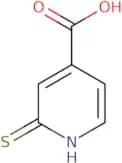
CAS:<p>Versatile small molecule scaffold</p>Formula:C6H6N2O3Purity:Min. 95%Molecular weight:154.12 g/mol2-Thioxo-1,2-dihydropyridine-4-carboxylic acid
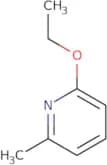
CAS:<p>2-Thioxo-1,2-dihydropyridine-4-carboxylic acid (TDPCA) is a molecule that is structurally similar to the protonated form of 2-thioxoimidazole carboxylic acid. TDPCA has been shown to be an antibacterial agent against Staphylococcus aureus with surface-enhanced Raman scattering properties. TDPCA can also act as a fluorescence probe and has pharmacokinetic properties that are dependent on its molecular weight, which can be determined using plasma mass spectrometry. TDPCA absorbs light in the red region of the spectrum and shifts to the blue region when it reacts with silver ions. It also binds to carboxylate groups, which may be used for detection by nanosensors.</p>Formula:C6H5NO2SPurity:Min. 95%Molecular weight:155.17 g/mol2-Ethoxy-6-methylpyridine
CAS:<p>2-Ethoxy-6-methylpyridine is a polypeptide chain with anti-oxidant properties. It has been shown to significantly reduce oxidative damage to protein synthesis in the cytoplasm of animals. 2-Ethoxy-6-methylpyridine also inhibits lipid peroxidation and membrane damage, which may be due to its ability to act as an endoplasmic reticulum (ER) template. This compound is able to bind to ER membranes and alter their structure, which may lead to the prevention of cell death.</p>Formula:C8H11NOPurity:Min. 95%Molecular weight:137.18 g/mol[(2-Methylphenyl)thio]acetic acid
CAS:<p>Versatile small molecule scaffold</p>Formula:C9H10O2SPurity:Min. 95%Molecular weight:182.24 g/mol


![2,5,6-Trimethyl-3H,4H-thieno[2,3-d]pyrimidin-4-one](/_next/image/?url=https%3A%2Fstatic.cymitquimica.com%2Fproducts%2F3D%2Fthumb-webp%2FTAA59345.webp&w=3840&q=75)

![[(2-Methylphenyl)thio]acetic acid](/_next/image/?url=https%3A%2Fstatic.cymitquimica.com%2Fproducts%2F3D%2Fthumb-webp%2FTAA61915.webp&w=3840&q=75)