Building Blocks
This section contains fundamental products for the synthesis of organic and biological compounds. Building blocks are the essential starting materials used to construct complex molecules through various chemical reactions. They play a critical role in drug discovery, material science, and chemical research. At CymitQuimica, we offer a diverse range of high-quality building blocks to support your innovative research and industrial projects, ensuring you have the essential components for successful synthesis.
Subcategories of "Building Blocks"
- Boronic Acids & Boronic Acid Derivatives(5,756 products)
- Chiral Building Blocks(1,242 products)
- Hydrocarbon Building Blocks(6,095 products)
- Organic Building Blocks(61,038 products)
Found 196817 products of "Building Blocks"
Sort by
Purity (%)
0
100
|
0
|
50
|
90
|
95
|
100
(1S,2S)-2-Phenylcyclopentan-1-amine hydrochloride
CAS:<p>Versatile small molecule scaffold</p>Formula:C11H16ClNPurity:Min. 95%Molecular weight:197.7 g/mol4-Chloro-3-(1H)indazole carboxaldehyde
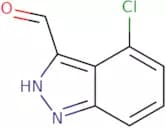
CAS:Versatile small molecule scaffoldFormula:C8H5ClN2OPurity:Min. 95%Molecular weight:180.59 g/mol1-(Morpholin-4-yl)-2-nitroethen-1-amine
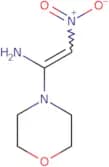
CAS:<p>Versatile small molecule scaffold</p>Formula:C6H11N3O3Purity:Min. 95%Molecular weight:173.17 g/mol5-Butylimidazolidine-2,4-dione
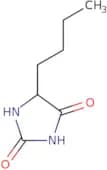
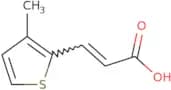
CAS:<p>Versatile small molecule scaffold</p>Formula:C7H12N2O2Purity:Min. 95%Molecular weight:156.18 g/mol(2E)-3-(3-Methylthiophen-2-yl)prop-2-enoic acid
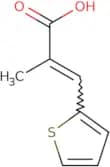
CAS:<p>(2E)-3-(3-Methylthiophen-2-yl)prop-2-enoic acid is a naturally occurring compound with two stereoisomers, the cis and trans isomers. The cis isomer has been found to have the same physiological properties as pyrantel, while the trans isomer has been shown to be resistant to alkaline hydrolysis. (2E)-3-(3-Methylthiophen-2-yl)prop-2-enoic acid can be isolated from plants by using chromatographic techniques that separate it from other compounds with similar structures. This compound also has a homolog, (4R)-4-(3,5,-dimethylphenyl)butanoic acid, which can be synthesized in the laboratory.</p>Formula:C8H8O2SPurity:Min. 95%Molecular weight:168.21 g/mol(2E)-2-Methyl-3-(thiophen-2-yl)prop-2-enoic acid
CAS:<p>Versatile small molecule scaffold</p>Formula:C8H8O2SPurity:Min. 95%Molecular weight:168.21 g/mol(3R)-3,6-Bis({[(tert-butoxy)carbonyl]amino})hexanoic acid
CAS:<p>Versatile small molecule scaffold</p>Formula:C16H30N2O6Purity:Min. 95%Molecular weight:346.4 g/molMethyl 4-[(1S)-1-hydroxyethyl]benzoate
CAS:<p>Versatile small molecule scaffold</p>Formula:C10H12O3Purity:Min. 95%Molecular weight:180.2 g/molFadrozole
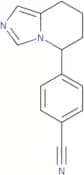
CAS:<p>Fadrozole is an inhibitor of the enzyme aromatase, which converts androgens to estrogens. It is used in combination with other drugs to treat breast cancer in postmenopausal women and prostate cancer in men. The molecular basis for the inhibitory properties of fadrozole is its ability to bind to the dinucleotide phosphate-binding site of aromatase, thereby inhibiting its activity. Fadrozole inhibits the production of estrogens by competitively binding to the enzyme's active site. The inhibitory effect of fadrozole on aromatase activity has been demonstrated in experimental models and provides a possible explanation for its use in combination with other drugs for breast and prostate cancer treatment.</p>Formula:C14H13N3Purity:Min. 95%Molecular weight:223.27 g/mol1-(3-Aminopropyl)-1,2-dihydropyridin-2-one
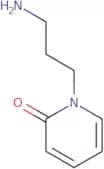
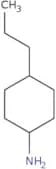
CAS:<p>Versatile small molecule scaffold</p>Formula:C8H12N2OPurity:Min. 95%Molecular weight:152.19 g/mol4-Propylcyclohexylamine (cis- and trans- mixture)
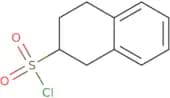
CAS:<p>4-Propylcyclohexylamine is a versatile compound that finds applications in various industries. It is commonly used as a building block in the synthesis of copolymers, catalysts, and triazine derivatives. This compound exhibits excellent reactivity in organometallic reactions and can act as a pyridinium scavenger. With its high isolated yield and particulate nature, it is ideal for research purposes and as a reagent for the activation of cellulose.</p>Formula:C9H19NPurity:Min. 95%Molecular weight:141.26 g/mol1,2,3,4-Tetrahydronaphthalene-2-sulfonyl chloride
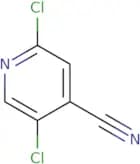
CAS:<p>Versatile small molecule scaffold</p>Formula:C10H11ClO2SPurity:Min. 95%Molecular weight:230.71 g/mol2,5-Dichloroisonicotinonitrile
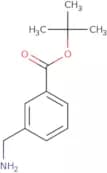
CAS:<p>2,5-Dichloroisonicotinonitrile is a tyrosine kinase inhibitor that is used to treat autoimmune diseases. The compound inhibits the function of the enzyme tyrosine kinase by binding to its ATP binding site. 2,5-Dichloroisonicotinonitrile is also a potent antibacterial agent with activity against both Gram-positive and Gram-negative bacteria. It has been shown to be active against Mycobacterium tuberculosis, methicillin-resistant Staphylococcus aureus (MRSA), and Clostridium perfringens. The drug can cause adverse effects such as pulmonary fibrosis and thyroiditis in animal studies.</p>Formula:C6H2Cl2N2Purity:Min. 95%Molecular weight:173 g/moltert-butyl 3-(aminomethyl)benzoate
CAS:<p>Versatile small molecule scaffold</p>Formula:C12H17NO2Purity:Min. 95%Molecular weight:207.3 g/mol{2-Oxabicyclo[4.1.0]heptan-7-yl}methanols
CAS:<p>Versatile small molecule scaffold</p>Formula:C7H12O2Purity:Min. 95%Molecular weight:128.2 g/mol1-Amino-1H-benzo[D]imidazol-2(3H)-one
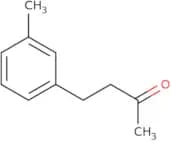
CAS:<p>1-Amino-1H-benzo[D]imidazol-2(3H)-one is a heterocyclic compound that belongs to the group of 4-azaindole, chromic acid, substituents, oxidized. It has been shown to be an effective inhibitor of thiosemicarbazones and pyrrole in vitro. Additionally, this compound inhibits bacterial growth by binding to DNA gyrase and topoisomerase IV enzymes. This drug is also being studied as a potential treatment for cancer.</p>Formula:C7H7N3OPurity:Min. 95%Molecular weight:149.15 g/mol4-(3-Methylphenyl)butan-2-one
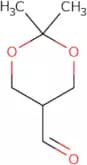
CAS:<p>Versatile small molecule scaffold</p>Formula:C11H14OPurity:Min. 95%Molecular weight:162.23 g/mol2,2-Dimethyl-1,3-dioxane-5-carbaldehyde
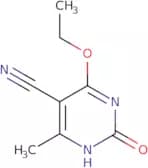
CAS:<p>Versatile small molecule scaffold</p>Formula:C7H12O3Purity:Min. 95%Molecular weight:144.17 g/mol4-Ethoxy-6-methyl-2-oxo-1,2-dihydropyrimidine-5-carbonitrile
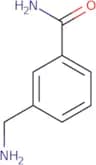
CAS:<p>Versatile small molecule scaffold</p>Formula:C8H9N3O2Purity:Min. 95%Molecular weight:179.18 g/mol3-(Aminomethyl)benzamide
CAS:<p>Versatile small molecule scaffold</p>Formula:C8H10N2OPurity:Min. 95%Molecular weight:150.18 g/mol

![(3R)-3,6-Bis({[(tert-butoxy)carbonyl]amino})hexanoic acid](/_next/image/?url=https%3A%2Fstatic.cymitquimica.com%2Fproducts%2F3D%2Fthumb-webp%2FCEA68648.webp&w=3840&q=75)
![Methyl 4-[(1S)-1-hydroxyethyl]benzoate](/_next/image/?url=https%3A%2Fstatic.cymitquimica.com%2Fproducts%2F3D%2Fthumb-webp%2FCEA68171.webp&w=3840&q=75)
![{2-Oxabicyclo[4.1.0]heptan-7-yl}methanols](/_next/image/?url=https%3A%2Fstatic.cymitquimica.com%2Fproducts%2F3D%2Fthumb-webp%2FCEA62895.webp&w=3840&q=75)
![1-Amino-1H-benzo[D]imidazol-2(3H)-one](/_next/image/?url=https%3A%2Fstatic.cymitquimica.com%2Fproducts%2F3D%2Fthumb-webp%2FCEA61691.webp&w=3840&q=75)