Building Blocks
This section contains fundamental products for the synthesis of organic and biological compounds. Building blocks are the essential starting materials used to construct complex molecules through various chemical reactions. They play a critical role in drug discovery, material science, and chemical research. At CymitQuimica, we offer a diverse range of high-quality building blocks to support your innovative research and industrial projects, ensuring you have the essential components for successful synthesis.
Subcategories of "Building Blocks"
- Boronic Acids & Boronic Acid Derivatives(5,756 products)
- Chiral Building Blocks(1,242 products)
- Hydrocarbon Building Blocks(6,095 products)
- Organic Building Blocks(61,038 products)
Found 196817 products of "Building Blocks"
Sort by
Purity (%)
0
100
|
0
|
50
|
90
|
95
|
100
Heptyl carbamate
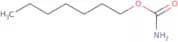
CAS:<p>Heptyl carbamate is a cholinergic antagonist of the blood disorders. It has been shown to inhibit hydroxy and hiv infection. In vitro assays have shown that heptyl carbamate inhibits the synthesis of fatty acid, thereby reducing cholesterol levels and inhibiting the production of insulin resistance in cells. Heptyl carbamate also binds to the same site on acetylcholinesterase as donepezil, which blocks the breakdown of acetylcholine and leads to an accumulation of this neurotransmitter in nerve cells. This increased concentration of acetylcholine in nerve cells can lead to a reduced incidence of Alzheimer's disease-related symptoms.</p>Formula:C8H17NO2Purity:Min. 95%Molecular weight:159.23 g/molH-Gly-Leu-OMe hydrochloride
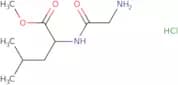
CAS:<p>Versatile small molecule scaffold</p>Formula:C9H19ClN2O3Purity:Min. 95%Molecular weight:238.71 g/mol1-Benzoylpiperidin-2-one
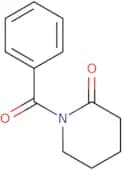
CAS:<p>1-Benzoylpiperidin-2-one is a cyclic amide that contains an iminium group. It is synthesized in the presence of phenolic and yields two isomers, with one being more stable than the other. 1-Benzoylpiperidin-2-one has been shown to inhibit nicotine metabolism by inhibiting cytochrome P450 enzymes. Mechanistically, 1-benzoylpiperidin-2-one binds to the heme moiety at the active site of the enzyme and acts as a reversible inhibitor. The nitrogen atom of 1-benzoylpiperidin-2-one binds to the methylene carbon of heme b, leading to inhibition of microsomal enzymes such as phenol hydroxylase and deuterium incorporation into piperidine metabolites.</p>Formula:C12H13NO2Purity:Min. 95%Molecular weight:203.24 g/mol1-(4-(Benzyloxy)phenyl)-2-bromoethanone
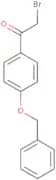
CAS:<p>1-(4-Benzyloxy)phenyl-2-bromoethanone is a carbonylation agent that is used to synthesize alkaloids. This compound is efficient and can be used in the synthesis of rigidin, a tetrasubstituted benzene. It is also used as a reagent for the protection of benzyl groups. The deprotection reaction occurs by using triphosgene or catalytic hydrogenation.</p>Formula:C15H13BrO2Purity:Min. 95%Molecular weight:305.17 g/mol1-Phenylpent-4-en-2-amine
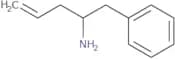
CAS:Controlled Product<p>1-Phenylpent-4-en-2-amine is a fatty alcohol that is soluble in water and organic solvents. It is used as a pharmaceutical dosage form, usually as an ester or salt. 1-Phenylpent-4-en-2-amine has been shown to be effective for the treatment of high blood pressure and diagnosing serotonin transporter gene disorders. The human body metabolizes this drug into conjugates, which are then excreted from the body. Diagnostic agents can be used to detect the presence of these metabolites in urine samples.</p>Formula:C11H15NPurity:Min. 95%Molecular weight:161.24 g/mol2-Hydroxy-4-phenylbutanoic acid
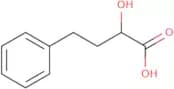
CAS:<p>2-Hydroxy-4-phenylbutanoic acid is an aliphatic hydrocarbon that is used for the synthesis of chiral compounds. It inhibits enzymes such as esterases, transferases, and oxidoreductases. 2-Hydroxy-4-phenylbutanoic acid also catalyzes the Friedel-Crafts reaction. This chemical has been shown to be a stereoselective enzyme inhibitor, which may be useful in asymmetric synthesis.</p>Formula:C10H12O3Purity:Min. 95%Molecular weight:180.2 g/mol6-Bromo-1,2,3,4-tetrahydropyrimidine-2,4-dione
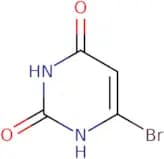
CAS:<p>Versatile small molecule scaffold</p>Formula:C4H3BrN2O2Purity:Min. 95%Molecular weight:190.98 g/mol2-(Ethenesulfonyl)ethan-1-ol
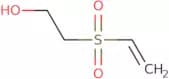
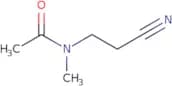
CAS:<p>2-(Ethenesulfonyl)ethan-1-ol is a versatile compound with various characteristics and applications. It has high bioavailability and can be easily absorbed by the body. This compound is known to inhibit the activity of glucoamylase, an enzyme that breaks down carbohydrates. It has also been studied for its potential antiviral properties. In addition to its pharmaceutical applications, 2-(Ethenesulfonyl)ethan-1-ol finds use in other industries as well. It is commonly used in research chemicals and synthetic cannabinoids production. Its phototoxicity properties make it useful in the development of sunscreen products. Moreover, it can be utilized as a building block in the synthesis of copolymers, glutamate derivatives, fatty acids, and other organic compounds. Overall, 2-(Ethenesulfonyl)ethan-1-ol is a valuable compound with diverse applications across multiple industries. Its unique characteristics make it an essential ingredient</p>Formula:C4H8O3SPurity:Min. 95%Color and Shape:Clear LiquidMolecular weight:136.17 g/molN-(2-Cyanoethyl)-N-methylacetamide
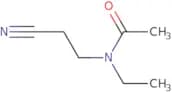
CAS:<p>Versatile small molecule scaffold</p>Formula:C6H10N2OPurity:Min. 95%Molecular weight:126.16 g/molN-(2-Cyanoethyl)-N-ethylacetamide
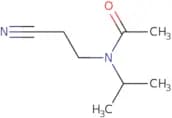
CAS:<p>Versatile small molecule scaffold</p>Formula:C7H12N2OPurity:Min. 95%Molecular weight:140.18 g/molN-(2-Cyanoethyl)-N-(propan-2-yl)acetamide
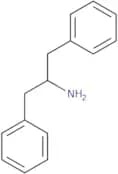
CAS:<p>Versatile small molecule scaffold</p>Formula:C8H14N2OPurity:Min. 95%Molecular weight:154.21 g/mol1,3-Diphenylpropan-2-amine
CAS:Controlled Product<p>1,3-Diphenylpropan-2-amine is a molecule with a hydrophobic nature. It has been shown to activate the enzyme monoamine oxidase in the brain, leading to an increase in the production of heat and causing hyperthermia. 1,3-Diphenylpropan-2-amine is metabolized by isozymes in different tissues and organs. 1,3-Diphenylpropan-2-amine interacts with pethidine (meperidine) to produce meperidine analogues, which are active at opioid receptors. These meperidine analogues have been shown to cause respiratory depression and hypotension when administered intravenously. The benzyl groups on this molecule have also been shown to interact with imidazoles such as ketoconazole and clotrimazole.</p>Formula:C15H17NPurity:Min. 95%Molecular weight:211.3 g/molcycloheptanecarbaldehyde
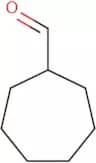
CAS:<p>Cycloheptanecarbaldehyde is a divalent hydrocarbon that is an agonist at the opioid receptor. It also has been shown to react with chlorinated compounds, such as hydrochloric acid or chloramine, which may indicate its presence in the environment. Cycloheptanecarbaldehyde has been found to be reactive with amines and other compounds that have a hydrogen atom attached to a heteroatom such as oxygen or nitrogen. The compound can also react with aliphatic hydrocarbons under certain conditions, thereby forming tropylium ions.</p>Formula:C8H14OPurity:Min. 95%Molecular weight:126.2 g/mol2-(1H-Imidazol-2-yl)benzoic acid hydrochloride
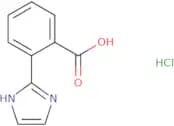
CAS:Versatile small molecule scaffoldFormula:C10H9ClN2O2Purity:Min. 95%Molecular weight:224.64 g/molEthyl 2-(ethylamino)-4-methyl-1,3-thiazole-5-carboxylate
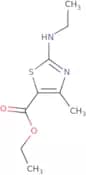
CAS:<p>Versatile small molecule scaffold</p>Formula:C9H14N2O2SPurity:Min. 95%Molecular weight:214.29 g/molFuran-2,3-dicarboxylic acid
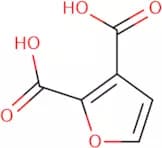
CAS:<p>Furan-2,3-dicarboxylic acid is a fluorogenic probe that reacts with water vapor to form a fluorescent product. The reaction of furan-2,3-dicarboxylic acid with methanol and ethylene glycol yields 2,5-furandicarboxylic acid. This compound is also the product of the reaction of furan-2,3-dicarboxylic acid with magnesium salt in anhydrous sodium carbonate. Furan-2,3-dicarboxylic acid can be oxidized by pyridinium chlorochromate (PCC) to form 5-hydroxymethylfurfural. Furan-2,3-dicarboxylic acid has been shown to react with p-hydroxybenzoic acid in the presence of an oxidation catalyst to yield a furandicarboxyl derivative.</p>Formula:C6H4O5Purity:Min. 95%Molecular weight:156.09 g/mol4-(Methoxycarbonyl)furan-3-carboxylic acid
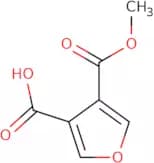
CAS:<p>4-(Methoxycarbonyl)furan-3-carboxylic acid is a fluorescent compound that can be used as an efficient hydrogenation reagent. It is also a versatile and efficient synthetic intermediate for the synthesis of bicyclic and heterocycled amines. 4-(Methoxycarbonyl)furan-3-carboxylic acid is generated from the reduction of 4-(methoxycarbonyl)pyrazole with lithium aluminum hydride, followed by hydrolysis. This method has been shown to yield high yields and functionalized products.</p>Formula:C7H6O5Purity:Min. 95%Molecular weight:170.12 g/mol2,4-Furandicarboxylic acid
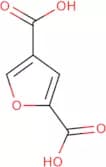
CAS:<p>2,4-Furandicarboxylic acid is a type of organic compound with the chemical formula C6H2O4. It is an acid that has optical properties and can be used as a reagent in organic synthesis. 2,4-Furandicarboxylic acid is biosynthesized by lactam dehydration, catalyzed by the enzyme 5-hmf. Furan rings are known to form when this compound undergoes oxidation reactions. The presence of furan rings can be detected through magnetic resonance spectroscopy and can be used to determine the concentration of 2,4-furandicarboxylic acid in urine samples.</p>Formula:C6H4O5Purity:Min. 95%Molecular weight:156.09 g/mol4-(Methoxycarbonyl)thiophene-3-carboxylic acid
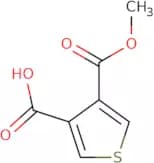
CAS:<p>4-(Methoxycarbonyl)thiophene-3-carboxylic acid is a colorless liquid with a boiling point of 104-106 degrees Celsius. It can be obtained by alkaline hydrolysis of 4-(methoxycarbonyl)thiophene-2,5-dicarboxylic acid, or by the action of methanol on thiophene. The solubility of this compound in solvents depends on the polarity and the hydrogen bonding capability of the solvent. The kinetics of hydrolysis are dependent on temperature and pH. This compound has a pKa value of 10.5 and an ionization constant (pKb) value of 10.1. The thermodynamic parameters for this compound are calculated to be -9.4 kcal/mol for enthalpy, -8.4 kcal/mol for entropy, and -7.6 kcal/mol for free energy change at 298 K and</p>Formula:C7H6O4SPurity:Min. 95%Molecular weight:186.19 g/molDimethyl Thiophene-3,4-dicarboxylate
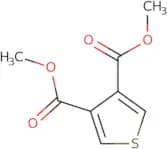
CAS:<p>Dimethyl Thiophene-3,4-dicarboxylate is a bioactive molecule that can be synthesized in a cross-coupling reaction. Dimethyl Thiophene-3,4-dicarboxylate has also been shown to have cytotoxic properties. This compound is able to alkylate DNA and RNA, which may account for its cytotoxic effects. The interactions of this compound with the acceptor molecules are still unknown. There is no information about the modification of this compound or the diffraction pattern obtained from it.</p>Formula:C8H8O4SPurity:Min. 95%Molecular weight:200.21 g/mol