Building Blocks
This section contains fundamental products for the synthesis of organic and biological compounds. Building blocks are the essential starting materials used to construct complex molecules through various chemical reactions. They play a critical role in drug discovery, material science, and chemical research. At CymitQuimica, we offer a diverse range of high-quality building blocks to support your innovative research and industrial projects, ensuring you have the essential components for successful synthesis.
Subcategories of "Building Blocks"
- Boronic Acids & Boronic Acid Derivatives(5,756 products)
- Chiral Building Blocks(1,242 products)
- Hydrocarbon Building Blocks(6,095 products)
- Organic Building Blocks(61,038 products)
Found 196817 products of "Building Blocks"
Sort by
Purity (%)
0
100
|
0
|
50
|
90
|
95
|
100
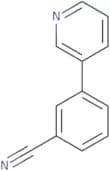
3-(Pyridin-3-yl)benzonitrile
CAS:<p>Versatile small molecule scaffold</p>Formula:C12H8N2Purity:Min. 95%Molecular weight:180.2 g/mol4-Hydroxy-1-cyclohexanecarboxylic Acid '-Lactone
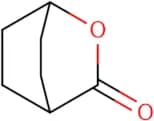
CAS:<p>4-Hydroxy-1-cyclohexanecarboxylic acid ´-lactone is a lactone that is used as an initiator in the production of polyesters. It has also been used as a reactant for synthesizing organolithium compounds. It has been shown that 4-hydroxy-1-cyclohexanecarboxylic acid ´-lactone can be polymerized with styrene and toluene to form a copolymer. This copolymer has been studied by spectroscopy and calorimetry. The enthalpy of this reaction was determined to be -2,979 kJ/mol. The structure of 4-hydroxy-1-cyclohexanecarboxylic acid ´-lactone has been confirmed using crystallography.</p>Formula:C7H10O2Purity:Min. 95%Molecular weight:126.16 g/molCyclohexylmethanesulfonyl fluoride
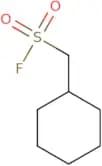
CAS:<p>Versatile small molecule scaffold</p>Formula:C7H13FO2SPurity:Min. 95%Molecular weight:180.24 g/molCyclohexylmethanesulfonamide
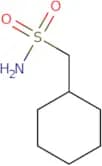
CAS:<p>Cyclohexylmethanesulfonamide is a quinoline derivative that has been shown to have affinity for the CB1 receptor. It has been used in animal studies as an anti-inflammatory agent and may also have cancer chemopreventive properties. The compound has also been shown to inhibit the activity of the NS5B polymerase, which is involved in viral RNA synthesis. Cyclohexylmethanesulfonamide binds to the C1-C6 alkyl group and alkylsulfonyl group on the enzyme, inhibiting its ability to replicate viral RNA. It has been suggested that this drug may be useful in treating psychotic disorders because it can cross the blood brain barrier.</p>Formula:C7H15NO2SPurity:Min. 95%Molecular weight:177.27 g/mol2-Cyclohexyl-2-hydroxyacetonitrile
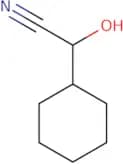
CAS:<p>2-Cyclohexyl-2-hydroxyacetonitrile is a reaction mixture that can be used to synthesize an amide, dialkyl, or carbonate. It is a high yield reaction with hydrogen chloride and carbonate as reagents. The reactants are cyanohydrin and alkoxide or halide. The product of this reaction is an anhydride. 2-Cyclohexyl-2-hydroxyacetonitrile can also be used to make phosgene by reacting with phosgene gas in the presence of metallic chloride or other halides.</p>Formula:C8H13NOPurity:Min. 95%Molecular weight:139.19 g/mol2-Cyclohexyl-2-oxoacetic acid
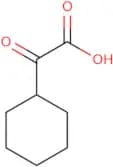
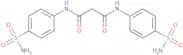
CAS:<p>2-Cyclohexyl-2-oxoacetic acid (2C2OA) is a quaternary ammonium salt that has been used in the synthesis of benzyl esters. 2C2OA is also reactive and can be used as an organic solvent. It reacts with Friedel-Crafts reaction to produce enantiomeric cyclohexanones, which are useful for the preparation of acyl halides and hydroxyl groups. 2C2OA is not an acid but can react with inorganic acids to form condensation products. Hydrogen chloride (HCl) will react with 2C2OA to produce cyclohexene and cyclohexanone chlorides, which are both volatile compounds. 2C2OA can also act as an acyl halide by reacting with acyl halides.</p>Formula:C8H12O3Purity:Min. 95%Molecular weight:156.18 g/molN,N'-Bis(4-sulfamoylphenyl)propanediamide
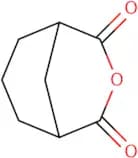
CAS:<p>Versatile small molecule scaffold</p>Formula:C15H16N4O6S2Purity:Min. 95%Molecular weight:412.4 g/molcis-1,3-Cyclohexanedicarboxylic anhydride
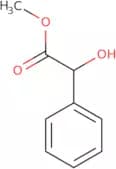
CAS:<p>Versatile small molecule scaffold</p>Formula:C8H10O3Purity:Min. 95%Molecular weight:154.17 g/molMethyl DL-Mandelate
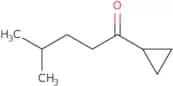
CAS:<p>Methyl DL-Mandelate is a chiral compound that has been shown to have an inhibitory effect on the growth of bacteria. It binds to bacterial cell surface receptors and causes lysis by creating holes in the membrane. Methyl DL-Mandelate also has high resistance against wastewater treatment; it is not removed during conventional treatment processes and can be used in the treatment of infectious diseases. The mechanism for this inhibition is unknown, but it has been hypothesized that methyl DL-Mandelate acts as an adsorbent, which blocks or inhibits the binding sites of other antibiotics or toxins.</p>Formula:C9H10O3Purity:Min. 95%Molecular weight:166.18 g/mol1-Cyclopropyl-4-methylpentan-1-one
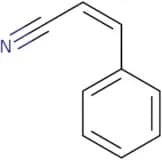
CAS:<p>Versatile small molecule scaffold</p>Formula:C9H16OPurity:Min. 95%Molecular weight:140.22 g/mol3-Phenylacrylonitrile
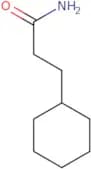
CAS:<p>3-Phenylacrylonitrile is an enzyme inhibitor that binds to the active site of the diphenolase enzyme, thereby inhibiting its function. The nitrile group in 3-phenylacrylonitrile is responsible for binding to the enzyme and forming a hydrogen bond with a zirconium oxide group. Hydroxyl groups on the phenyl ring also contribute to this reaction by making polar bonds with water molecules. This reaction is reversible and can be reversed by adding hydrochloric acid or by heating it at high temperatures. This reversibility provides a way to determine when 3-phenylacrylonitrile has bound to the active site of diphenolase by measuring the amount of heat released during the reaction.</p>Formula:C9H7NPurity:Min. 95%Molecular weight:129.16 g/mol3-Cyclohexylpropionamide
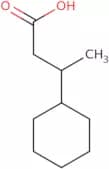
CAS:<p>3-Cyclohexylpropionamide is a reactivating agent that inhibits the growth of cancer cells by binding to their receptors. 3-Cyclohexylpropionamide has been shown to reactivate tumor cells that have become resistant to certain drugs, such as phenylacetate. This drug also has inhibitory effects on the growth of tumor cell lines and in animal tests has shown efficacy against drug-resistant breast cancer and colon cancer models. 3-Cyclohexylpropionamide binds to the protein receptor at a site near the active site, which prevents it from activating the catalytic site. This binding prevents the formation of an enzyme-drug complex with the enzyme that is required for cell division, inhibiting protein synthesis and cell division.</p>Formula:C9H17NOPurity:Min. 95%Molecular weight:155.24 g/mol3-Cyclohexylbutanoic acid
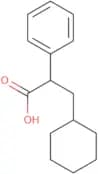
CAS:<p>Versatile small molecule scaffold</p>Formula:C10H18O2Purity:Min. 95%Molecular weight:170.25 g/mol3-Cyclohexyl-2-phenylpropanoic acid
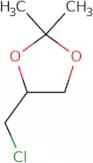
CAS:<p>Versatile small molecule scaffold</p>Formula:C15H20O2Purity:Min. 95%Molecular weight:232.32 g/mol4-Chloromethyl-2,2-dimethyl-1,3-dioxolane
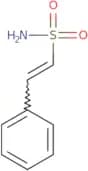
CAS:<p>4-Chloromethyl-2,2-dimethyl-1,3-dioxolane is a chemical compound that is used as a marker to identify the presence of fatty acids in plant tissues. It can be synthesized by reacting chloroacetaldehyde with methanol and sodium hydroxide. This compound has a cyclic structure and is chiral. It is also used for mass spectrometric analysis of fatty acid composition in plants. The synthesis of 4-chloromethyl-2,2-dimethyl-1,3-dioxolane involves four steps: (i) chlorination of acetaldehyde with sodium hypochlorite; (ii) hydrolysis of the resulting chloroacetaldehyde with methanol and sodium hydroxide; (iii) oxidation of the resulting chloroformate with hydrogen peroxide; and (iv) hydrolysis of the resulting 4-chloromethyloxymethanol with water.</p>Formula:C6H11ClO2Purity:Min. 95%Molecular weight:150.6 g/mol2-Phenylethene-1-sulfonamide
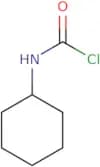
CAS:<p>2-Phenylethene-1-sulfonamide is a heterocyclic compound that is a disulfide. It is used in the biomedical field as an intramolecular crosslinker for polystyrene and polyacrylonitrile. 2-Phenylethene-1-sulfonamide has been shown to react with acetone, forming carbon disulfide, which is toxic to living cells. 2-Phenylethene-1-sulfonamide has also been shown to be a basic chemical with life science applications. This heterocyclic compound can be synthesized by cyclization of styrene and it's derivatives.</p>Formula:C8H9NO2SPurity:Min. 95%Molecular weight:183.23 g/molN-Cyclohexylcarbamoyl chloride
CAS:<p>N-Cyclohexylcarbamoyl chloride is a phenoxy, diphenyl ether (DPDE) analog that acts as a competitive inhibitor of the enzyme RNA polymerase. It binds to the DPDE binding site on RNA polymerase and blocks the binding of DPDE substrates, thereby inhibiting transcription. This compound has been shown to be expressed in plants and its profile primarily includes chlorides, alkynyl groups, alicyclic, carbonyl groups, and c1-6 alkylsulfonyls.</p>Formula:C7H12ClNOPurity:Min. 95%Molecular weight:161.63 g/mol2-[(4-tert-Butylphenyl)sulfanyl]acetic Acid
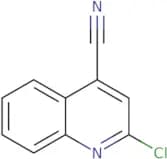
CAS:<p>Versatile small molecule scaffold</p>Formula:C12H16O2SPurity:Min. 95%Molecular weight:224.31 g/mol2-Chloroquinoline-4-carbonitrile
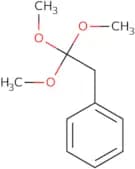
CAS:<p>2-Chloroquinoline-4-carbonitrile is a nucleophilic substitution reaction with methanol as the electrophile. The reaction has been studied kinetically, and the rate of reaction was found to depend on the substituents on the chloroquinoline ring. The substituent effect can be described by mesomeric interactions. The rate of reaction is also dependent on the concentration of methoxide ion, which is a reactant in this substitution reaction.<br>2-Chloroquinoline-4-carbonitrile is an organic compound that contains two methyl groups substituted onto the 2 and 4 positions of the quinoline ring. This organic compound reacts with methanol to form a substituted quinoline product and hydrogen gas.</p>Formula:C10H5ClN2Purity:Min. 95%Molecular weight:188.61 g/mol(2,2,2-Trimethoxyethyl)benzene
CAS:<p>Versatile small molecule scaffold</p>Formula:C11H16O3Purity:Min. 95%Molecular weight:196.24 g/mol

![2-[(4-tert-Butylphenyl)sulfanyl]acetic Acid](/_next/image/?url=https%3A%2Fstatic.cymitquimica.com%2Fproducts%2F3D%2Fthumb-webp%2FEAA36563.webp&w=3840&q=75)