Building Blocks
This section contains fundamental products for the synthesis of organic and biological compounds. Building blocks are the essential starting materials used to construct complex molecules through various chemical reactions. They play a critical role in drug discovery, material science, and chemical research. At CymitQuimica, we offer a diverse range of high-quality building blocks to support your innovative research and industrial projects, ensuring you have the essential components for successful synthesis.
Subcategories of "Building Blocks"
- Boronic Acids & Boronic Acid Derivatives(5,756 products)
- Chiral Building Blocks(1,242 products)
- Hydrocarbon Building Blocks(6,095 products)
- Organic Building Blocks(61,038 products)
Found 196817 products of "Building Blocks"
Sort by
Purity (%)
0
100
|
0
|
50
|
90
|
95
|
100
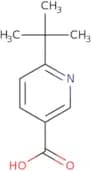
6-(tert-Butyl)nicotinic acid
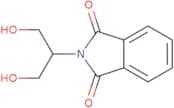
CAS:<p>Versatile small molecule scaffold</p>Formula:C10H13NO2Purity:Min. 95%Molecular weight:179.22 g/mol2-(1,3-Dihydroxypropan-2-yl)isoindoline-1,3-dione
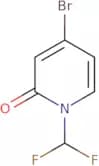
CAS:<p>Versatile small molecule scaffold</p>Formula:C11H11NO4Purity:Min. 95%Molecular weight:221.21 g/mol4-Bromo-1-(difluoromethyl)-1,2-dihydropyridin-2-one
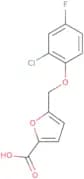
CAS:<p>Versatile small molecule scaffold</p>Formula:C6H4BrF2NOPurity:Min. 95%Molecular weight:224 g/mol5-(2-Chloro-4-fluorophenoxymethyl)furan-2-carboxylic acid
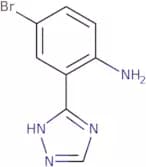
CAS:<p>Versatile small molecule scaffold</p>Formula:C12H8ClFO4Purity:Min. 95%Molecular weight:270.64 g/mol4-Bromo-2-(1H-1,2,4-triazol-3-yl)aniline
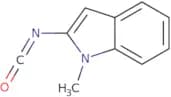
CAS:<p>Versatile small molecule scaffold</p>Formula:C8H7BrN4Purity:Min. 95%Molecular weight:239.07 g/mol2-Isocyanato-1-methyl-1H-indole
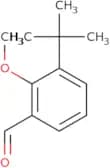
CAS:<p>Versatile small molecule scaffold</p>Formula:C10H8N2OPurity:Min. 95%Molecular weight:172.2 g/mol3-(tert-Butyl)-2-methoxybenzaldehyde
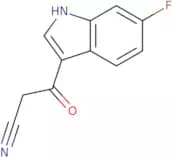
CAS:<p>Versatile small molecule scaffold</p>Formula:C12H16O2Purity:Min. 95%Molecular weight:192.25 g/mol3-(6-Fluoro-1H-indol-3-yl)-3-oxopropanenitrile
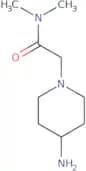
CAS:<p>Versatile small molecule scaffold</p>Formula:C11H7FN2OPurity:Min. 95%Molecular weight:202.18 g/mol2-(4-Aminopiperidin-1-yl)-N,N-dimethylacetamide
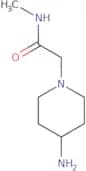
CAS:<p>Versatile small molecule scaffold</p>Formula:C9H19N3OPurity:Min. 95%Molecular weight:185.27 g/mol2-(4-Aminopiperidin-1-yl)-N-methylacetamide
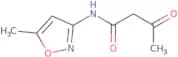
CAS:<p>Versatile small molecule scaffold</p>Formula:C8H17N3OPurity:Min. 95%Molecular weight:171.24 g/molN-(5-Methyl-1,2-oxazol-3-yl)-3-oxobutanamide
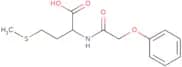
CAS:<p>Versatile small molecule scaffold</p>Formula:C8H10N2O3Purity:Min. 95%Molecular weight:182.18 g/mol4-(Methylsulfanyl)-2-(2-phenoxyacetamido)butanoic acid
CAS:<p>Versatile small molecule scaffold</p>Formula:C13H17NO4SPurity:Min. 95%Molecular weight:283.35 g/mol6-Bromopyrido[2,3-d]pyrimidin-2-amine
CAS:<p>Versatile small molecule scaffold</p>Formula:C7H5BrN4Purity:Min. 95%Molecular weight:225.05 g/mol4-[2-Amino-4-(trifluoromethyl)phenyl]piperazin-2-one
CAS:<p>Versatile small molecule scaffold</p>Formula:C11H12F3N3OPurity:Min. 95%Molecular weight:259.23 g/molpyrido[2,3-d]pyrimidin-2-amine
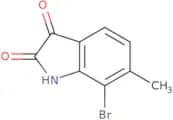
CAS:<p>Pyrido[2,3-d]pyrimidin-2-amine is a nucleophilic amine that has been synthesized for its antibacterial properties. It inhibits adenosine kinase and thus prevents the phosphorylation of adenosine monophosphate (AMP) to adenosine triphosphate (ATP). The reaction time of pyrido[2,3-d]pyrimidin-2-amine is dependent on the heterocycle present. Pharmacokinetic studies have shown that this chemical is metabolized in the liver by glucuronidation and sulfation.</p>Formula:C7H6N4Purity:Min. 95%Molecular weight:146.14 g/mol7-Bromo-6-methyl-2,3-dihydro-1H-indole-2,3-dione
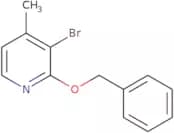
CAS:<p>Versatile small molecule scaffold</p>Formula:C9H6BrNO2Purity:Min. 95%Molecular weight:240.05 g/mol2-(Benzyloxy)-3-bromo-4-methylpyridine
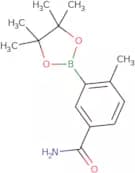
CAS:<p>Versatile small molecule scaffold</p>Formula:C13H12BrNOPurity:Min. 95%Molecular weight:278.14 g/mol4-Methyl-3-(4,4,5,5-tetramethyl-1,3,2-dioxaborolan-2-yl)benzamide
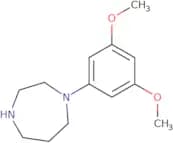
CAS:<p>Versatile small molecule scaffold</p>Formula:C14H20BNO3Purity:Min. 95%Molecular weight:261.13 g/mol1-(3,5-Dimethoxyphenyl)-1,4-diazepane
CAS:<p>Versatile small molecule scaffold</p>Formula:C13H20N2O2Purity:Min. 95%Molecular weight:236.31 g/molAnle138b
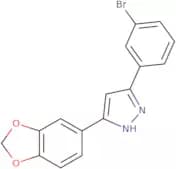
CAS:<p>Anle138b is a cyclic lipopeptide that belongs to the group of photochemically active substances. It has been shown to be effective in a number of animal models, including a model system for Alzheimer's disease, and has been shown to be clinically relevant in humans. Anle138b is being investigated as a treatment for cognitive impairment due to its ability to cross the blood-brain barrier and bind selectively to neurons. The drug has been shown to inhibit synaptic dysfunction and energy metabolism in these cells. Clinical trials are ongoing for Alzheimer's disease and other dementias.</p>Formula:C16H11BrN2O2Purity:Min. 95%Molecular weight:343.17 g/mol

![6-Bromopyrido[2,3-d]pyrimidin-2-amine](/_next/image/?url=https%3A%2Fstatic.cymitquimica.com%2Fproducts%2F3D%2Fthumb-webp%2FHKB67089.webp&w=3840&q=75)
![4-[2-Amino-4-(trifluoromethyl)phenyl]piperazin-2-one](/_next/image/?url=https%3A%2Fstatic.cymitquimica.com%2Fproducts%2F3D%2Fthumb-webp%2FHKB67241.webp&w=3840&q=75)
![pyrido[2,3-d]pyrimidin-2-amine](/_next/image/?url=https%3A%2Fstatic.cymitquimica.com%2Fproducts%2F3D%2Fthumb-webp%2FHKB67907.webp&w=3840&q=75)