Building Blocks
This section contains fundamental products for the synthesis of organic and biological compounds. Building blocks are the essential starting materials used to construct complex molecules through various chemical reactions. They play a critical role in drug discovery, material science, and chemical research. At CymitQuimica, we offer a diverse range of high-quality building blocks to support your innovative research and industrial projects, ensuring you have the essential components for successful synthesis.
Subcategories of "Building Blocks"
- Boronic Acids & Boronic Acid Derivatives(5,756 products)
- Chiral Building Blocks(1,242 products)
- Hydrocarbon Building Blocks(6,095 products)
- Organic Building Blocks(61,038 products)
Found 196817 products of "Building Blocks"
Sort by
Purity (%)
0
100
|
0
|
50
|
90
|
95
|
100
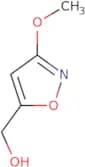
(3-Methoxy-1,2-oxazol-5-yl)methanol
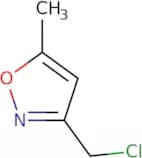
CAS:<p>Versatile small molecule scaffold</p>Formula:C5H7NO3Purity:Min. 95%Molecular weight:129.11 g/mol3-(Chloromethyl)-5-methylisoxazole
CAS:<p>3-(Chloromethyl)-5-methylisoxazole is an organolithium reagent that is used for the synthesis of a variety of complex organic compounds. 3-(Chloromethyl)-5-methylisoxazole is a versatile reagent that can be used in metallation reactions, cycloadditions, and selective transformations. The selectivity of this reagent has been shown to be due to its ability to form stable organolithium compounds with heteroatoms such as oxygen and nitrogen.</p>Formula:C5H6ClNOPurity:Min. 95%Molecular weight:131.56 g/mol5-(Chloromethyl)-3-methoxy-1,2-oxazole
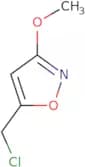
CAS:<p>Versatile small molecule scaffold</p>Formula:C5H6ClNO2Purity:Min. 95%Molecular weight:147.56 g/mol-2(5-Methylisoxazol-3-Yl)Acetonitrile
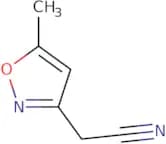
CAS:<p>-2(5-Methylisoxazol-3-Yl)Acetonitrile is a heterocyclic compound that is used as a catalyst in cross-coupling reactions. It can be utilised for the synthesis of aromatic heterocycles and tosylate derivatives. -2(5-Methylisoxazol-3-Yl)Acetonitrile is an analogue of 2,5-dimethylisoxazole, and it can be used as a synthetic intermediate for the synthesis of various pharmaceuticals.</p>Formula:C6H6N2OPurity:Min. 95%Molecular weight:122.12 g/mol2-(Dimethyl-1,2-oxazol-4-yl)acetonitrile
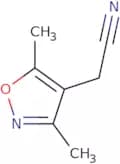
CAS:<p>Versatile small molecule scaffold</p>Formula:C7H8N2OPurity:Min. 95%Molecular weight:136.15 g/mol1,5-Dimethyl-2,3-dihydro-1H-imidazole-2-thione
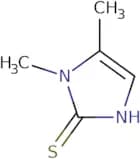
CAS:<p>Versatile small molecule scaffold</p>Formula:C5H8N2SPurity:Min. 95%Molecular weight:128.2 g/mol1-[4-Chloro-3-(trifluoromethyl)phenyl]propan-2-one
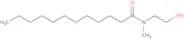
CAS:<p>Versatile small molecule scaffold</p>Formula:C10H8ClF3OPurity:Min. 95%Molecular weight:236.62 g/molN-(2-Hydroxyethyl)-N-methyldodecanamide
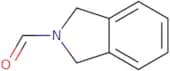
CAS:<p>N-(2-Hydroxyethyl)-N-methyldodecanamide is a surfactant that is used in cosmetics for its ability to form micelles and solubilize fatty acids and oils. It is a hydrophobic molecule with a high viscosity, which makes it suitable for use in products such as shampoos, body lotions, and face creams. N-(2-Hydroxyethyl)-N-methyldodecanamide can also be used as an emulsifier in the preparation of foods such as mayonnaise, salad dressings, and whipped cream. This compound has been shown to be toxic to the worm Caenorhabditis elegans at concentrations above 10%.</p>Formula:C15H31NO2Purity:Min. 95%Molecular weight:257.41 g/mol1,3-Dihydro-2H-isoindole-2-carboxaldehyde
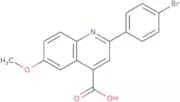
CAS:<p>Versatile small molecule scaffold</p>Formula:C9H9NOPurity:Min. 95%Molecular weight:147.17 g/mol2-(4-Bromophenyl)-6-methoxyquinoline-4-carboxylic acid
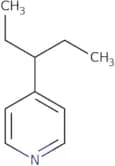
CAS:<p>Versatile small molecule scaffold</p>Formula:C17H12BrNO3Purity:Min. 95%Molecular weight:358.2 g/mol4-(3-Pentyl)pyridine
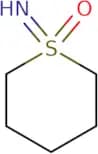
CAS:<p>4-(3-Pentyl)pyridine is a colorless and odorless liquid that is soluble in organic solvents. It has been shown to be a good solvent for many organic compounds, such as the acetonitrile, and has a high boiling point. 4-(3-Pentyl)pyridine can also undergo photolysis and thermally induced reactions, which may make it suitable for use as an additive in solar cells.</p>Formula:C10H15NPurity:Min. 95%Molecular weight:149.24 g/molHexahydro-1λ4-thiopyran-1-imine 1-oxide
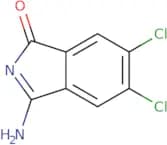
CAS:<p>Versatile small molecule scaffold</p>Formula:C5H11NOSPurity:Min. 95%Molecular weight:133.21 g/mol5,6-Dichloro-3-imino-2,3-dihydro-1H-isoindol-1-one
CAS:<p>Versatile small molecule scaffold</p>Formula:C8H4Cl2N2OPurity:Min. 95%Molecular weight:215.03 g/mol8-Phenyl-8-azabicyclo[3.2.1]octan-3-one
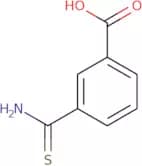
CAS:<p>Versatile small molecule scaffold</p>Formula:C13H15NOPurity:Min. 95%Molecular weight:201.26 g/mol3-Carbamothioylbenzoic acid
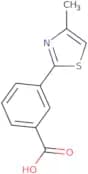
CAS:<p>3-Carbamothioylbenzoic acid is an antimicrobial agent that is used to treat chronic bacterial infections. It has been shown to inhibit the synthesis of proteins by binding to the ribosome, preventing peptide bond formation. 3-Carbamothioylbenzoic acid has been shown to be effective against a number of bacteria, including protocatechuic acid, benzoate and all-trans-retinoic acid. The reaction products are thought to be responsible for its antibacterial activity. 3-Carbamothioylbenzoic acid also inhibits the production of cycloheximide, an inhibitor of protein synthesis. This inhibition prevents cell division and leads to cell death by apoptosis.</p>Formula:C8H7NO2SPurity:Min. 95%Molecular weight:181.21 g/mol3-(4-Methyl-1,3-thiazol-2-yl)benzoic acid
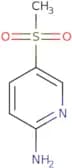
CAS:<p>Versatile small molecule scaffold</p>Formula:C11H9NO2SPurity:Min. 95%Molecular weight:219.26 g/mol2-Amino-5-(methylsulfonyl)pyridine
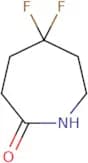
CAS:<p>Versatile small molecule scaffold</p>Formula:C6H8N2O2SPurity:Min. 95%Molecular weight:172.2 g/mol5,5-Difluoro-2-azepanone
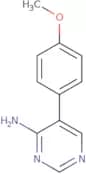
CAS:<p>Versatile small molecule scaffold</p>Formula:C6H9F2NOPurity:Min. 95%Molecular weight:149.14 g/mol5-(4-Methoxyphenyl)pyrimidin-4-amine
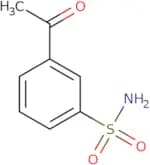
CAS:<p>Versatile small molecule scaffold</p>Formula:C11H11N3OPurity:Min. 95%Molecular weight:201.22 g/mol3-Acetylbenzenesulfonamide
CAS:<p>Versatile small molecule scaffold</p>Formula:C8H9NO3SPurity:Min. 95%Molecular weight:199.22 g/mol

![1-[4-Chloro-3-(trifluoromethyl)phenyl]propan-2-one](/_next/image/?url=https%3A%2Fstatic.cymitquimica.com%2Fproducts%2F3D%2Fthumb-webp%2FKBA17295.webp&w=3840&q=75)
![8-Phenyl-8-azabicyclo[3.2.1]octan-3-one](/_next/image/?url=https%3A%2Fstatic.cymitquimica.com%2Fproducts%2F3D%2Fthumb-webp%2FKBA19393.webp&w=3840&q=75)