Building Blocks
This section contains fundamental products for the synthesis of organic and biological compounds. Building blocks are the essential starting materials used to construct complex molecules through various chemical reactions. They play a critical role in drug discovery, material science, and chemical research. At CymitQuimica, we offer a diverse range of high-quality building blocks to support your innovative research and industrial projects, ensuring you have the essential components for successful synthesis.
Subcategories of "Building Blocks"
- Boronic Acids & Boronic Acid Derivatives(5,778 products)
- Chiral Building Blocks(1,243 products)
- Hydrocarbon Building Blocks(6,098 products)
- Organic Building Blocks(61,046 products)
Found 203857 products of "Building Blocks"
Sort by
Purity (%)
0
100
|
0
|
50
|
90
|
95
|
100
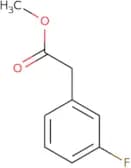
Methyl 3-Fluorophenylacetate
CAS:<p>Methyl 3-Fluorophenylacetate is an alkali, cyclopropene carboxamide that has a nucleophilic functionality. It is positioned strategically in biomolecular chemistry and biomolecular function. Methyl 3-Fluorophenylacetate has been used as a building block to synthesize bioactive molecules such as peptides and polymers. In addition, it can be used as a fluorescent probe for the identification of nucleophilic functionalities.</p>Formula:C9H9FO2Purity:Min. 95%Molecular weight:168.17 g/mol2-{4-Chloro-1H-pyrazolo[3,4-d]pyrimidin-1-yl}ethan-1-ol
CAS:Versatile small molecule scaffoldFormula:C7H7ClN4OPurity:Min. 95%Molecular weight:198.61 g/mol[3-(1H-1,3-Benzodiazol-2-yl)propyl](methyl)amine
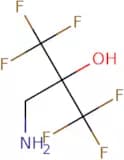
CAS:Versatile small molecule scaffoldFormula:C11H15N3Purity:Min. 95%Molecular weight:189.26 g/mol3-Amino-1,1,1-trifluoro-2-(trifluoromethyl)propan-2-ol
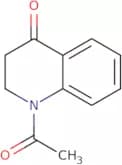
CAS:Versatile small molecule scaffoldFormula:C4H5F6NOPurity:Min. 95%Molecular weight:197.08 g/mol1-acetyl-1,2,3,4-tetrahydroquinolin-4-one
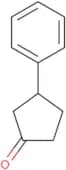
CAS:1-Acetyl-1,2,3,4-tetrahydroquinolin-4-one is a chemical compound that can be prepared by nitration of quinolin-4-one with concentrated sulfuric acid. This chemical has the following constants:Formula:C11H11NO2Purity:Min. 95%Molecular weight:189.21 g/mol3-Phenyl-cyclopentanone
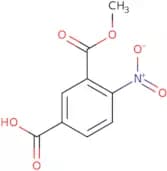
CAS:3-Phenyl-cyclopentanone is a conformational chiral reagent that is used in the synthesis of enantiomerically pure compounds. It is a substrate for many enzymatic reactions, such as alkylation, and can be used to prepare one of the two possible stereoisomers. 3-Phenyl-cyclopentanone has been shown to show positive dichroism in the visible region and negative dichroism in the near infrared region. This compound also has potential for use as an analytical reagent due to its ability to separate solutes based on their chromatographic properties.Formula:C11H12OPurity:Min. 95%Molecular weight:160.21 g/mol3-(Methoxycarbonyl)-4-nitrobenzoic acid
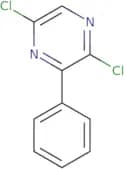
CAS:Versatile small molecule scaffoldFormula:C9H7NO6Purity:Min. 95%Molecular weight:225.16 g/mol2,5-Dichloro-3-phenylpyrazine
CAS:Versatile small molecule scaffoldFormula:C10H6Cl2N2Purity:Min. 95%Molecular weight:225.07 g/molDiethyl[(piperidin-2-yl)methyl]amine
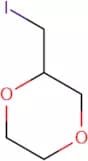
CAS:Versatile small molecule scaffoldFormula:C10H22N2Purity:Min. 95%Molecular weight:170.3 g/mol2-(iodomethyl)-1,4-dioxane
CAS:2-(iodomethyl)-1,4-dioxane is a cytotoxic moiety that binds to the capsid protein of a virus. It has been shown to be an antiviral agent against HIV-1 and other retroviruses. 2-(iodomethyl)-1,4-dioxane is hydrophobic, connecting and binds to hydrophobic regions in proteins. The compound was also observed to have antiviral activity against HIV-2 and SIV. 2-(iodomethyl)-1,4-dioxane was found to form hydrogen bonds with the capsid proteins of both HIV-1 and HIV-2, which are important for viral infectivity. This compound has been used as a linker for attaching cytotoxic molecules such as doxorubicin or camptothecin to liposomes or nanoparticles.Formula:C5H9IO2Purity:Min. 95%Molecular weight:228.03 g/molSpiro[benzo[d][1,3]dioxole-2,1'-cyclohexan]-5-amine
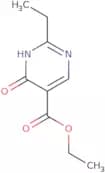
CAS:Versatile small molecule scaffoldFormula:C12H15NO2Purity:Min. 95%Molecular weight:205.26 g/molEthyl 2-ethyl-6-oxo-1,6-dihydropyrimidine-5-carboxylate
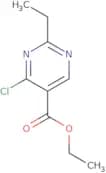
CAS:Versatile small molecule scaffoldFormula:C9H12N2O3Purity:Min. 95%Molecular weight:196.2 g/molEthyl 4-chloro-2-ethylpyrimidine-5-carboxylate
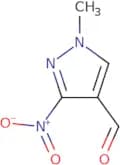
CAS:Versatile small molecule scaffoldFormula:C9H11ClN2O2Purity:Min. 95%Molecular weight:214.65 g/mol1-Methyl-3-nitro-1H-pyrazole-4-carbaldehyde
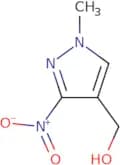
CAS:<p>Versatile small molecule scaffold</p>Formula:C5H5N3O3Purity:Min. 95%Molecular weight:155.11 g/mol(1-Methyl-3-nitro-1H-pyrazol-4-yl)methanol
CAS:<p>Versatile small molecule scaffold</p>Formula:C5H7N3O3Purity:Min. 95%Molecular weight:157.13 g/mol2-Methylpiperidine-1-carbonyl chloride
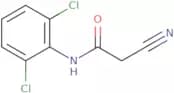
CAS:Versatile small molecule scaffoldFormula:C7H12ClNOPurity:Min. 95%Molecular weight:161.63 g/mol2-Cyano-N-(2,6-dichlorophenyl)acetamide
CAS:Versatile small molecule scaffoldFormula:C9H6Cl2N2OPurity:Min. 95%Molecular weight:229.06 g/mol2-[(3-Fluorophenyl)amino]acetonitrile
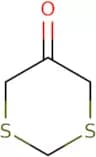
CAS:Versatile small molecule scaffoldFormula:C8H7FN2Purity:Min. 95%Molecular weight:150.15 g/mol1,3-Dithian-5-one
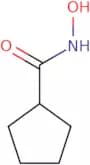
CAS:1,3-Dithian-5-one is a carbonyl compound that contains an aromatic ring. It has been used as a herbicide and bactericide. Spectroscopic data has shown that the carbonyl group in 1,3-dithian-5-one is responsible for its spectra. These spectral data also show that it is an antisymmetric molecule with a carbonyl group at the center of the molecule. The carbonyl group absorbs light in the visible range, which can be seen in its spectrum. This compound also has gas phase equilibrium interactions with sulfur.Formula:C4H6OS2Purity:Min. 95%Molecular weight:134.2 g/molN-Hydroxycyclopentanecarboxamide
CAS:Versatile small molecule scaffoldFormula:C6H11NO2Purity:Min. 95%Molecular weight:129.16 g/mol

![2-{4-Chloro-1H-pyrazolo[3,4-d]pyrimidin-1-yl}ethan-1-ol](/_next/image/?url=https%3A%2Fstatic.cymitquimica.com%2Fproducts%2F3D%2Fthumb-webp%2FPCA12715.webp&w=3840&q=75)
amine](/_next/image/?url=https%3A%2Fstatic.cymitquimica.com%2Fproducts%2F3D%2Fthumb-webp%2FPCA13752.webp&w=3840&q=75)
![Diethyl[(piperidin-2-yl)methyl]amine](/_next/image/?url=https%3A%2Fstatic.cymitquimica.com%2Fproducts%2F3D%2Fthumb-webp%2FPCA16809.webp&w=3840&q=75)
![Spiro[benzo[d][1,3]dioxole-2,1'-cyclohexan]-5-amine](/_next/image/?url=https%3A%2Fstatic.cymitquimica.com%2Fproducts%2F3D%2Fthumb-webp%2FPCA17941.webp&w=3840&q=75)

![2-[(3-Fluorophenyl)amino]acetonitrile](/_next/image/?url=https%3A%2Fstatic.cymitquimica.com%2Fproducts%2F3D%2Fthumb-webp%2FPCA20453.webp&w=3840&q=75)