


Building Blocks
This section contains fundamental products for the synthesis of organic and biological compounds. Building blocks are the essential starting materials used to construct complex molecules through various chemical reactions. They play a critical role in drug discovery, material science, and chemical research. At CymitQuimica, we offer a diverse range of high-quality building blocks to support your innovative research and industrial projects, ensuring you have the essential components for successful synthesis.
Subcategories of "Building Blocks"
- Boronic Acids & Boronic Acid Derivatives(5,756 products)
- Chiral Building Blocks(1,242 products)
- Hydrocarbon Building Blocks(6,095 products)
- Organic Building Blocks(61,051 products)
Found 199813 products of "Building Blocks"
Sort by
Purity (%)
0
100
|
0
|
50
|
90
|
95
|
100
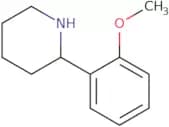
2-(2-Methoxyphenyl)piperidine
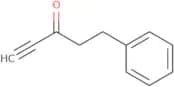
CAS:<p>Versatile small molecule scaffold</p>Formula:C12H17NOPurity:Min. 95%Molecular weight:191.27 g/mol5-Phenylpent-1-yn-3-one
CAS:<p>5-Phenylpent-1-yn-3-one is a chiral, carbonyl derivative that can be used as an intermediate in organic synthesis. It has been shown to be a reagent for the synthesis of enamines and amides. The asymmetric synthesis of 5-phenylpent-1-yn-3-ones is catalyzed by copper. 5-Phenylpent-1-yn-3-one has also been used in the synthesis of surfactants and has been shown to be an efficient electrophilic addition agent. 5-Phenylpent-1y n -3 -one is not an achiral molecule because it can exist as two geometric isomers, cis and trans.</p>Formula:C11H10OPurity:Min. 95%Molecular weight:158.2 g/mol1-(Aminomethyl)-5-methoxy-2,3-dihydro-1H-inden-1-ol
CAS:<p>Versatile small molecule scaffold</p>Formula:C11H15NO2Purity:Min. 95%Molecular weight:193.2 g/molrac-(3aR,6aS)-Hexahydro-1H-cyclopenta[C]thiophen-5-one
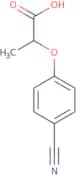
CAS:<p>Versatile small molecule scaffold</p>Formula:C7H10OSPurity:Min. 95%Molecular weight:142.22 g/mol2-(4-Cyanophenoxy)propanoic acid
CAS:<p>Versatile small molecule scaffold</p>Formula:C10H9NO3Purity:Min. 95%Molecular weight:191.18 g/mol4-[(1H-1,2,3-Triazol-1-yl)methyl]benzoic acid
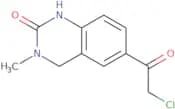
CAS:Versatile small molecule scaffoldFormula:C10H9N3O2Purity:Min. 95%Molecular weight:203.2 g/mol6-(2-Chloroacetyl)-3-methyl-1,2,3,4-tetrahydroquinazolin-2-one
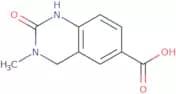
CAS:<p>Versatile small molecule scaffold</p>Formula:C11H11ClN2O2Purity:Min. 95%Molecular weight:238.67 g/mol3-Methyl-2-oxo-1,2,3,4-tetrahydroquinazoline-6-carboxylic acid
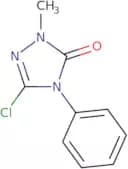
CAS:<p>Versatile small molecule scaffold</p>Formula:C10H10N2O3Purity:Min. 95%Molecular weight:206.2 g/mol3-Chloro-1-methyl-4-phenyl-4,5-dihydro-1H-1,2,4-triazol-5-one
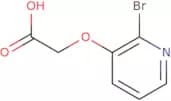
CAS:<p>Versatile small molecule scaffold</p>Formula:C9H8ClN3OPurity:Min. 95%Molecular weight:209.63 g/mol2-((2-Bromopyridin-3-yl)oxy)acetic acid
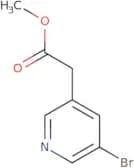
CAS:<p>Versatile small molecule scaffold</p>Formula:C7H6BrNO3Purity:Min. 95%Molecular weight:232.03 g/molMethyl 2-(5-bromopyridin-3-yl)acetate
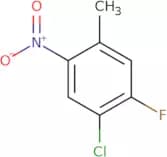
CAS:<p>Methyl 2-(5-bromopyridin-3-yl)acetate is a potent inhibitor of respiratory syncytial virus (RSV) and other viruses. It inhibits the activity of polyproteins by binding to their ester bond, which blocks their formation. Methyl 2-(5-bromopyridin-3-yl)acetate has been shown to inhibit the synthesis of cysteine proteinase, an enzyme that is responsible for breaking down proteins in the body. This inhibition of the cysteine proteinase leads to an accumulation of proteins and can lead to a number of symptoms such as fever, diarrhea, nausea, vomiting, and abdominal pain. Inhibiting this enzyme also prevents translation by halting ribosomal RNA processing.</p>Formula:C8H8BrNO2Purity:Min. 95%Molecular weight:230.06 g/mol3-Chloro-4-fluoro-6-methylnitrobenzene
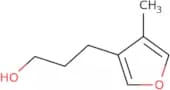
CAS:<p>Versatile small molecule scaffold</p>Formula:C7H5ClFNO2Purity:Min. 95%Molecular weight:189.57 g/mol3-(4-Methylfuran-3-yl)propan-1-ol
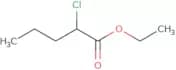
CAS:<p>3-(4-Methylfuran-3-yl)propan-1-ol is a chemical compound that belongs to the group of organic compounds. It is a colorless liquid with a pleasant odor. 3-(4-Methylfuran-3-yl)propan-1-ol has been found in the filtrate of certain plants, such as the endophyte fungi Fusarium verticillioides. It has been shown to have antifeedant properties and can be used in combination with other fungicides, such as tebuconazole or triazole, to control phytopathogens. 3-(4-Methylfuran-3-yl)propan-1-ol may also be used as an additive for food chemistry or in element analysis.</p>Formula:C8H12O2Purity:Min. 95%Molecular weight:140.18 g/molEthyl 2-chloropentanoate
CAS:<p>Versatile small molecule scaffold</p>Formula:C7H13ClO2Purity:Min. 95%Molecular weight:164.63 g/mol2-[(3-Amino-2-pyridinyl)amino]ethanol
CAS:<p>Versatile small molecule scaffold</p>Formula:C7H11N3OPurity:Min. 95%Molecular weight:153.18 g/mol4-Isothiocyanato-1-methylpiperidine
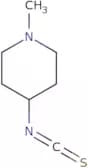
CAS:<p>4-Isothiocyanato-1-methylpiperidine is a type of inhibitor that binds to the kinase and blocks the phosphorylation of proteins. The binding of 4-isothiocyanato-1-methylpiperidine to receptor kinases blocks the activation of these receptors, which prevents growth factor β from binding to them. This leads to inhibition of cell growth by preventing mitosis and cell division. In addition, 4-isothiocyanato-1-methylpiperidine can inhibit the activity of type I receptor kinases in transfected cells, such as luciferase.</p>Formula:C7H12N2SPurity:Min. 95%Molecular weight:156.25 g/mol2-(3-Bromophenyl)-1,3-thiazolidine-4-carboxylic acid
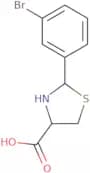
CAS:<p>2-(3-Bromophenyl)-1,3-thiazolidine-4-carboxylic acid is an antiparasitic drug. It is a natural compound that has been approved for the treatment of leishmaniasis. This drug also has antimicrobial activity and has been used to treat bacterial and viral infections. 2-(3-Bromophenyl)-1,3-thiazolidine-4-carboxylic acid is synthesized in a laboratory by reacting 3-bromobenzaldehyde with thiosemicarbazide. This drug may also be used to treat fungal infections such as Candida albicans.</p>Formula:C10H10BrNO2SPurity:Min. 95%Molecular weight:288.16 g/mol2-(2-acetamido-2-methylpropanamido)-2-methylpropanoic acid
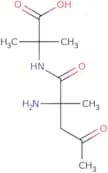
CAS:<p>Versatile small molecule scaffold</p>Formula:C10H18N2O4Purity:Min. 95%Molecular weight:230.26 g/mol5-Oxo-2H,3H,5H,9bh-[1,3]thiazolo[2,3-a]isoindole-3-carboxylic acid
CAS:<p>Versatile small molecule scaffold</p>Formula:C11H9NO3SPurity:Min. 95%Molecular weight:235.26 g/molMethyl 2-amino-2-phenylbutanoate hydrochloride
CAS:<p>Versatile small molecule scaffold</p>Formula:C11H16ClNO2Purity:Min. 95%Molecular weight:229.7 g/mol

![rac-(3aR,6aS)-Hexahydro-1H-cyclopenta[C]thiophen-5-one](/_next/image/?url=https%3A%2Fstatic.cymitquimica.com%2Fproducts%2F3D%2Fthumb-webp%2FTEA59791.webp&w=3840&q=75)
![4-[(1H-1,2,3-Triazol-1-yl)methyl]benzoic acid](/_next/image/?url=https%3A%2Fstatic.cymitquimica.com%2Fproducts%2F3D%2Fthumb-webp%2FTEA61853.webp&w=3840&q=75)
![2-[(3-Amino-2-pyridinyl)amino]ethanol](/_next/image/?url=https%3A%2Fstatic.cymitquimica.com%2Fproducts%2F3D%2Fthumb-webp%2FTEA70501.webp&w=3840&q=75)
![5-Oxo-2H,3H,5H,9bh-[1,3]thiazolo[2,3-a]isoindole-3-carboxylic acid](/_next/image/?url=https%3A%2Fstatic.cymitquimica.com%2Fproducts%2F3D%2Fthumb-webp%2FTEA72668.webp&w=3840&q=75)
