


Building Blocks
This section contains fundamental products for the synthesis of organic and biological compounds. Building blocks are the essential starting materials used to construct complex molecules through various chemical reactions. They play a critical role in drug discovery, material science, and chemical research. At CymitQuimica, we offer a diverse range of high-quality building blocks to support your innovative research and industrial projects, ensuring you have the essential components for successful synthesis.
Subcategories of "Building Blocks"
- Boronic Acids & Boronic Acid Derivatives(5,756 products)
- Chiral Building Blocks(1,242 products)
- Hydrocarbon Building Blocks(6,095 products)
- Organic Building Blocks(61,038 products)
Found 196817 products of "Building Blocks"
Sort by
Purity (%)
0
100
|
0
|
50
|
90
|
95
|
100
rac-(1R,2R)-2-(Oxolan-2-yl)cyclopropane-1-carboxylic acid
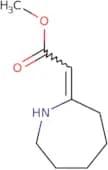
CAS:<p>Versatile small molecule scaffold</p>Formula:C8H12O3Purity:Min. 95%Molecular weight:156.2 g/mol(Z)-Methyl 2-(azepan-2-ylidene)acetate
CAS:<p>Versatile small molecule scaffold</p>Formula:C9H15NO2Purity:Min. 95%Molecular weight:169.2 g/mol4,6-Dimethyl-2-(tributylstannyl)pyrimidine
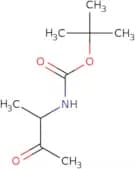
CAS:Controlled Product<p>Versatile small molecule scaffold</p>Formula:C18H34N2SnPurity:Min. 95%Molecular weight:397.2 g/moltert-Butyl N-(3-oxobutan-2-yl)carbamate
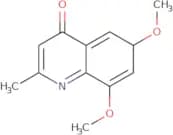
CAS:<p>Versatile small molecule scaffold</p>Formula:C9H17NO3Purity:Min. 95%Molecular weight:187.24 g/mol6,8-Dimethoxy-2-methyl-1,4-dihydroquinolin-4-one
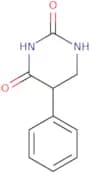
CAS:<p>Versatile small molecule scaffold</p>Formula:C12H13NO3Purity:Min. 95%Molecular weight:219.24 g/mol5-Phenyl-1,3-diazinane-2,4-dione
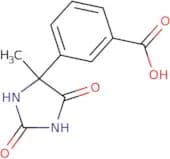
CAS:<p>Versatile small molecule scaffold</p>Formula:C10H10N2O2Purity:Min. 95%Molecular weight:190.2 g/mol3-(4-Methyl-2,5-dioxoimidazolidin-4-yl)benzoic acid
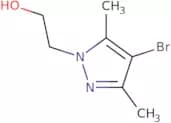
CAS:<p>Versatile small molecule scaffold</p>Formula:C11H10N2O4Purity:Min. 95%Molecular weight:234.21 g/mol2-(4-Bromo-3,5-dimethyl-1H-pyrazol-1-yl)ethan-1-ol
CAS:<p>Versatile small molecule scaffold</p>Formula:C7H11BrN2OPurity:Min. 95%Molecular weight:219.08 g/molEthyl 2-[(carbamoylmethyl)amino]acetate
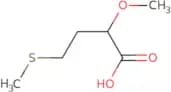
CAS:<p>Versatile small molecule scaffold</p>Formula:C6H12N2O3Purity:Min. 95%Molecular weight:160.17 g/mol2-Methoxy-4-(methylsulfanyl)butanoic acid
CAS:<p>Versatile small molecule scaffold</p>Formula:C6H12O3SPurity:Min. 95%Molecular weight:164.22 g/mol6-[4-(Trifluoromethyl)phenoxy]pyridin-3-amine
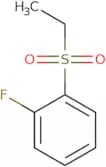
CAS:<p>Versatile small molecule scaffold</p>Formula:C12H9F3N2OPurity:Min. 95%Molecular weight:254.21 g/mol1-(Ethanesulfonyl)-2-fluorobenzene
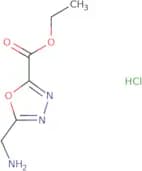
CAS:<p>Versatile small molecule scaffold</p>Formula:C8H9FO2SPurity:Min. 95%Molecular weight:188.22 g/molEthyl 5-(aminomethyl)-1,3,4-oxadiazole-2-carboxylate hydrochloride
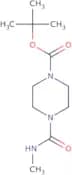
CAS:<p>Versatile small molecule scaffold</p>Formula:C6H10ClN3O3Purity:Min. 95%Molecular weight:207.61 g/moltert-Butyl 4-(methylcarbamoyl)piperazine-1-carboxylate
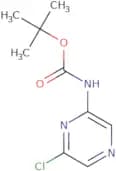
CAS:<p>Versatile small molecule scaffold</p>Formula:C11H21N3O3Purity:Min. 95%Molecular weight:243.3 g/moltert-Butyl N-(6-chloropyrazin-2-yl)carbamate
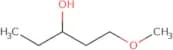
CAS:<p>Versatile small molecule scaffold</p>Formula:C9H12ClN3O2Purity:Min. 95%Molecular weight:229.66 g/mol1-Methoxypentan-3-ol
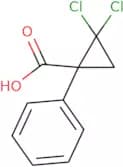
CAS:<p>Versatile small molecule scaffold</p>Formula:C6H14O2Purity:Min. 95%Molecular weight:118.17 g/mol2,2-Dichloro-1-phenylcyclopropane-1-carboxylic acid
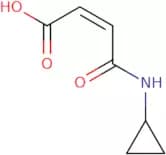
CAS:<p>2,2-Dichloro-1-phenylcyclopropane-1-carboxylic acid is a cyclopropanecarboxylic acid. It is an organochlorine compound that has been used as a pesticide and herbicide. 2,2-Dichloro-1-phenylcyclopropane-1-carboxylic acid inhibits the production of chlorophyll in plants by inhibiting the activity of photosystem II. This inhibition leads to a decrease in the rate of photosynthesis and plant growth.</p>Formula:C10H8Cl2O2Purity:Min. 95%Molecular weight:231.07 g/mol(2z)-3-(cyclopropylcarbamoyl)prop-2-enoic acid
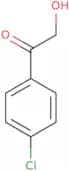
CAS:<p>Versatile small molecule scaffold</p>Formula:C7H9NO3Purity:Min. 95%Molecular weight:155.15 g/mol1-(4-Chlorophenyl)-2-hydroxyethan-1-one
CAS:<p>1-(4-Chlorophenyl)-2-hydroxyethan-1-one is a selective enantiomer that inhibits the growth of candida parapsilosis and c. parapsilosis. It has been shown to be preferentially oxidized by candida parapsilosis and c. parapsilosis, which leads to its selectivity for these fungi. 1-(4-Chlorophenyl)-2-hydroxyethan-1-one has been shown to be a biphasic system that can inhibit the growth of both candida parapsilosis and c. parapsilosis, with biphasic activity being due to its ability to selectively oxidize alcohols in these fungi. This compound is also an enantiomer, making it more effective than other compounds with similar structures but different stereochemistry.</p>Formula:C8H7ClO2Purity:Min. 95%Molecular weight:170.59 g/molSpiro[5.5]undecan-1-amine
CAS:<p>Versatile small molecule scaffold</p>Formula:C11H21NPurity:Min. 95%Molecular weight:167.3 g/mol

![Ethyl 2-[(carbamoylmethyl)amino]acetate](/_next/image/?url=https%3A%2Fstatic.cymitquimica.com%2Fproducts%2F3D%2Fthumb-webp%2FCBB97529.webp&w=3840&q=75)
![6-[4-(Trifluoromethyl)phenoxy]pyridin-3-amine](/_next/image/?url=https%3A%2Fstatic.cymitquimica.com%2Fproducts%2F3D%2Fthumb-webp%2FCBB96633.webp&w=3840&q=75)
![Spiro[5.5]undecan-1-amine](/_next/image/?url=https%3A%2Fstatic.cymitquimica.com%2Fproducts%2F3D%2Fthumb-webp%2FCBA99230.webp&w=3840&q=75)