


Building Blocks
This section contains fundamental products for the synthesis of organic and biological compounds. Building blocks are the essential starting materials used to construct complex molecules through various chemical reactions. They play a critical role in drug discovery, material science, and chemical research. At CymitQuimica, we offer a diverse range of high-quality building blocks to support your innovative research and industrial projects, ensuring you have the essential components for successful synthesis.
Subcategories of "Building Blocks"
- Boronic Acids & Boronic Acid Derivatives(5,756 products)
- Chiral Building Blocks(1,242 products)
- Hydrocarbon Building Blocks(6,095 products)
- Organic Building Blocks(61,038 products)
Found 196817 products of "Building Blocks"
Sort by
Purity (%)
0
100
|
0
|
50
|
90
|
95
|
100
3-Methyl-4-(propan-2-yl)-2,5-dihydro-1,2-oxazol-5-one
CAS:<p>Versatile small molecule scaffold</p>Formula:C7H11NO2Purity:Min. 95%Molecular weight:141.17 g/mol3-(Thiophen-2-yl)phenol
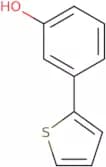
CAS:<p>Versatile small molecule scaffold</p>Formula:C10H8OSPurity:Min. 95%Molecular weight:176.24 g/mol4-Benzyl-3,3-dimethylpiperazin-2-one
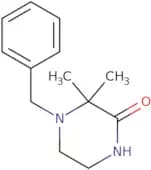
CAS:<p>Versatile small molecule scaffold</p>Formula:C13H18N2OPurity:Min. 95%Molecular weight:218.29 g/mol1-Benzyl-2,5-dimethylpiperazine
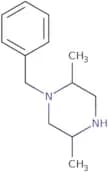
CAS:<p>Versatile small molecule scaffold</p>Formula:C13H20N2Purity:Min. 95%Molecular weight:204.31 g/mol2-(4-Hydroxyphenyl)-2-methylpropanoic acid
CAS:<p>Versatile small molecule scaffold</p>Formula:C10H12O3Purity:Min. 95%Molecular weight:180.2 g/mol3,5-Dichloro-N-(2-methyl-3-oxobutan-2-yl)benzamide
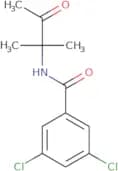
CAS:<p>3,5-Dichloro-N-(2-methyl-3-oxobutan-2-yl)benzamide (3,5DCMB) is a herbicide that inhibits photosynthesis in plants. It is metabolized to dichlorobenzene and hydrated to 3,5-dichlorobenzaldehyde. The metabolites are excreted through the urine or via the lungs. 3,5DCMB is also a xenobiotic with an ethynyl group and a methyl ketone group.</p>Formula:C12H13Cl2NO2Purity:Min. 95%Molecular weight:274.14 g/molEthyl 1,4-diazabicyclo[2.2.2]octane-2-carboxylate
CAS:<p>Versatile small molecule scaffold</p>Formula:C9H16N2O2Purity:Min. 95%Molecular weight:184.24 g/molOctahydro-1H-inden-1-one
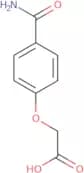
CAS:<p>Octahydro-1H-inden-1-one is an alkylation agent that has been used in the synthesis of triketones and ethyl diazoacetate. This compound is a synthetic intermediate that is used to produce organic compounds. It can be prepared by the kinetic reaction of ethyl diazoacetate with chloride or by the thermolysis of 1,3,5-triketone. Octahydro-1H-inden-1-one can also be synthesized from octahydrobenzofuran using a regiospecifically catalyzed reaction. The compound exists as two regiospecific isomers due to its double bond: cis and trans. The cis form has greater reactivity than the trans form because it has two electron withdrawing groups on the same side of the double bond and it can be hydrolyzed more easily than its trans isomer.<br>Octahydro-1H-ind</p>Formula:C9H14OPurity:Min. 95%Molecular weight:138.21 g/mol2-(4-Carbamoylphenoxy)acetic acid
CAS:<p>Versatile small molecule scaffold</p>Formula:C9H9NO4Purity:Min. 95%Molecular weight:195.17 g/mol5-Chloro-1-methyl-3-(propan-2-yl)-1H-pyrazole
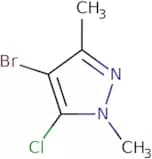
CAS:<p>Versatile small molecule scaffold</p>Formula:C7H11ClN2Purity:Min. 95%Molecular weight:158.63 g/mol4-Bromo-5-chloro-1,3-dimethyl-1H-pyrazole
CAS:<p>Versatile small molecule scaffold</p>Formula:C5H6BrClN2Purity:Min. 95%Molecular weight:209.47 g/mol3-Amino-4-ethoxycyclobut-3-ene-1,2-dione
CAS:Versatile small molecule scaffoldFormula:C6H7NO3Purity:Min. 95%Molecular weight:141.12 g/mol3-Ethoxy-4-(methylamino)cyclobut-3-ene-1,2-dione
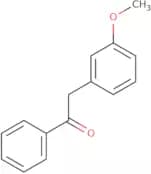
CAS:<p>Versatile small molecule scaffold</p>Formula:C7H9NO3Purity:Min. 95%Molecular weight:155.15 g/mol2-(3-Methoxyphenyl)acetophenone
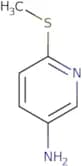
CAS:<p>Versatile small molecule scaffold</p>Formula:C15H14O2Purity:Min. 95%Molecular weight:226.27 g/mol6-Methylsulfanyl-pyridin-3-ylamine
CAS:<p>Versatile small molecule scaffold</p>Formula:C6H8N2SPurity:Min. 95%Molecular weight:140.2 g/mol1-Bromo-3-methanesulfinylbenzene
CAS:<p>1-Bromo-3-methanesulfinylbenzene (1BrMS) is a chemoselective oxidant that can be used for the oxidation of sulfides and sulfoxides. 1BrMS has been shown to have an optimum pH of 9.5, and it has been shown to be catalytic in the presence of hydrogen peroxide. It also exhibits enantioselectivity and chemoselectivity as well as high regioselectivity. 1BrMS is stable under basic conditions, but breaks down under acidic conditions due to its reactive nature. The parameters of 1BrMS are not fully understood at this time, but it has been shown to be a powerful oxidant with potential applications in organic synthesis.</p>Formula:C7H7BrOSPurity:Min. 95%Molecular weight:219.1 g/mol4-Ethoxy-1H-indole-2-carboxylic acid
CAS:<p>Versatile small molecule scaffold</p>Formula:C11H11NO3Purity:Min. 95%Molecular weight:205.22 g/mol2-[3-(Benzyloxy)phenyl]ethan-1-amine hydrochloride
CAS:<p>Versatile small molecule scaffold</p>Formula:C15H18ClNOPurity:Min. 95%Molecular weight:263.76 g/mol1-[(4-Chlorophenyl)methyl]cyclopropan-1-amine hydrochloride
CAS:<p>Versatile small molecule scaffold</p>Formula:C10H13Cl2NPurity:Min. 95%Molecular weight:218.12 g/mol2-(2-Propynyloxy)benzenecarbaldehyde
CAS:<p>2-(2-Propynyloxy)benzenecarbaldehyde (2-POBA) is a biomolecule that can be used as a fluorescence probe. It reacts with nucleophiles, such as pyridines and coumarins, to form radical species. 2-POBA has shown antibacterial activity against subtilis and other bacterial strains. The allyl group in 2-POBA is responsible for the antibacterial activity. 2-POBA also reacts with cyclic voltammetric and electrospray ionization techniques to produce an ion signal that is indicative of its presence in solution.</p>Formula:C10H8O2Purity:Min. 95%Molecular weight:160.17 g/mol



![Ethyl 1,4-diazabicyclo[2.2.2]octane-2-carboxylate](/_next/image/?url=https%3A%2Fstatic.cymitquimica.com%2Fproducts%2F3D%2Fthumb-webp%2FEBA92470.webp&w=3840&q=75)





![2-[3-(Benzyloxy)phenyl]ethan-1-amine hydrochloride](/_next/image/?url=https%3A%2Fstatic.cymitquimica.com%2Fproducts%2F3D%2Fthumb-webp%2FEBA97397.webp&w=3840&q=75)
![1-[(4-Chlorophenyl)methyl]cyclopropan-1-amine hydrochloride](/_next/image/?url=https%3A%2Fstatic.cymitquimica.com%2Fproducts%2F3D%2Fthumb-webp%2FEBA97780.webp&w=3840&q=75)
