Building Blocks
This section contains fundamental products for the synthesis of organic and biological compounds. Building blocks are the essential starting materials used to construct complex molecules through various chemical reactions. They play a critical role in drug discovery, material science, and chemical research. At CymitQuimica, we offer a diverse range of high-quality building blocks to support your innovative research and industrial projects, ensuring you have the essential components for successful synthesis.
Subcategories of "Building Blocks"
- Boronic Acids & Boronic Acid Derivatives(5,778 products)
- Chiral Building Blocks(1,242 products)
- Hydrocarbon Building Blocks(6,098 products)
- Organic Building Blocks(61,092 products)
Found 199296 products of "Building Blocks"
Sort by
Purity (%)
0
100
|
0
|
50
|
90
|
95
|
100
(3-Chlorocyclobutyl)methanol
CAS:<p>Versatile small molecule scaffold</p>Formula:C5H9ClOPurity:Min. 95%Molecular weight:120.58 g/molMethyl 4-hydroxy-3-methoxyphenylacetate
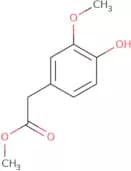
CAS:<p>Methyl 4-hydroxy-3-methoxyphenylacetate (HMPAA) is a natural compound, which can be detected by mass spectrometric detection. It is an evaporative and has been shown to have inhibitory effects on the growth of ganglion cells in culture. HMPAA also inhibits phosphotungstic acid precipitation assays and crth2 expression. HMPAA has been shown to interact with other proteins, such as protein–protein interactions or functional groups. This compound is also involved in chemical reactions, such as the hydroxyl group or the methyl group. The detectable concentration of HMPAA ranges from 1 ng/mL to 1 μM and it is found in monomers or organic acids.</p>Formula:C10H12O4Purity:Min. 95%Molecular weight:196.2 g/mol1-Methyl-4-phenyl-1H-1,2,3-triazole
CAS:<p>1-Methyl-4-phenyl-1H-1,2,3-triazole is a ligand that interacts with copper. It is used in the synthesis of pyridine complexes and as a reagent for the preparation of other organometallic compounds. 1-Methyl-4-phenyl-1H-1,2,3-triazole has been shown to be able to replace azide or chloride ligands in some metal coordination complexes. It has been observed in spectra of copper and rhenium complexes with axially coordinated ligands. The X ray crystal structures of 1 methyl 4 phenyl 1H 1 2 3 triazole have revealed that it can be either a luminescent or nonluminescent compound depending on the type of solvent used during its preparation.</p>Formula:C9H9N3Purity:Min. 95%Molecular weight:159.19 g/mol2-Chloro-4-methyl-1H-benzo[d]imidazole
CAS:<p>2-Chloro-4-methyl-1H-benzo[d]imidazole is a biochemical, which has been used in structural studies and conformational analyses. The compound has been shown to be an oriented molecule that can exist in two different forms, depending on the solvent conditions. 2-Chloro-4-methyl-1H-benzo[d]imidazole is a halide with a low degree of solubility in water. It reacts with divalent cations such as magnesium or calcium ions to form insoluble salts. 2CMBDI has been shown to inhibit DNA replication by binding to 8-oxoguanosine residues during the synthesis of DNA and preventing their incorporation into the growing strand. Mechanistically, 2CMBDI inhibits cellular anions and causes cell death by inhibiting DNA replication.</p>Formula:C8H7ClN2Purity:Min. 95%Molecular weight:166.61 g/mol2-Chloro-1,5-dimethyl-1H-benzo[D]imidazole
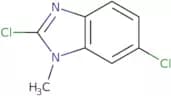
CAS:<p>Versatile small molecule scaffold</p>Formula:C9H9ClN2Purity:Min. 95%Molecular weight:180.63 g/mol2,6-Dichloro-1-methyl-1H-1,3-benzodiazole
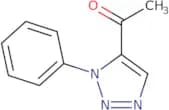
CAS:<p>Versatile small molecule scaffold</p>Formula:C8H6Cl2N2Purity:Min. 95%Molecular weight:201.05 g/mol1-(1-Phenyl-1H-1,2,3-triazol-5-yl)ethan-1-one
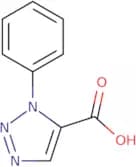
CAS:<p>Versatile small molecule scaffold</p>Formula:C10H9N3OPurity:Min. 95%Molecular weight:187.2 g/mol1-Phenyl-1H-1,2,3-triazole-5-carboxylic acid
CAS:<p>Versatile small molecule scaffold</p>Formula:C9H7N3O2Purity:Min. 95%Molecular weight:189.17 g/molPyrrolidine-1-carbohydrazide
CAS:<p>Versatile small molecule scaffold</p>Formula:C5H11N3OPurity:Min. 95%Molecular weight:129.16 g/mol2-[(4-Methoxyphenyl)carbonyl]furan
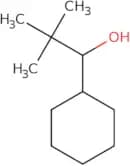
CAS:Versatile small molecule scaffoldFormula:C12H10O3Purity:Min. 95%Molecular weight:202.21 g/mol1-Cyclohexyl-2,2-dimethylpropan-1-ol
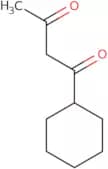
CAS:<p>Versatile small molecule scaffold</p>Formula:C11H22OPurity:Min. 95%Molecular weight:170.29 g/mol1-Cyclohexylbutane-1,3-dione
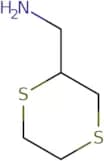
CAS:<p>Versatile small molecule scaffold</p>Formula:C10H16O2Purity:Min. 95%Molecular weight:168.23 g/mol1,4-Dithian-2-ylmethanamine
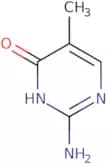
CAS:<p>Versatile small molecule scaffold</p>Formula:C5H11NS2Purity:Min. 95%Molecular weight:149.3 g/mol2-Amino-5-methyl-4-pyrimidinol
CAS:2-Amino-5-methyl-4-pyrimidinol is a metabolite of the nucleobase cytosine. It is also a competitive inhibitor of guanine deaminase, an enzyme that converts guanine to inosine. 2-Amino-5-methyl-4-pyrimidinol can be synthesized by solid phase synthesis and has been shown to have clinical potential for the treatment of cancer.Formula:C5H7N3OPurity:Min. 95%Molecular weight:125.13 g/molrac-(1R,2S)-2-Carbamoylcyclopropane-1-carboxylic acid
CAS:<p>Versatile small molecule scaffold</p>Formula:C5H7NO3Purity:Min. 95%Molecular weight:129.1 g/molMethyl 4-(aminooxy)butanoate hydrochloride
CAS:<p>Versatile small molecule scaffold</p>Formula:C5H12ClNO3Purity:Min. 95%Molecular weight:169.61 g/mol2-Propylpiperidine hydrochloride
CAS:<p>2-Propylpiperidine hydrochloride is a piperidine that is heterocyclic in nature and has the molecular formula C8H19N. It is obtained by the condensation of propionic acid with ammonia, followed by reaction with ethylene oxide. 2-Propylpiperidine hydrochloride is used as a starting material in the synthesis of other compounds such as coniine and its derivatives. The stereogenic center in 2-propylpiperidine hydrochloride can be synthesized using asymmetric methodology. The salt form of this compound is 2-propylpiperidine hydrochloride hydroxide (2-ppi) or 2-propylpiperidine hydrochloride hydrate. This compound can also exist as an alcohol, enantiopure, or amide form.</p>Formula:C8H18ClNPurity:Min. 95%Molecular weight:163.69 g/molrac-(3S,6R)-3,6-Bis(hydroxymethyl)piperazine-2,5-dione
CAS:<p>Versatile small molecule scaffold</p>Formula:C6H10N2O4Purity:Min. 95%Molecular weight:174.15 g/mol3,6-Dimethylene-2,5-piperazinedione
CAS:<p>3,6-Methylene-2,5-piperazinedione is a heterocyclic compound that belongs to the piperazinedione ring system. It is synthesized from 3,6-dithiobenzoic acid and thioacetic acid. The synthesis of this compound proceeds through a series of reactions involving oxidation of the thioacetic acid to the dithiols, followed by a sequence of nucleophilic substitution reactions.</p>Formula:C6H6N2O2Purity:Min. 95%Molecular weight:138.12 g/mol1,1-Dichloro-2-(chloromethyl)-2-methylcyclopropane
CAS:<p>Versatile small molecule scaffold</p>Formula:C5H7Cl3Purity:Min. 95%Molecular weight:173.46 g/mol



![2-Chloro-4-methyl-1H-benzo[d]imidazole](/_next/image/?url=https%3A%2Fstatic.cymitquimica.com%2Fproducts%2F3D%2Fthumb-webp%2FQAA96557.webp&w=3840&q=75)
![2-Chloro-1,5-dimethyl-1H-benzo[D]imidazole](/_next/image/?url=https%3A%2Fstatic.cymitquimica.com%2Fproducts%2F3D%2Fthumb-webp%2FQAA96560.webp&w=3840&q=75)

![2-[(4-Methoxyphenyl)carbonyl]furan](/_next/image/?url=https%3A%2Fstatic.cymitquimica.com%2Fproducts%2F3D%2Fthumb-webp%2FQAA97074.webp&w=3840&q=75)