Building Blocks
This section contains fundamental products for the synthesis of organic and biological compounds. Building blocks are the essential starting materials used to construct complex molecules through various chemical reactions. They play a critical role in drug discovery, material science, and chemical research. At CymitQuimica, we offer a diverse range of high-quality building blocks to support your innovative research and industrial projects, ensuring you have the essential components for successful synthesis.
Subcategories of "Building Blocks"
- Boronic Acids & Boronic Acid Derivatives(5,756 products)
- Chiral Building Blocks(1,242 products)
- Hydrocarbon Building Blocks(6,095 products)
- Organic Building Blocks(61,055 products)
Found 199650 products of "Building Blocks"
Sort by
Purity (%)
0
100
|
0
|
50
|
90
|
95
|
100
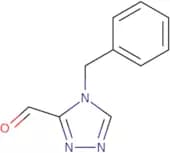
4-Benzyl-4H-1,2,4-triazole-3-carbaldehyde
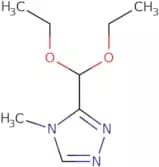
CAS:Versatile small molecule scaffoldFormula:C10H9N3OPurity:Min. 95%Molecular weight:187.2 g/mol3-(Diethoxymethyl)-4-methyl-4H-1,2,4-triazole
CAS:<p>Versatile small molecule scaffold</p>Formula:C8H15N3O2Purity:Min. 95%Molecular weight:185.22 g/mol2-{[(tert-Butoxy)carbonyl]amino}-6-cyanohexanoic acid
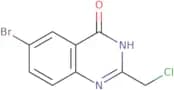
CAS:<p>Versatile small molecule scaffold</p>Formula:C12H20N2O4Purity:Min. 95%Molecular weight:256.3 g/mol6-bromo-2-(chloromethyl)-3,4-dihydroquinazolin-4-one
CAS:Versatile small molecule scaffoldFormula:C9H6BrClN2OPurity:Min. 95%Molecular weight:273.51 g/mol3-(Trimethylsilyl)phenylboronic acid
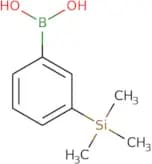
CAS:<p>3-(Trimethylsilyl)phenylboronic acid is an organic compound with the chemical formula B(SiMe3)2. It is used in cross-coupling reactions, such as the Suzuki reaction. 3-(Trimethylsilyl)phenylboronic acid has been shown to be a very effective catalyst for square planar substrates and isomeric substrates. The photophysical properties of this compound have been studied extensively. In addition, 3-(trimethylsilyl)phenylboronic acid has been used to synthesize a variety of anilines. This compound reacts with chloride to produce cyclic compounds and can also be used to synthesize boronate esters for use in palladium-catalyzed cross-coupling reactions.</p>Formula:C9H15BO2SiPurity:Min. 95%Molecular weight:194.11 g/mol1,1,1-Trifluoro-2-phenylpropan-2-amine
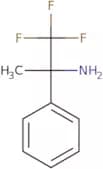
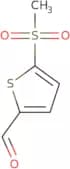
CAS:<p>Versatile small molecule scaffold</p>Formula:C9H10F3NPurity:Min. 95%Molecular weight:189.18 g/mol5-(Methylsulfonyl)-2-thiophenecarbaldehyde
CAS:<p>Versatile small molecule scaffold</p>Formula:C6H6O3S2Purity:Min. 95%Molecular weight:190.24 g/mol[1-[(Benzyloxy)methyl]cyclopropyl]methanol
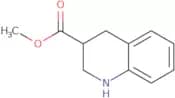
CAS:<p>Versatile small molecule scaffold</p>Formula:C12H16O2Purity:Min. 95%Molecular weight:192.25 g/molMethyl 1,2,3,4-tetrahydroquinoline-3-carboxylate
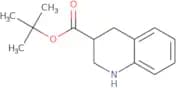
CAS:<p>Versatile small molecule scaffold</p>Formula:C11H13NO2Purity:Min. 95%Molecular weight:191.23 g/moltert-Butyl 1,2,3,4-tetrahydroquinoline-3-carboxylate
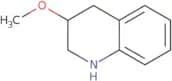
CAS:<p>Versatile small molecule scaffold</p>Formula:C14H19NO2Purity:Min. 95%Molecular weight:233.31 g/mol3-Methoxy-1,2,3,4-tetrahydroquinoline
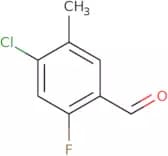
CAS:<p>Versatile small molecule scaffold</p>Formula:C10H13NOPurity:Min. 95%Molecular weight:163.22 g/mol4-Chloro-2-fluoro-5-methylbenzaldehyde
CAS:<p>Versatile small molecule scaffold</p>Formula:C8H6ClFOPurity:Min. 95%Molecular weight:172.58 g/mol4-Chloro-2-fluoro-5-methylbenzoic acid
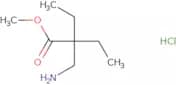
CAS:<p>Versatile small molecule scaffold</p>Formula:C8H6ClFO2Purity:Min. 95%Molecular weight:188.58 g/molMethyl 2-(aminomethyl)-2-ethylbutanoate hydrochloride
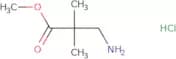
CAS:Versatile small molecule scaffoldFormula:C8H18ClNO2Purity:Min. 95%Molecular weight:195.69 g/molMethyl 3-amino-2,2-dimethylpropanoate hydrochloride
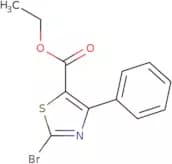
CAS:<p>Versatile small molecule scaffold</p>Formula:C6H14ClNO2Purity:Min. 95%Molecular weight:167.63 g/molEthyl 2-bromo-4-phenylthiazole-5-carboxylate
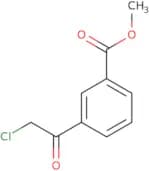
CAS:Ethyl 2-bromo-4-phenylthiazole-5-carboxylate is an organic compound. It may be used in optoelectronic devices such as light emitting diodes and solar cells.Formula:C12H10BrNO2SPurity:Min. 95%Molecular weight:312.18 g/molMethyl 3-(2-chloroacetyl)benzoate
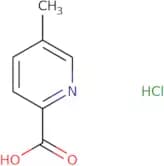
CAS:<p>Versatile small molecule scaffold</p>Formula:C10H9ClO3Purity:Min. 95%Molecular weight:212.63 g/mol5-Methylpyridine-2-carboxylic acid hydrochloride
CAS:<p>5-Methylpyridine-2-carboxylic acid hydrochloride (5MP) is a chemical compound that can be used in the production of picolinic acid, which is an intermediate for aminophenols. The reaction with aminophenols is catalyzed by 5MP. In the presence of 2-aminophenol, picolinic acid can be produced. The reaction is also catalyzed by bacteria such as escherichia coli and escherichia. 5MP has been used in biotechnology for the production of antibiotics, enzymes, hormones, and other pharmaceuticals. In microbiology, it is used to produce a variety of products including antibiotics, enzymes, hormones, and other pharmaceuticals. It can also be used as a substrate to produce antimicrobials such as escherichia coli and escherichia.</p>Formula:C7H8ClNO2Purity:Min. 95%Molecular weight:173.6 g/mol1-Fluoro-2-iodo-4-nitrobenzene
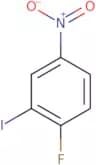
CAS:<p>Versatile small molecule scaffold</p>Formula:C6H3FINO2Purity:Min. 95%Molecular weight:267 g/molMethyl 1-Methyl-3-Nitro-1H-Pyrazole-5-Carboxylate
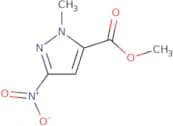
CAS:<p>Versatile small molecule scaffold</p>Formula:C6H7N3O4Purity:Min. 95%Molecular weight:185.14 g/mol

![2-{[(tert-Butoxy)carbonyl]amino}-6-cyanohexanoic acid](/_next/image/?url=https%3A%2Fstatic.cymitquimica.com%2Fproducts%2F3D%2Fthumb-webp%2FCHA03112.webp&w=3840&q=75)
![[1-[(Benzyloxy)methyl]cyclopropyl]methanol](/_next/image/?url=https%3A%2Fstatic.cymitquimica.com%2Fproducts%2F3D%2Fthumb-webp%2FCHA20076.webp&w=3840&q=75)