Building Blocks
This section contains fundamental products for the synthesis of organic and biological compounds. Building blocks are the essential starting materials used to construct complex molecules through various chemical reactions. They play a critical role in drug discovery, material science, and chemical research. At CymitQuimica, we offer a diverse range of high-quality building blocks to support your innovative research and industrial projects, ensuring you have the essential components for successful synthesis.
Subcategories of "Building Blocks"
- Boronic Acids & Boronic Acid Derivatives(5,756 products)
- Chiral Building Blocks(1,242 products)
- Hydrocarbon Building Blocks(6,095 products)
- Organic Building Blocks(61,038 products)
Found 196817 products of "Building Blocks"
Sort by
Purity (%)
0
100
|
0
|
50
|
90
|
95
|
100
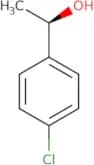
(1R)-1-(4-Methoxyphenyl)ethan-1-ol
CAS:<p>(1R)-1-(4-Methoxyphenyl)ethan-1-ol (1R,2S)-(+)-N-methylbenzeneethanamine is a stereoselective and selective reagent for the conversion of l-phenylalanine to (2S,3S)-(+)-N-methylbenzeneethanamine. It is commonly used in the synthesis of the enantiopure amino acid l-amino acid derivatives. This compound has been shown to be an effective inhibitor of bacterial growth at high concentrations. The reaction rate increases with increasing temperature and substrate concentration. The cell membrane permeability is higher than that of styrene, which makes this compound useful for the preparation of immobilized enzymes for carbonyl reduction reactions.</p>Formula:C9H12O2Purity:Min. 95%Molecular weight:152.19 g/mol[Dimethyl(oxo)-λ⁶-sulfanylidene]urea
CAS:<p>Versatile small molecule scaffold</p>Formula:C3H8N2O2SPurity:Min. 95%Molecular weight:136.18 g/mol3-(Diethylcarbamoyl)propanoic acid
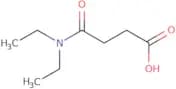
CAS:<p>3-(Diethylcarbamoyl)propanoic acid is a prodrug that is hydrolyzed in vivo to the active form, 3-diethylamino-2-propanol. This compound has analgesic and antiinflammatory properties due to its ability to inhibit prostaglandin synthesis. 3-(Diethylcarbamoyl)propanoic acid has been shown to be effective against ureaplasmas, mycoplasmas, chlamydia and some viruses. It also inhibits the replication of prions and parasites such as worms and flukes.</p>Formula:C8H15NO3Purity:Min. 95%Molecular weight:173.21 g/mol2-Nitro-5-(trifluoromethyl)furan
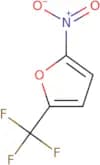
CAS:<p>Versatile small molecule scaffold</p>Formula:C5H2F3NO3Purity:Min. 95%Molecular weight:181.07 g/mol[2-(Phenylsulfanyl)phenyl]methanol
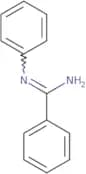
CAS:<p>Versatile small molecule scaffold</p>Formula:C13H12OSPurity:Min. 95%Molecular weight:216.3 g/molN-Phenylbenzamidine
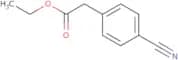
CAS:<p>N-Phenylbenzamidine is a bicyclic heterocycle that has been synthesized and characterized as an amide. Its functional theory is based on the molecule's nucleophilic nature. The sodium hydrogen tautomeric form of N-phenylbenzamidine can be obtained by acidifying the molecule in water, which results in a chloride ion being released. The chloride is then regenerated by reaction with carbon disulphide. N-Phenylbenzamidine is used in plant cell cultures for the inhibition of protein synthesis, which may be due to its ability to inhibit the enzyme carbonic anhydrase.</p>Formula:C13H12N2Purity:Min. 95%Molecular weight:196.25 g/molEthyl 4-cyanophenylacetate
CAS:<p>Versatile small molecule scaffold</p>Formula:C11H11NO2Purity:Min. 95%Molecular weight:189.21 g/molEthyl 2-(4-acetylphenyl)acetate
CAS:<p>Ethyl 2-(4-acetylphenyl)acetate is an oxime that has analgesic activities. It also inhibits the cyclooxygenase enzyme, which is involved in the biosynthesis of prostaglandins and thromboxanes. The inhibitory effects of this compound are reduced by rofecoxib, a cox-2 inhibitor, and nordihydroguaiaretic acid, a cox-1 inhibitor.</p>Formula:C12H14O3Purity:Min. 95%Molecular weight:206.24 g/mol9H-Fluorene-9-carbonitrile
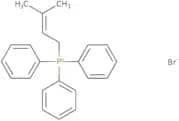
CAS:<p>9H-Fluorene-9-carbonitrile is a nitrate that functions as a growth regulator. It has been shown to inhibit the growth of plants by inhibiting the activity of nucleophilic enzymes and reactive nitrogen species. It is also used as an intermediate for the synthesis of triazole fungicides, which are used in agriculture to control diseases on crops such as wheat, oats, barley, and corn. 9H-Fluorene-9-carbonitrile reacts with carbanions derived from c1-6 alkyl halides or protonated amines to form carbenes. 9H-Fluorene-9-carbonitrile undergoes nucleophilic substitution reactions with electrophiles such as ketones or carboxylic acids at temperatures between 0°C and 100°C. This compound is also used for mechanistic studies on the reaction of carbenes with other molecules containing a carbonyl group.</p>Formula:C14H9NPurity:Min. 95%Molecular weight:191.23 g/mol(3-Methyl-2-butenyl)triphenyl-phosphonium Bromide
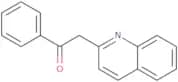
CAS:<p>Versatile small molecule scaffold</p>Formula:C23H24BrPPurity:Min. 95%Molecular weight:411.31 g/mol1-Phenyl-2-(quinolin-2-yl)ethan-1-one
CAS:<p>1-Phenyl-2-(quinolin-2-yl)ethan-1-one is an enolate that has the ability to form a zwitterion. It is soluble in nonpolar solvents and reacts with calcium carbonate, forming a white precipitate. This compound is reactive and can be used as an intermediate for the synthesis of many other organic compounds. 1-Phenyl-2-(quinolin-2-yl)ethan-1-one has been shown to interact with methyl derivatives and piperidine. The enolate anion can be activated by radiation or by adding a base such as piperidine.</p>Formula:C17H13NOPurity:Min. 95%Molecular weight:247.29 g/mol3,6-Dichloropicolinamide
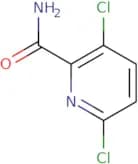
CAS:<p>3,6-Dichloropicolinamide is a chemical compound with the molecular formula C5H4Cl2N2O. It belongs to the class of pyridine compounds. 3,6-Dichloropicolinamide is a potent inhibitor of cellular activity. The inhibition of synovial fibroblasts was shown using fluorescence and x-ray analysis. This chemical has also been shown to lower the solvents in human recombinant proteins and can be used as an alternative in these experiments.</p>Formula:C6H4Cl2N2OPurity:Min. 95%Molecular weight:191.01 g/mol3-Methyl-4-(propan-2-yl)cyclohexan-1-one
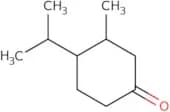
CAS:<p>Versatile small molecule scaffold</p>Formula:C10H18OPurity:Min. 95%Molecular weight:154.25 g/mol2-Methoxyoctane
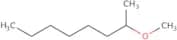
CAS:<p>2-Methoxyoctane is a chemical compound that belongs to the group of organic compounds called primary alcohols. It can be synthesized by the oxidative demethylation of 2-methylpentane. The reaction is catalyzed by an acid and proceeds with high yield. 2-Methoxyoctane can be used as a solvent for other reactants and in photochemistry experiments. It has a viscosity, which is higher than most other solvents, but lower than water. This product also has functional groups that allow it to react with nucleophiles and polarities that make it capable of forming hydrogen bonds.</p>Formula:C9H20OPurity:Min. 95%Molecular weight:144.25 g/mol2,5-Difluoro-4-nitroaniline
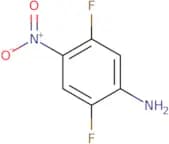
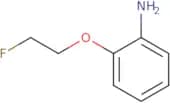
CAS:<p>Versatile small molecule scaffold</p>Formula:C6H4F2N2O2Purity:Min. 95%Molecular weight:174.1 g/mol2-(2-Fluoroethoxy)aniline
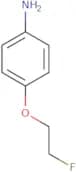
CAS:<p>Versatile small molecule scaffold</p>Formula:C8H10FNOPurity:Min. 95%Molecular weight:155.17 g/mol4-(2-Fluoroethoxy)aniline
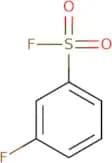
CAS:<p>Versatile small molecule scaffold</p>Formula:C8H10FNOPurity:Min. 95%Molecular weight:155.17 g/mol3-Fluorobenzene-1-sulfonyl fluoride
CAS:<p>3-Fluorobenzene-1-sulfonyl fluoride is a chemical compound that can be used as a catalyst to synthesize organic compounds. It is a colorless liquid, which is soluble in water and organic solvents. This catalyst has been shown to be more efficient than the traditional catalysts, such as tetraphenylphosphonium chloride, potassium fluoride or sodium borohydride. 3-Fluorobenzene-1-sulfonyl fluoride also reacts with nitro groups to produce dinitro compounds, which are valuable synthetic intermediates for the production of dyes and pharmaceuticals. The synthesis of this compound can be carried out in high yields with stoichiometric amounts of reactants.</p>Formula:C6H4F2O2SPurity:Min. 95%Molecular weight:178.16 g/mol2-Cyclohexylideneacetic acid
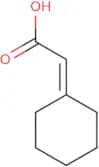
CAS:<p>2-Cyclohexylideneacetic acid is a pseudomonic acid that is synthesized by an asymmetric synthesis. The compound has been shown to be active against cerebral tumors in mice and can inhibit the growth of cells in culture. 2-Cyclohexylideneacetic acid is also the precursor for gabapentin, which is used as a treatment for seizures, mood disorders and pain. Gabapentin inhibits the activity of voltage-gated sodium channels, which are required for the propagation of action potentials in neurons. This drug can also be used as a solvent in pharmaceutical formulations. 2-Cyclohexylideneacetic acid binds to cell membranes and may inhibit bacterial growth through its effects on cell membrane permeability and integrity. It has been shown to have chiral properties, with one enantiomer being more active than the other. 2-Cyclohexylideneacetic acid has been shown to inhibit the growth</p>Formula:C8H12O2Purity:Min. 95%Molecular weight:140.18 g/molChlorocyclooctane
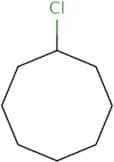
CAS:<p>Chlorocyclooctane is an organic solvent used in the production of polyurethanes and other polymers. It is a colorless liquid that has a pleasant odor. Chlorocyclooctane can also be used as a reactive diluent, a conditioning agent, or a polymerization initiator. This chemical is an isomeric mixture of two compounds: chloromethylcyclohexane and cyclohexanone. Chlorocyclooctane reacts with proton to form the amide which is then reacted with inorganic acid to yield uv absorption. The reaction intermediates are hydrogen chloride and nucleophilic, which react with inorganic reagents to form synthetic products such as polymers</p>Formula:C8H15ClPurity:Min. 95%Molecular weight:146.66 g/mol

![[Dimethyl(oxo)-λ⁶-sulfanylidene]urea](/_next/image/?url=https%3A%2Fstatic.cymitquimica.com%2Fproducts%2F3D%2Fthumb-webp%2FBAA52015.webp&w=3840&q=75)
![[2-(Phenylsulfanyl)phenyl]methanol](/_next/image/?url=https%3A%2Fstatic.cymitquimica.com%2Fproducts%2F3D%2Fthumb-webp%2FBAA52714.webp&w=3840&q=75)