


Building Blocks
This section contains fundamental products for the synthesis of organic and biological compounds. Building blocks are the essential starting materials used to construct complex molecules through various chemical reactions. They play a critical role in drug discovery, material science, and chemical research. At CymitQuimica, we offer a diverse range of high-quality building blocks to support your innovative research and industrial projects, ensuring you have the essential components for successful synthesis.
Subcategories of "Building Blocks"
- Boronic Acids & Boronic Acid Derivatives(5,756 products)
- Chiral Building Blocks(1,242 products)
- Hydrocarbon Building Blocks(6,095 products)
- Organic Building Blocks(61,038 products)
Found 196817 products of "Building Blocks"
Sort by
Purity (%)
0
100
|
0
|
50
|
90
|
95
|
100
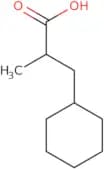
3-Cyclohexyl-2-methylpropanoic acid
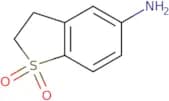
CAS:<p>Versatile small molecule scaffold</p>Formula:C10H18O2Purity:Min. 95%Molecular weight:170.25 g/mol2,3-Dihydro-1-benzothiophen-5-amine 1,1-dioxide
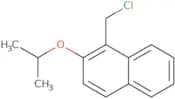
CAS:<p>Versatile small molecule scaffold</p>Formula:C8H9NO2SPurity:Min. 95%Molecular weight:183.23 g/mol1-(Chloromethyl)-2-(propan-2-yloxy)naphthalene
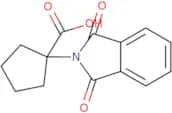
CAS:<p>Versatile small molecule scaffold</p>Formula:C14H15ClOPurity:Min. 95%Molecular weight:234.72 g/mol1-(1,3-Dioxo-2,3-dihydro-1H-isoindol-2-yl)cyclopentane-1-carboxylic acid
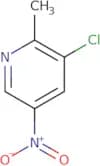
CAS:<p>Versatile small molecule scaffold</p>Formula:C14H13NO4Purity:Min. 95%Molecular weight:259.26 g/mol3-Chloro-2-methyl-5-nitropyridine
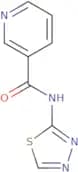
CAS:<p>Versatile small molecule scaffold</p>Formula:C6H5ClN2O2Purity:Min. 95%Molecular weight:172.57 g/molN-(1,3,4-Thiadiazolyl)nicotinamide
CAS:<p>N-(1,3,4-Thiadiazolyl)nicotinamide is an intracellular drug that inhibits the release of a growth factor, which may be involved in the development of migraine. It has been shown to inhibit the activity of the enzyme VEGF and reduces infarction volume in rats. N-(1,3,4-Thiadiazolyl)nicotinamide also has a neuroprotective effect by reducing reactive astrocytes and inhibiting fibrillary acidic protein expression in the cerebral cortex of rats. This drug is osmotically active and can induce neuronal damage due to brain swelling. N-(1,3,4-Thiadiazolyl)nicotinamide is also used as a stain for neurons in histological studies.</p>Formula:C8H6N4OSPurity:Min. 95%Molecular weight:206.22 g/mol9-Azaspiro[5.6]dodecane
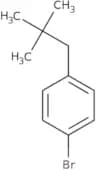
CAS:<p>Versatile small molecule scaffold</p>Formula:C11H21NPurity:Min. 95%Molecular weight:167.29 g/mol1-Bromo-4-(2,2-dimethylpropyl)benzene
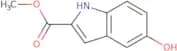
CAS:<p>Versatile small molecule scaffold</p>Formula:C11H15BrPurity:Min. 95%Molecular weight:227.14 g/molMethyl 5-hydroxy-1H-indole-2-carboxylate
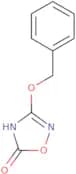
CAS:<p>Methyl 5-hydroxy-1H-indole-2-carboxylate is a potent drug for the treatment of cancer cells. It inhibits acetylcholinesterase activity and has been shown to have neurodegenerative properties in a number of different cell lines. Methyl 5-hydroxy-1H-indole-2-carboxylate is also a strong inhibitor of acetylcholinesterase, which may be responsible for its neuroprotective effects.</p>Formula:C10H9NO3Purity:Min. 95%Molecular weight:191.18 g/mol3-(Benzyloxy)-4,5-dihydro-1,2,4-oxadiazol-5-one
CAS:<p>Versatile small molecule scaffold</p>Formula:C9H8N2O3Purity:Min. 95%Molecular weight:192.17 g/mol9-Methyl-4-oxo-4H-pyrido[1,2-a]pyrimidine-3-carboxylic acid
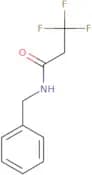
CAS:<p>Versatile small molecule scaffold</p>Formula:C10H8N2O3Purity:Min. 95%Molecular weight:204.18 g/molN-Benzyl-3,3,3-trifluoropropanamide
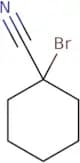
CAS:<p>Versatile small molecule scaffold</p>Formula:C10H10F3NOPurity:Min. 95%Molecular weight:217.19 g/mol1-Bromocyclohexane-1-carbonitrile
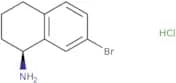
CAS:<p>1-Bromocyclohexane-1-carbonitrile (1BCC) is an orthogonal alkylation agent that can react with a wide variety of functionalized organic halides. It reacts with the carbon atom in the organic halide, forming a new carbon-carbon bond. This reaction is highly selective and does not require any protecting groups or activation by copper. 1BCC also has high activity with nitroalkanes, which makes it a useful reagent for synthesizing diamines. 1BCC can be used as an efficient synthetic method for aromatic and nonaromatic diamines.</p>Formula:C7H10BrNPurity:Min. 95%Molecular weight:188.06 g/mol(S)-7-Bromo-1,2,3,4-tetrahydro-naphthalen-1-ylamine hydrochloride ee
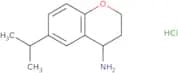
CAS:<p>Versatile small molecule scaffold</p>Formula:C10H13BrClNPurity:Min. 95%Molecular weight:262.57 g/mol(R)-6-Isopropylchroman-4-amine hydrochloride
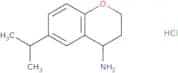
CAS:<p>Versatile small molecule scaffold</p>Formula:C12H18ClNOPurity:Min. 95%Molecular weight:227.73 g/mol(4S)-6-(Propan-2-yl)-3,4-dihydro-2H-1-benzopyran-4-amine hydrochloride
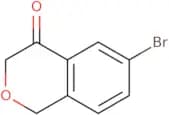
CAS:<p>Versatile small molecule scaffold</p>Formula:C12H18ClNOPurity:Min. 95%Molecular weight:227.73 g/mol6-Bromoisochroman-4-one
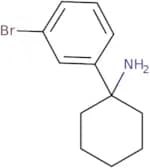
CAS:<p>Versatile small molecule scaffold</p>Formula:C9H7BrO2Purity:Min. 95%Molecular weight:227.06 g/mol1-(3-bromophenyl)cyclohexan-1-amine
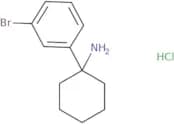
CAS:Controlled Product<p>Versatile small molecule scaffold</p>Formula:C12H16BrNPurity:Min. 95%Molecular weight:254.2 g/mol1-(3-Bromophenyl)cyclohexan-1-amine hydrochloride
CAS:Controlled Product<p>Versatile small molecule scaffold</p>Formula:C12H17BrClNPurity:Min. 95%Molecular weight:290.63 g/mol[1-Methyl-5-(trifluoromethyl)-1H-pyrazol-4-yl]methanol
CAS:<p>Versatile small molecule scaffold</p>Formula:C6H7F3N2OPurity:Min. 95%Molecular weight:180.13 g/mol

![9-Azaspiro[5.6]dodecane](/_next/image/?url=https%3A%2Fstatic.cymitquimica.com%2Fproducts%2F3D%2Fthumb-webp%2FBCA99109.webp&w=3840&q=75)
![9-Methyl-4-oxo-4H-pyrido[1,2-a]pyrimidine-3-carboxylic acid](/_next/image/?url=https%3A%2Fstatic.cymitquimica.com%2Fproducts%2F3D%2Fthumb-webp%2FBCA99193.webp&w=3840&q=75)
![[1-Methyl-5-(trifluoromethyl)-1H-pyrazol-4-yl]methanol](/_next/image/?url=https%3A%2Fstatic.cymitquimica.com%2Fproducts%2F3D%2Fthumb-webp%2FBCB23650.webp&w=3840&q=75)