


Building Blocks
This section contains fundamental products for the synthesis of organic and biological compounds. Building blocks are the essential starting materials used to construct complex molecules through various chemical reactions. They play a critical role in drug discovery, material science, and chemical research. At CymitQuimica, we offer a diverse range of high-quality building blocks to support your innovative research and industrial projects, ensuring you have the essential components for successful synthesis.
Subcategories of "Building Blocks"
- Boronic Acids & Boronic Acid Derivatives(5,756 products)
- Chiral Building Blocks(1,242 products)
- Hydrocarbon Building Blocks(6,095 products)
- Organic Building Blocks(61,038 products)
Found 196817 products of "Building Blocks"
Sort by
Purity (%)
0
100
|
0
|
50
|
90
|
95
|
100
3-[(Adamantan-1-yl)amino]propanenitrile hydrochloride
CAS:<p>Versatile small molecule scaffold</p>Formula:C13H21ClN2Purity:Min. 95%Molecular weight:240.77 g/mol4-(Methylthio)benzhydrazide
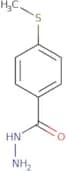
CAS:<p>4-(Methylthio)benzhydrazide is a ligand that has been synthesized from an acid hydrazide and an ethyl ester. The synthesis of this compound involves the reaction of ethylene with methyl ester to produce the acid hydrazide, which then reacts with phenanthroline and thiocarbamate. This chemical has been used in techniques involving magnetic resonance spectroscopy and potassium hydroxide, hydrazide, coordination, chloride, carbon disulfide.</p>Formula:C8H10N2OSPurity:Min. 95%Molecular weight:182.24 g/mol2-Chloro-1-(4-methoxyphenyl)propan-1-one
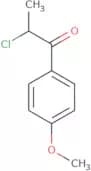
CAS:<p>Versatile small molecule scaffold</p>Formula:C10H11ClO2Purity:Min. 95%Molecular weight:198.64 g/molN-[4-(2-Chloropropanoyl)phenyl]acetamide
CAS:<p>Versatile small molecule scaffold</p>Formula:C11H12ClNO2Purity:Min. 95%Molecular weight:225.67 g/mol2-Methoxy-3-phenylpropanenitrile
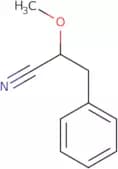
CAS:<p>2-Methoxy-3-phenylpropanenitrile is an organic compound that is used as a solvent in the manufacturing of other chemicals. It has a boiling point of 170 degrees Celsius and can be found in many household products such as paint, varnish, and lacquer removers. 2-Methoxy-3-phenylpropanenitrile is also used to produce rubber additives and plastics. This chemical has been classified as an irritant and is corrosive to metal surfaces.</p>Formula:C10H11NOPurity:Min. 95%Molecular weight:161.2 g/molMethyl 2-methoxy-3-oxobutanoate
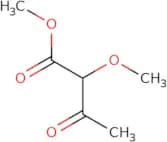
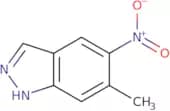
CAS:<p>Methyl 2-methoxy-3-oxobutanoate is a dienes, chemistry, insect, functionalized, diels-alder. It is an organic compound with the chemical formula CH3OOC(CH2)2CH=C(OH)(CH3)CO2H.<br>Methyl 2-methoxy-3-oxobutanoate has been found to be an effective inhibitor of anthraquinone and australian.</p>Formula:C6H10O4Purity:Min. 95%Molecular weight:146.14 g/mol6-Methyl-5-nitro-1H-indazole
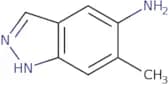
CAS:<p>Versatile small molecule scaffold</p>Formula:C8H7N3O2Purity:Min. 95%Molecular weight:177.16 g/mol6-Methyl-1H-indazol-5-amine
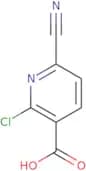
CAS:<p>Versatile small molecule scaffold</p>Formula:C8H9N3Purity:Min. 95%Molecular weight:147.18 g/mol2-Chloro-6-cyanopyridine-3-carboxylic acid
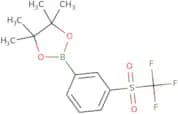
CAS:<p>Versatile small molecule scaffold</p>Formula:C7H3ClN2O2Purity:Min. 95%Molecular weight:182.56 g/mol4,4,5,5-Tetramethyl-2-(3-trifluoromethanesulfonylphenyl)-1,3,2-dioxaborolane
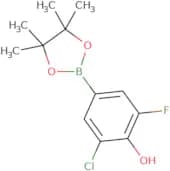
CAS:<p>Versatile small molecule scaffold</p>Formula:C13H16BF3O4SPurity:Min. 95%Molecular weight:336.1 g/mol2-Chloro-6-fluoro-4-(4,4,5,5-tetramethyl-1,3,2-dioxaborolan-2-yl)phenol
CAS:<p>Versatile small molecule scaffold</p>Formula:C12H15BClFO3Purity:Min. 95%Molecular weight:272.51 g/molrac-(1R,4R)-4-[(Dimethylamino)methyl]cyclohexan-1-amine dihydrochloride
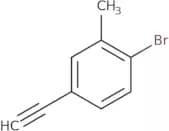
CAS:<p>Versatile small molecule scaffold</p>Formula:C9H22Cl2N2Purity:Min. 95%Molecular weight:229.19 g/mol1-Bromo-4-ethynyl-2-methylbenzene
CAS:<p>Versatile small molecule scaffold</p>Formula:C9H7BrPurity:Min. 95%Molecular weight:195.06 g/mol4-{[(Isoquinolin-5-yl)methyl]amino}butan-1-ol
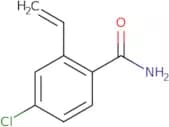
CAS:<p>Versatile small molecule scaffold</p>Formula:C14H18N2OPurity:Min. 95%Molecular weight:230.31 g/mol4-Chloro-2-ethenylbenzamide
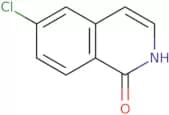
CAS:<p>Versatile small molecule scaffold</p>Formula:C9H8ClNOPurity:Min. 95%Molecular weight:181.62 g/mol6-Chloroisoquinolin-1-ol
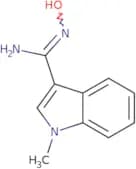
CAS:<p>Versatile small molecule scaffold</p>Formula:C9H6ClNOPurity:Min. 95%Molecular weight:179.61 g/molN'-Hydroxy-1-methyl-1H-indole-3-carboximidamide
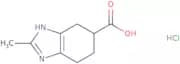
CAS:<p>Versatile small molecule scaffold</p>Formula:C10H11N3OPurity:Min. 95%Molecular weight:189.21 g/mol2-Methyl-4,5,6,7-tetrahydro-1H-1,3-benzodiazole-5-carboxylic acid hydrochloride
CAS:<p>Versatile small molecule scaffold</p>Formula:C9H13ClN2O2Purity:Min. 95%Molecular weight:216.66 g/molMethyl 1-methyl-1H-benzo[d]imidazole-6-carboxylate
CAS:<p>Versatile small molecule scaffold</p>Formula:C10H10N2O2Purity:Min. 95%Molecular weight:190.2 g/mol2-(Methyldisulfanyl)ethan-1-amine hydrochloride
CAS:<p>Methylenedioxymethamphetamine (MDMA) is a compound that belongs to the group of substituted amphetamines. It is a substituted analog of methamphetamine and amphetamine. The drug is known for its stimulant effects and can be used as a recreational drug. MDMA has been shown to be immunogenic, which means it can produce antibodies in the body's immune system. Antibodies are proteins produced by the immune system that bind to antigens and remove them from the body. The production of antibodies against MDMA may lead to immunosuppression, which could result in an increased risk for infection, such as HIV or hepatitis B/C. Methylenedioxyamphetamine (MDA) is structurally similar to MDMA and also produces antibodies, but not at the same rate as MDMA does.</p>Formula:C3H10ClNS2Purity:Min. 95%Molecular weight:159.7 g/mol
![3-[(Adamantan-1-yl)amino]propanenitrile hydrochloride](/_next/image/?url=https%3A%2Fstatic.cymitquimica.com%2Fproducts%2F3D%2Fthumb-webp%2FGDA09947.webp&w=3840&q=75)

![N-[4-(2-Chloropropanoyl)phenyl]acetamide](/_next/image/?url=https%3A%2Fstatic.cymitquimica.com%2Fproducts%2F3D%2Fthumb-webp%2FGDA11208.webp&w=3840&q=75)
![rac-(1R,4R)-4-[(Dimethylamino)methyl]cyclohexan-1-amine dihydrochloride](/_next/image/?url=https%3A%2Fstatic.cymitquimica.com%2Fproducts%2F3D%2Fthumb-webp%2FGEC95401.webp&w=3840&q=75)
![4-{[(Isoquinolin-5-yl)methyl]amino}butan-1-ol](/_next/image/?url=https%3A%2Fstatic.cymitquimica.com%2Fproducts%2F3D%2Fthumb-webp%2FGED88822.webp&w=3840&q=75)
![Methyl 1-methyl-1H-benzo[d]imidazole-6-carboxylate](/_next/image/?url=https%3A%2Fstatic.cymitquimica.com%2Fproducts%2F3D%2Fthumb-webp%2FGFA02050.webp&w=3840&q=75)
