Building Blocks
This section contains fundamental products for the synthesis of organic and biological compounds. Building blocks are the essential starting materials used to construct complex molecules through various chemical reactions. They play a critical role in drug discovery, material science, and chemical research. At CymitQuimica, we offer a diverse range of high-quality building blocks to support your innovative research and industrial projects, ensuring you have the essential components for successful synthesis.
Subcategories of "Building Blocks"
- Boronic Acids & Boronic Acid Derivatives(5,756 products)
- Chiral Building Blocks(1,242 products)
- Hydrocarbon Building Blocks(6,095 products)
- Organic Building Blocks(61,051 products)
Found 199813 products of "Building Blocks"
Sort by
Purity (%)
0
100
|
0
|
50
|
90
|
95
|
100
Thieno[3,4-b]thiophene-2-carboxylic acid
CAS:<p>Thieno[3,4-b]thiophene-2-carboxylic acid is a carboxylic acid. It has the ability to form stable thieno[3,4-b]thiophene-2-carboxylate ions in an aqueous solution. These ions can be detected by spectroscopic studies of the adsorption on electrodes and electrochemical polymerization. Thieno[3,4-b]thiophene-2-carboxylic acid is not easily oxidized or reduced due to its stability and low energy state.</p>Formula:C8H6O2S2Purity:Min. 95%Molecular weight:198.26 g/mol5,6,7,8-Tetrahydroquinolin-1-ium-1-olate
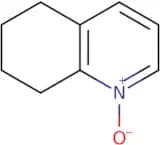
CAS:<p>5,6,7,8-Tetrahydroquinolin-1-ium-1-olate is a white crystalline solid. It has a molecular weight of 178.07 and a melting point of 190°C. 5,6,7,8-Tetrahydroquinolin-1-ium-1-olate is stabilized by hydrogen bonds between the two monomers in the dimer form. It also has an asymmetric conformation with six carbons in its backbone. The hemihydrate form of 5,6,7,8 tetrahydroquinolinium 1 -olate is formed when the water molecule is bound to one oxygen atom on each monomer in the dimer.</p>Formula:C9H11NOPurity:Min. 95%Molecular weight:149.19 g/mol(2-Aminopropyl)diethylamine
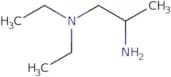
CAS:<p>Versatile small molecule scaffold</p>Formula:C7H18N2Purity:Min. 95%Molecular weight:130.23 g/mol3-Amino-4(3H)-quinazolinone
CAS:<p>3-Amino-4(3H)-quinazolinone is a nucleophilic compound that can react with methyl anthranilate, an anthranilic acid derivative. When reacted with aziridine, 3-amino-4(3H) quinazolinone forms a hydroxyl group. This compound is cytotoxic to human liver cells in vitro and exhibits significant cytotoxicity against cancer cells. It has been shown to inhibit the growth of epidermal growth factor (EGF) in vitro and can be used as a tumor promoter. 3-Amino-4(3H)-quinazolinone also reacts with amines such as amino acids, amides, and ammonia to form aziridinium ions. Aziridinium ions are nitrogen nucleophiles that can react with other molecules to form new compounds or break down existing ones.</p>Formula:C8H7N3OPurity:Min. 95%Molecular weight:161.16 g/mol3-Amino-5,7-dimethyladamantane-1-carboxylic acid
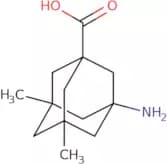
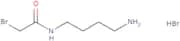
CAS:Versatile small molecule scaffoldFormula:C13H21NO2Purity:Min. 95%Molecular weight:223.3 g/molN-(4-Aminobutyl)-2-bromoacetamide hydrobromide
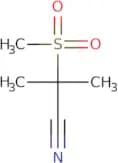
CAS:<p>Versatile small molecule scaffold</p>Formula:C6H14Br2N2OPurity:Min. 95%Molecular weight:290 g/mol2-Methanesulfonyl-2-Methylpropanenitrile
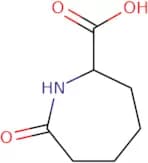
CAS:<p>Versatile small molecule scaffold</p>Formula:C5H9NO2SPurity:Min. 95%Molecular weight:147.2 g/mol7-Oxoazepane-2-carboxylic acid
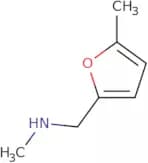
CAS:<p>Versatile small molecule scaffold</p>Formula:C7H11NO3Purity:Min. 95%Molecular weight:157.17 g/molMethyl-(5-methyl-furan-2-ylmethyl)-amine
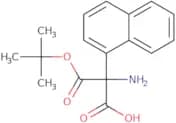
CAS:<p>Versatile small molecule scaffold</p>Formula:C7H11NOPurity:Min. 95%Molecular weight:125.17 g/mol(N-BOC-Amino)(naphthalen-1-yl)acetic acid
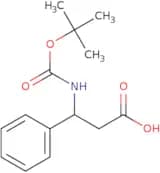
CAS:<p>Versatile small molecule scaffold</p>Formula:C17H19NO4Purity:Min. 95%Molecular weight:301.34 g/mol3-tert-Butoxycarbonylamino-3-phenyl-propionic acid
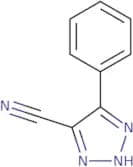
CAS:<p>Versatile small molecule scaffold</p>Formula:C14H19NO4Purity:Min. 95%Molecular weight:265.31 g/mol4-Phenyl-1H-1,2,3-triazole-5-carbonitrile
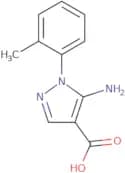
CAS:<p>Versatile small molecule scaffold</p>Formula:C9H6N4Purity:Min. 95%Molecular weight:170.17 g/mol5-Amino-1-(2-methylphenyl)-1H-pyrazole-4-carboxylic acid
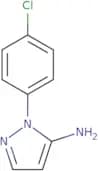
CAS:<p>Versatile small molecule scaffold</p>Formula:C11H11N3O2Purity:Min. 95%Molecular weight:217.22 g/mol1-(4-Chlorophenyl)-1H-pyrazol-5-amine
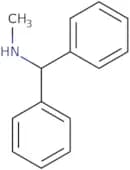
CAS:<p>Versatile small molecule scaffold</p>Formula:C9H8ClN3Purity:Min. 95%Molecular weight:193.63 g/molN-(Diphenylmethyl)methylamine
CAS:<p>N-(Diphenylmethyl)methylamine is an immunomodulatory drug. It is a prodrug of 3-mercaptopropionic acid, which can inhibit the growth of tumor cells and influenza virus. N-(Diphenylmethyl)methylamine has been shown to have anti-inflammatory effects in diabetic patients. This drug also has the ability to regulate β-amino acid and β-catenin levels in the body. N-(Diphenylmethyl)methylamine inhibits phosphorylation of β-catenin by inhibiting protein kinase C activity, leading to increased expression of this protein in cancer cells.</p>Formula:C14H15NPurity:Min. 95%Molecular weight:197.28 g/molN-[(2-Methylphenyl)methylidene]hydroxylamine
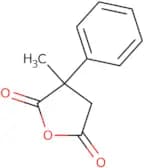
CAS:<p>N-[(2-Methylphenyl)methylidene]hydroxylamine is a pest control agent that is used as an insecticide and a fungicide. It is classified as an aryloxyphenoxy hydroxamic acid. N-[(2-Methylphenyl)methylidene]hydroxylamine binds to the enzyme cytochrome oxidase, which is essential for aerobic respiration, and inhibits oxidative phosphorylation. This leads to the accumulation of toxic reactive oxygen species (ROS) and cell death. N-[(2-Methylphenyl)methylidene]hydroxylamine has been shown to be bactericidal against Gram-positive bacteria such as Bacillus spp., Staphylococcus spp., and Streptococcus pyogenes, as well as Gram-negative bacteria such as Escherichia coli, Salmonella enterica, Pseudomonas aeruginosa, and Klebs</p>Formula:C8H9NOPurity:Min. 95%Molecular weight:135.16 g/mol3-Methyl-3-phenyloxolane-2,5-dione
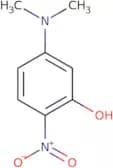
CAS:<p>Versatile small molecule scaffold</p>Formula:C11H10O3Purity:Min. 95%Molecular weight:190.19 g/mol5-(Dimethylamino)-2-nitrophenol
CAS:<p>Versatile small molecule scaffold</p>Formula:C8H10N2O3Purity:Min. 95%Molecular weight:182.18 g/mol2-[(4-bromophenyl)sulfanyl]ethan-1-ol
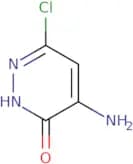
CAS:<p>Versatile small molecule scaffold</p>Formula:C8H9OSBrPurity:Min. 95%Molecular weight:233.12 g/mol4-Amino-6-chloro-2,3-dihydropyridazin-3-one
CAS:<p>Versatile small molecule scaffold</p>Formula:C4H4ClN3OPurity:Min. 95%Molecular weight:145.55 g/mol
![Thieno[3,4-b]thiophene-2-carboxylic acid](/_next/image/?url=https%3A%2Fstatic.cymitquimica.com%2Fproducts%2F3D%2Fthumb-webp%2FPAA63008.webp&w=3840&q=75)


![N-[(2-Methylphenyl)methylidene]hydroxylamine](/_next/image/?url=https%3A%2Fstatic.cymitquimica.com%2Fproducts%2F3D%2Fthumb-webp%2FPAA68379.webp&w=3840&q=75)
![2-[(4-bromophenyl)sulfanyl]ethan-1-ol](/_next/image/?url=https%3A%2Fstatic.cymitquimica.com%2Fproducts%2F3D%2Fthumb-webp%2FPAA70392.webp&w=3840&q=75)