Building Blocks
This section contains fundamental products for the synthesis of organic and biological compounds. Building blocks are the essential starting materials used to construct complex molecules through various chemical reactions. They play a critical role in drug discovery, material science, and chemical research. At CymitQuimica, we offer a diverse range of high-quality building blocks to support your innovative research and industrial projects, ensuring you have the essential components for successful synthesis.
Subcategories of "Building Blocks"
- Boronic Acids & Boronic Acid Derivatives(5,756 products)
- Chiral Building Blocks(1,242 products)
- Hydrocarbon Building Blocks(6,095 products)
- Organic Building Blocks(61,038 products)
Found 196817 products of "Building Blocks"
Sort by
Purity (%)
0
100
|
0
|
50
|
90
|
95
|
100
rac-(1R,2R)-2-Hydrazinylcyclohexan-1-ol dihydrochloride
CAS:<p>Versatile small molecule scaffold</p>Formula:C23H23NO2Purity:Min. 95%Molecular weight:345.4 g/mol2,5-bis[(morpholin-4-yl)methyl]benzene-1,4-diol
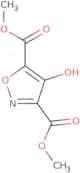
CAS:<p>Versatile small molecule scaffold</p>Formula:C16H24N2O4Purity:Min. 95%Molecular weight:308.38 g/mol3,5-Dimethyl 4-hydroxy-1,2-oxazole-3,5-dicarboxylate
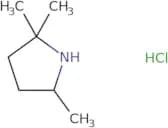
CAS:<p>Versatile small molecule scaffold</p>Formula:C7H7NO6Purity:Min. 95%Molecular weight:201.13 g/mol2,2,5-Trimethylpyrrolidine hydrochloride
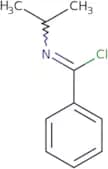
CAS:<p>Versatile small molecule scaffold</p>Formula:C7H16ClNPurity:Min. 95%Molecular weight:149.66 g/molN-(Propan-2-yl)benzenecarbonimidoyl chloride
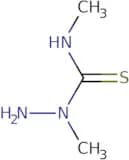
CAS:<p>N-(Propan-2-yl)benzenecarbonimidoyl chloride (PCI) is a synthetic, water-soluble drug that is used to treat anaerobic infections. PCI binds to the imidoyl group of bacterial enzymes, such as penicillinase and beta-lactamase, and inhibits their activity. It has been shown that PCI has an affinity for copper ions in the crystallographic analysis. This affinity can be optimized by changing the substituents on the phenyl ring to increase affinity for copper ions. The oxadiazoles and hydroxyalkyl groups are also being considered for optimization of this compound. PCI has been shown to inhibit the growth of various bacteria in screening tests with a shift in its absorption spectrum.</p>Formula:C10H12ClNPurity:Min. 95%Molecular weight:181.66 g/mol3-Amino-1,3-dimethylthiourea
CAS:<p>Versatile small molecule scaffold</p>Formula:C3H9N3SPurity:Min. 95%Molecular weight:119.19 g/molN1-[4-(Allyloxy)phenyl]acetamide
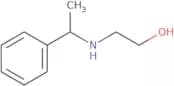
CAS:<p>N1-[4-(Allyloxy)phenyl]acetamide is a catalyst which is used to synthesize polyolefins, such as polyethylene and polypropylene. It has been shown to be an effective catalyst for the polymerization of ethylene. N1-[4-(Allyloxy)phenyl]acetamide has also been shown to have a high activity in the synthesis of polyolefins, with rates comparable to those of the most commonly used catalysts. The crystal structure of this compound was determined by X-ray diffraction analysis and found to contain two crystallographic asymmetric units. This complex can be immobilized on titanium or zirconium oxide supports and is soluble in dichloromethane. The molecular structure of N1-[4-(Allyloxy)phenyl]acetamide has been analyzed by X-ray crystallography and found to contain a planar acetamide group that is connected through a methylene bridge with an allyl</p>Formula:C11H13NO2Purity:Min. 95%Molecular weight:191.23 g/mol2-(1-Phenyl-ethylamino)-ethanol
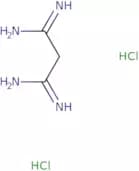
CAS:<p>2-(1-Phenyl-ethylamino)-ethanol is an organic compound that is used as a catalyst. The compound is produced industrially by the reaction of formaldehyde with phenethylamine, followed by hydrogenation and hydrolysis. 2-(1-Phenyl-ethylamino)-ethanol can be used as a catalyst in the synthesis of oxazolidines, ketones, and other compounds containing aldehydes or carboxylic acids. It also has basic properties, which means it will react with acidic compounds to produce salts. 2-(1-Phenyl-ethylamino)-ethanol binds to amino alcohols and pyrroles through hydrogen bonding interactions.</p>Formula:C10H15NOPurity:Min. 95%Molecular weight:165.24 g/molPropanebis(imidamide) dihydrochloride
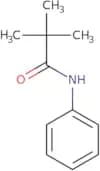
CAS:<p>Propanebis(imidamide) dihydrochloride is a drug that inhibits the enzyme guanylate cyclase. It is used to treat cardiovascular disorders, such as angina pectoris and hypertension. Propanebis(imidamide) dihydrochloride has been shown to inhibit the kinase, cyclase, and phosphodiesterase enzymes. This inhibition leads to an increase in the levels of cyclic guanosine monophosphate (cGMP). As a result, blood vessels are dilated, which reduces blood pressure and heart rate. The drug also increases the levels of intracellular cGMP by inhibiting protein kinase G. Propanebis(imidamide) dihydrochloride can be administered orally or intravenously.</p>Formula:C3H10Cl2N4Purity:Min. 95%Molecular weight:173.04 g/molN-Phenylpivalamide
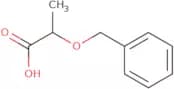
CAS:<p>N-Phenylpivalamide is an asymmetric synthesis that is a reaction yield of activated secondary amine and alkylsulfonyl chloride. The effective dose of n-phenylpivalamide is 0.01 mg/kg and the chloride ion, nitrogen atoms, and amines are all reactive functional groups. The nmr spectra show that this compound has stereoisomers.</p>Formula:C11H15NOPurity:Min. 95%Molecular weight:177.24 g/mol2-(Benzyloxy)propanoic acid
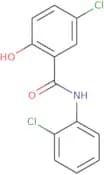
CAS:<p>2-(Benzyloxy)propanoic acid is a carboxylic acid that is used in biotechnology as a substrate for the production of optically pure carboxylic acids. It can be converted to pure hydroxyapatite, which is an important component of bone grafts and dentures. The microbial synthesis of 2-(benzyloxy)propanoic acid has been studied extensively. The n-terminal amino group can be removed by reduction with sodium sulfate or sodium borohydride, and the resulting alcohols can be converted to esters either enzymatically or with organic acids. 2-(Benzyloxy)propanoic acid also reacts with dodecyl mercaptan to give the corresponding dodecyl sulfate.</p>Formula:C10H12O3Purity:Min. 95%Molecular weight:180.2 g/mol5-Chloro-N-(2-Chlorophenyl)-2-Hydroxybenzamide
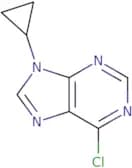
CAS:<p>5-Chloro-N-(2-chlorophenyl)-2-hydroxybenzamide is a promyelocytic leukemia (PML) inhibitor that has been shown to have significant cytotoxicity against leukemia cells. 5-Chloro-N-(2-chlorophenyl)-2-hydroxybenzamide also inhibits the growth of prostate cancer cells and cervical cancer cells. It has been shown to inhibit the expression of oncogenes, such as sarcoma viral oncogene (SV40), and induce apoptosis in human cancer cells. This drug also shows significant cytotoxicity against human leukemia HL60 cells and erythroleukemia U937 cells.</p>Formula:C13H9NO2Cl2Purity:Min. 95%Molecular weight:282.12 g/mol6-Chloro-9-cyclopropyl-9H-purine
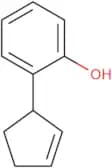
CAS:<p>Versatile small molecule scaffold</p>Formula:C8H7ClN4Purity:Min. 95%Molecular weight:194.62 g/mol2-(2-Cyclopenten-1-yl)-phenol
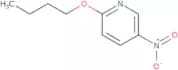
CAS:<p>Versatile small molecule scaffold</p>Formula:C11H12OPurity:Min. 95%Molecular weight:160.21 g/mol2-Butoxy-5-nitropyridine
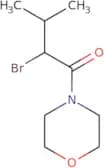
CAS:<p>Versatile small molecule scaffold</p>Formula:C9H12N2O3Purity:Min. 95%Molecular weight:196.2 g/mol2-Bromo-3-methyl-1-(morpholin-4-yl)butan-1-one
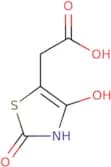
CAS:<p>Versatile small molecule scaffold</p>Formula:C9H16BrNO2Purity:Min. 95%Molecular weight:250.13 g/mol2-(Dihydroxy-1,3-thiazol-5-yl)acetic acid
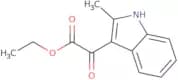
CAS:<p>Versatile small molecule scaffold</p>Formula:C5H5NO4SPurity:Min. 95%Molecular weight:175.16 g/molEthyl 2-(2-methyl-1H-indol-3-yl)-2-oxoacetate
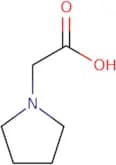
CAS:<p>Versatile small molecule scaffold</p>Formula:C13H13NO3Purity:Min. 95%Molecular weight:231.25 g/molPyrrolidin-1-yl-acetic acid hydrochloride
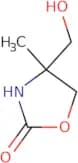
CAS:<p>Pyrrolidin-1-yl-acetic acid hydrochloride is a drug that inhibits the enzyme protease, which is involved in the replication of HIV. It also inhibits the enzyme piperazine, an essential cofactor for retroviral replication. Pyrrolidin-1-yl-acetic acid hydrochloride has been shown to inhibit insulin resistance and increase glucose uptake in animal models. This drug may be a potential treatment for diabetes mellitus type 2. The structural formula of this drug is shown below:</p>Formula:C6H12ClNO2Purity:Min. 95%Molecular weight:165.62 g/mol4-(Hydroxymethyl)-4-methyl-1,3-oxazolidin-2-one
CAS:<p>Versatile small molecule scaffold</p>Formula:C5H9NO3Purity:Min. 95%Molecular weight:131.13 g/mol

![2,5-bis[(morpholin-4-yl)methyl]benzene-1,4-diol](/_next/image/?url=https%3A%2Fstatic.cymitquimica.com%2Fproducts%2F3D%2Fthumb-webp%2FGAA61656.webp&w=3840&q=75)
![N1-[4-(Allyloxy)phenyl]acetamide](/_next/image/?url=https%3A%2Fstatic.cymitquimica.com%2Fproducts%2F3D%2Fthumb-webp%2FGAA62273.webp&w=3840&q=75)