Building Blocks
This section contains fundamental products for the synthesis of organic and biological compounds. Building blocks are the essential starting materials used to construct complex molecules through various chemical reactions. They play a critical role in drug discovery, material science, and chemical research. At CymitQuimica, we offer a diverse range of high-quality building blocks to support your innovative research and industrial projects, ensuring you have the essential components for successful synthesis.
Subcategories of "Building Blocks"
- Boronic Acids & Boronic Acid Derivatives(5,756 products)
- Chiral Building Blocks(1,242 products)
- Hydrocarbon Building Blocks(6,095 products)
- Organic Building Blocks(61,051 products)
Found 199813 products of "Building Blocks"
Sort by
Purity (%)
0
100
|
0
|
50
|
90
|
95
|
100
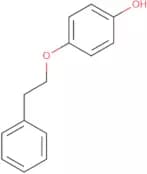
4-(2-Phenylethoxy)phenol
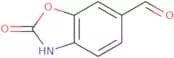
CAS:<p>4-(2-Phenylethoxy)phenol is a semiquinone that has been shown to react with styrene by reoxidizing the latter to styrene oxide and phenol. The kinetics of this reaction have been investigated using kinetic studies. 4-(2-Phenylethoxy)phenol reacts with ethers to form hydroquinones, which are also semiquinones. The stability constants for these reactions have been determined. 4-(2-Phenylethoxy)phenol has also been shown to be an intramolecular radical, which can react with hydroquinones to form quinones. These reactions are all reversible, and the kinetic parameters for these reactions have been determined.</p>Formula:C14H14O2Purity:Min. 95%Molecular weight:214.26 g/mol2-Oxo-2,3-dihydro-1,3-benzoxazole-6-carbaldehyde
CAS:<p>Versatile small molecule scaffold</p>Formula:C8H5NO3Purity:Min. 95%Molecular weight:163.13 g/mol2-Oxo-2,3-dihydro-1,3-benzoxazole-6-carboxylic acid
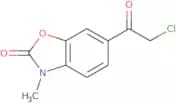
CAS:<p>Versatile small molecule scaffold</p>Formula:C8H5NO4Purity:Min. 95%Molecular weight:179.13 g/mol6-(2-Chloroacetyl)-3-methyl-2,3-dihydro-1,3-benzoxazol-2-one
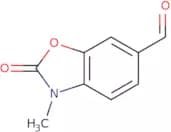
CAS:<p>6-(2-Chloroacetyl)-3-methyl-2,3-dihydro-1,3-benzoxazol-2-one is a molecule that has the formula C8H6ClNO. It is an ambident alkylation reagent and can be used to form chloroalkylations with various nucleophiles, such as triethylamine, potassium carbonate and carbonyl compounds. The compound is a benzoxazolinone derivative that can be nitrated. 6-(2-Chloroacetyl)-3-methyl-2,3-dihydro-1,3-benzoxazol-2-one has been used to synthesize a variety of heterocycles.</p>Formula:C10H8ClNO3Purity:Min. 95%Molecular weight:225.63 g/mol3-Methyl-2-oxo-2,3-dihydro-1,3-benzoxazole-6-carbaldehyde
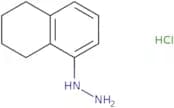
CAS:<p>Versatile small molecule scaffold</p>Formula:C9H7NO3Purity:Min. 95%Molecular weight:177.16 g/mol(5,6,7,8-Tetrahydronaphthalen-1-yl)hydrazine hydrochloride
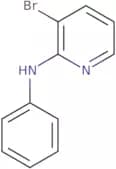
CAS:<p>Versatile small molecule scaffold</p>Formula:C10H15ClN2Purity:Min. 95%Molecular weight:198.69 g/mol3-Bromo-N-phenylpyridin-2-amine
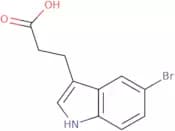
CAS:<p>3-Bromo-N-phenylpyridin-2-amine is an arylation reagent that is used in the synthesis of carbolines. It reacts with anilines to produce aryl amides, which are important intermediates for organic synthesis. 3-Bromo-N-phenylpyridin-2-amine catalyzes the reaction between aldehydes and nitroalkanes to form nitroarenes. This intramolecular reaction can be done in good yields and is not affected by steric hindrance. The photostimulated version of this reaction has been shown to be useful for synthesizing carbolines from aromatic compounds.</p>Formula:C11H9BrN2Purity:Min. 95%Molecular weight:249.11 g/mol5-Bromo-indol-3-propionic acid
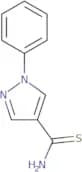
CAS:Versatile small molecule scaffoldFormula:C11H10BrNO2Purity:Min. 95%Molecular weight:268.11 g/mol1-Phenyl-1H-pyrazole-4-carbothioamide
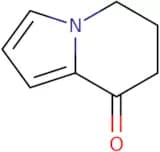
CAS:<p>Versatile small molecule scaffold</p>Formula:C10H9N3SPurity:Min. 95%Molecular weight:203.27 g/mol5,6,7,8-Tetrahydroindolizin-8-one
CAS:<p>Versatile small molecule scaffold</p>Formula:C8H9NOPurity:Min. 95%Molecular weight:135.16 g/mol[1-(2-Nitrobenzoyl)pyrrolidin-2-yl]methanol
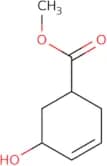
CAS:<p>Versatile small molecule scaffold</p>Formula:C12H14N2O4Purity:Min. 95%Molecular weight:250.25 g/molCis-methyl 5-hydroxycyclohex-3-ene-1-carboxylate
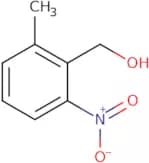
CAS:<p>Versatile small molecule scaffold</p>Formula:C8H12O3Purity:Min. 95%Molecular weight:156.18 g/mol(2-Methyl-6-nitrophenyl)methanol
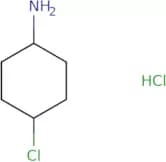
CAS:<p>Versatile small molecule scaffold</p>Formula:C8H9NO3Purity:Min. 95%Molecular weight:167.16 g/mol4-Chlorocyclohexan-1-amine hydrochloride
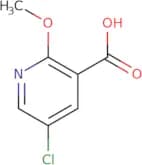
CAS:<p>Versatile small molecule scaffold</p>Formula:C6H13Cl2NPurity:Min. 95%Molecular weight:170.08 g/mol5-Chloro-2-methoxynicotinic acid
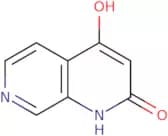
CAS:<p>5-Chloro-2-methoxynicotinic acid (5CMA) is a hypochlorite, which is an inorganic compound that contains the elements chlorine and oxygen. It belongs to the class of alkali metal hypochlorites, which are strong oxidizing agents. 5CMA is used as a reagent in organic synthesis, such as for chlorination of benzene rings. It has been shown to be effective for lowering blood glucose levels. 5CMA is also used as a solvent system for oral hypoglycemic agents, such as sulfonylurea derivatives and alpha-glucosidase inhibitors. The chlorinating agent can be replaced with a more benign substance that does not produce hazardous byproducts when mixed with water or other substances.<br>5CMA has also been shown to have oral hypoglycemic effects because it decreases the absorption of glucose from the intestine and stimulates insulin release from pancreatic β cells.</p>Formula:C7H6ClNO3Purity:Min. 95%Molecular weight:187.58 g/mol1,7-Naphthyridine-2,4-diol
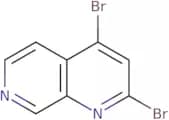
CAS:<p>Versatile small molecule scaffold</p>Formula:C8H6N2O2Purity:Min. 95%Molecular weight:162.15 g/mol2,4-dibromo-1,7-naphthyridine
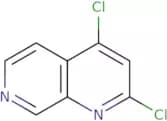
CAS:<p>Versatile small molecule scaffold</p>Formula:C8H4Br2N2Purity:Min. 95%Molecular weight:287.9 g/mol2,4-dichloro-1,7-naphthyridine
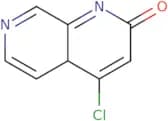
CAS:<p>Versatile small molecule scaffold</p>Formula:C8H4Cl2N2Purity:Min. 95%Molecular weight:199 g/mol4-Chloro-1,2-dihydro-1,7-naphthyridin-2-one
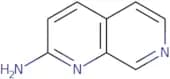
CAS:<p>Versatile small molecule scaffold</p>Formula:C8H5ClN2OPurity:Min. 95%Molecular weight:180.59 g/mol1,7-Naphthyridin-2-amine
CAS:<p>Versatile small molecule scaffold</p>Formula:C8H7N3Purity:Min. 95%Molecular weight:145.16 g/mol

![[1-(2-Nitrobenzoyl)pyrrolidin-2-yl]methanol](/_next/image/?url=https%3A%2Fstatic.cymitquimica.com%2Fproducts%2F3D%2Fthumb-webp%2FECA90811.webp&w=3840&q=75)