Building Blocks
This section contains fundamental products for the synthesis of organic and biological compounds. Building blocks are the essential starting materials used to construct complex molecules through various chemical reactions. They play a critical role in drug discovery, material science, and chemical research. At CymitQuimica, we offer a diverse range of high-quality building blocks to support your innovative research and industrial projects, ensuring you have the essential components for successful synthesis.
Subcategories of "Building Blocks"
- Boronic Acids & Boronic Acid Derivatives(5,756 products)
- Chiral Building Blocks(1,242 products)
- Hydrocarbon Building Blocks(6,095 products)
- Organic Building Blocks(61,055 products)
Found 199650 products of "Building Blocks"
Sort by
Purity (%)
0
100
|
0
|
50
|
90
|
95
|
100
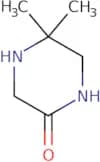
5,5-dimethylpiperazin-2-one
CAS:<p>Versatile small molecule scaffold</p>Formula:C6H12N2OPurity:Min. 95%Molecular weight:128.18 g/mol6,6-Dimethylpiperazin-2-one
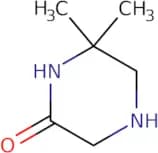
CAS:<p>Versatile small molecule scaffold</p>Formula:C6H12N2OPurity:Min. 95%Molecular weight:128.17 g/mol3-Benzylpiperazin-2-one
CAS:<p>Versatile small molecule scaffold</p>Formula:C11H14N2OPurity:Min. 95%Molecular weight:190.24 g/mol7-Methoxy-4,5-dihydronaphtho[1,2-b]thiophene-2-carboxylic acid
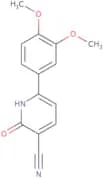
CAS:<p>Versatile small molecule scaffold</p>Formula:C14H12O3SPurity:Min. 95%Molecular weight:260.31 g/mol6-(3,4-Dimethoxyphenyl)-2-oxo-1,2-dihydropyridine-3-carbonitrile
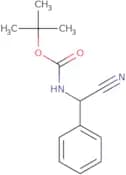
CAS:<p>Versatile small molecule scaffold</p>Formula:C14H12N2O3Purity:Min. 95%Molecular weight:256.26 g/mol(Cyano-phenyl-methyl)-carbamic acid tert-butyl ester
CAS:<p>Versatile small molecule scaffold</p>Formula:C13H16N2O2Purity:Min. 95%Molecular weight:232.28 g/mol2-Methylpyrazolo[1,5-a]pyrimidine
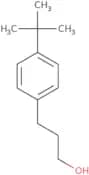
CAS:<p>The 2-methylpyrazolo[1,5-a]pyrimidine is a white crystalline solid that is soluble in some organic solvents. It has been shown to have a diffraction pattern that can be identified using x-ray diffraction and powder x-ray methods. The 2-methylpyrazolo[1,5-a]pyrimidine has not yet been synthesized in bulk quantities and only exists as a reaction solution or as a crystallizing agent.</p>Formula:C7H7N3Purity:Min. 95%Molecular weight:133.15 g/mol3-(4-tert-Butylphenyl)propan-1-ol
CAS:<p>Versatile small molecule scaffold</p>Formula:C13H20OPurity:Min. 95%Molecular weight:192.3 g/molN-{1-[4-(Propan-2-yl)phenyl]propylidene}hydroxylamine
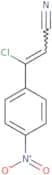
CAS:<p>Versatile small molecule scaffold</p>Formula:C12H17NOPurity:Min. 95%Molecular weight:191.27 g/mol3-Chloro-3-(4-nitrophenyl)prop-2-enenitrile
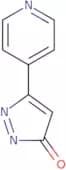
CAS:<p>Versatile small molecule scaffold</p>Formula:C9H5ClN2O2Purity:Min. 95%Molecular weight:208.6 g/mol3-(Pyridin-4-yl)-1H-pyrazol-5-ol
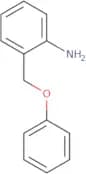
CAS:<p>Versatile small molecule scaffold</p>Formula:C8H5N3OPurity:Min. 95%Molecular weight:159.14 g/mol2-(Phenoxymethyl)aniline
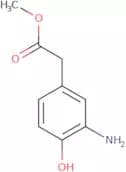
CAS:<p>Versatile small molecule scaffold</p>Formula:C13H13NOPurity:Min. 95%Molecular weight:199.25 g/molMethyl 2-(3-amino-4-hydroxyphenyl)acetate
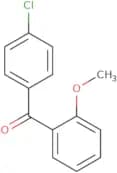
CAS:Versatile small molecule scaffoldFormula:C9H11NO3Purity:Min. 95%Molecular weight:181.19 g/mol(4-Chlorophenyl)(2-methoxyphenyl)methanone
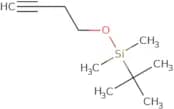
CAS:<p>Versatile small molecule scaffold</p>Formula:C14H11ClO2Purity:Min. 95%Molecular weight:246.69 g/mol4-(tert-Butyldimethylsilyloxy)-1-butyne
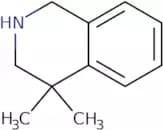
CAS:<p>4-(tert-Butyldimethylsilyloxy)-1-butyne is a monomer that is used in the production of polymers. It has been shown to be an effective treatment for diabetic neuropathy, which is a chronic condition caused by damage to the peripheral nerves. 4-(tert-Butyldimethylsilyloxy)-1-butyne has also been shown to help protect against nerve damage and improve bladder function in rats.</p>Formula:C10H20OSiPurity:Min. 95%Molecular weight:184.35 g/mol4,4-Dimethyl-1,2,3,4-tetrahydroisoquinoline
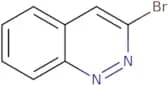
CAS:Versatile small molecule scaffoldFormula:C11H15NPurity:Min. 95%Molecular weight:161.24 g/mol3-Bromocinnoline
CAS:<p>3-Bromocinnoline is a heterobicyclic, primary amino acid with a carbonyl group. It has been shown to activate cancer cells and may be useful in the treatment of brain infarction. 3-Bromocinnoline has been shown to inhibit the activity of tyrosine kinase, which is involved in many cellular processes including cell growth, differentiation, and proliferation. The stereoisomers of 3-bromocinnoline have been shown to have different effects on protein kinase activity.</p>Formula:C8H5BrN2Purity:Min. 95%Molecular weight:209.05 g/mol3-Ethynyl-quinoline
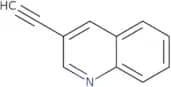
CAS:<p>3-Ethynyl-quinoline is a palladium ligand that can be used in the synthesis of palladium complexes. It is an electron-rich, nitrogen-containing heterocyclic compound. 3-Ethynyl-quinoline has been shown to bind to matrix-assisted laser desorption/ionization (MALDI) mass spectrometry and provide information about the structure of the molecule. The terminal alkynes are considered mesomeric, which means they can adopt different structures depending on the type of environment they are in. 3-Ethynyl-quinoline can undergo bond cleavage, as shown by mouse liver microsomes and profiles. In addition, this compound has been shown to have dopamine D3 receptor binding activity in vivo.</p>Formula:C11H7NPurity:Min. 95%Molecular weight:153.18 g/mol6-Ethynylquinoline
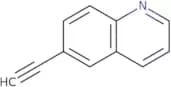
CAS:<p>6-Ethynylquinoline is a biomolecule that has been demonstrated to be efficient in the production of multipolar and dipolar molecules. It is also a quinoline derivative with a quadrupole moment. 6-Ethynylquinoline has been shown to be an analog of quinoline, which can be synthesized from 2-ethynylpyridine and formaldehyde. The compound is also used as a precursor for other compounds such as 3,4-dihydroisoquinolinium iodide (DIQI) and 4,5-dihydronaphthoquinone (DHNQ).</p>Formula:C11H7NPurity:Min. 95%Molecular weight:153.18 g/mol4-Ethynylisoquinoline
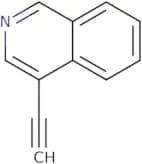
CAS:<p>4-Ethynylisoquinoline is a chemical compound that inhibits rho-kinase, an enzyme that plays a role in the formation of blood clots. It has been shown to be effective in inhibiting cerebral vasospasm and potent at inhibiting chloride ion channels. 4-Ethynylisoquinoline is used as a pharmaceutical preparation to treat dysuria, but should not be administered if the patient is dehydrated or has high blood pressure. 4-Ethynylisoquinoline can also be used as an intermediate for the synthesis of other compounds with similar properties, such as piperidine. This chemical compound is synthesized by reacting chlorobenzene with dimethylformamide and pyridine in the presence of heat.</p>Formula:C11H7NPurity:Min. 95%Molecular weight:153.18 g/mol


![7-Methoxy-4,5-dihydronaphtho[1,2-b]thiophene-2-carboxylic acid](/_next/image/?url=https%3A%2Fstatic.cymitquimica.com%2Fproducts%2F3D%2Fthumb-webp%2FDDA55465.webp&w=3840&q=75)
![2-Methylpyrazolo[1,5-a]pyrimidine](/_next/image/?url=https%3A%2Fstatic.cymitquimica.com%2Fproducts%2F3D%2Fthumb-webp%2FDDA56232.webp&w=3840&q=75)
![N-{1-[4-(Propan-2-yl)phenyl]propylidene}hydroxylamine](/_next/image/?url=https%3A%2Fstatic.cymitquimica.com%2Fproducts%2F3D%2Fthumb-webp%2FDDA57514.webp&w=3840&q=75)